
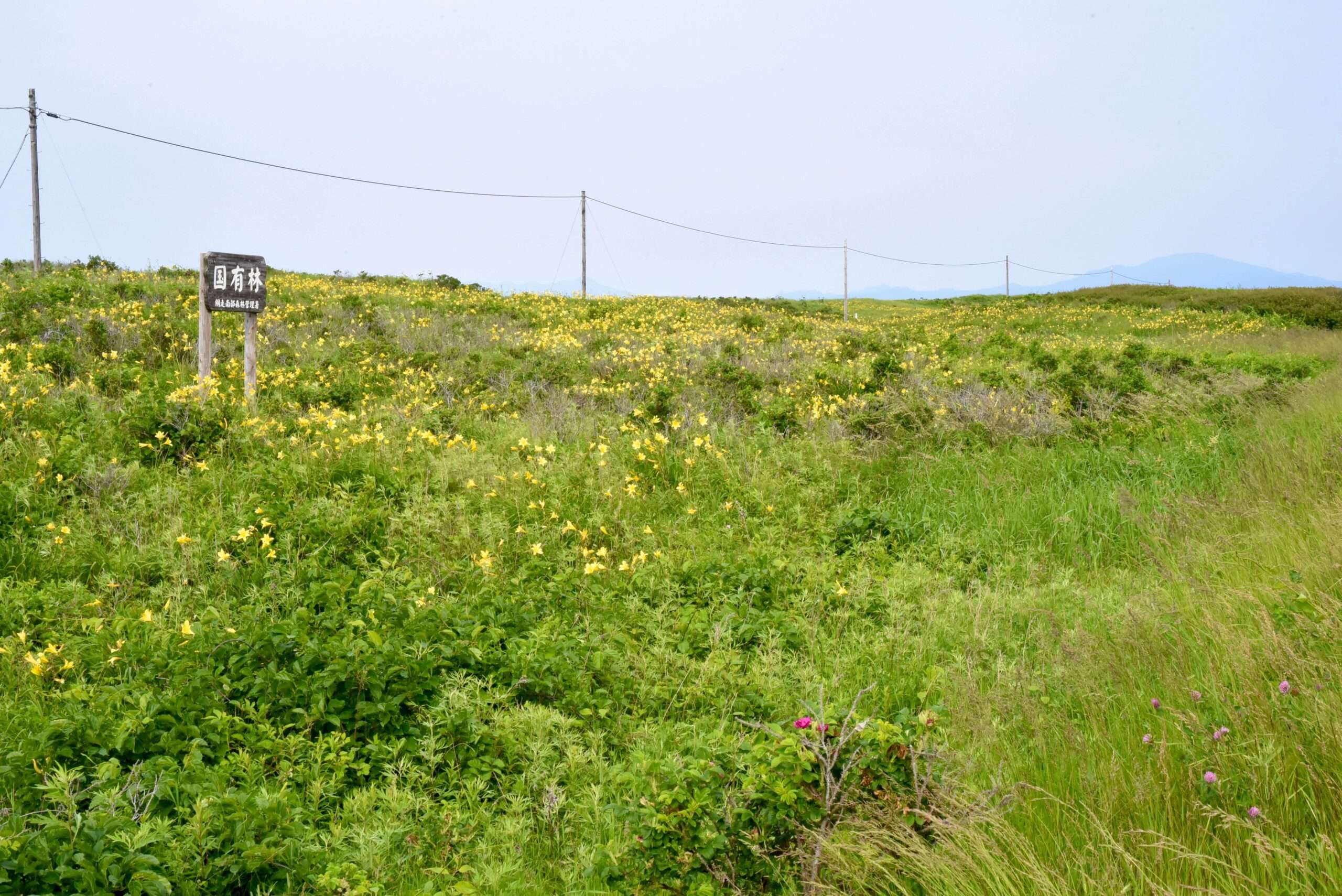

Photo courtesy of Satoshi Tsuda
“Fire ecology,” the academic field known as the ecology of fire, has been established in arid and semiarid regions prone to wildfires—such as the United States (particularly California), Australia, the Mediterranean coast, South Africa, and Chile—where Mediterranean climates are prevalent.
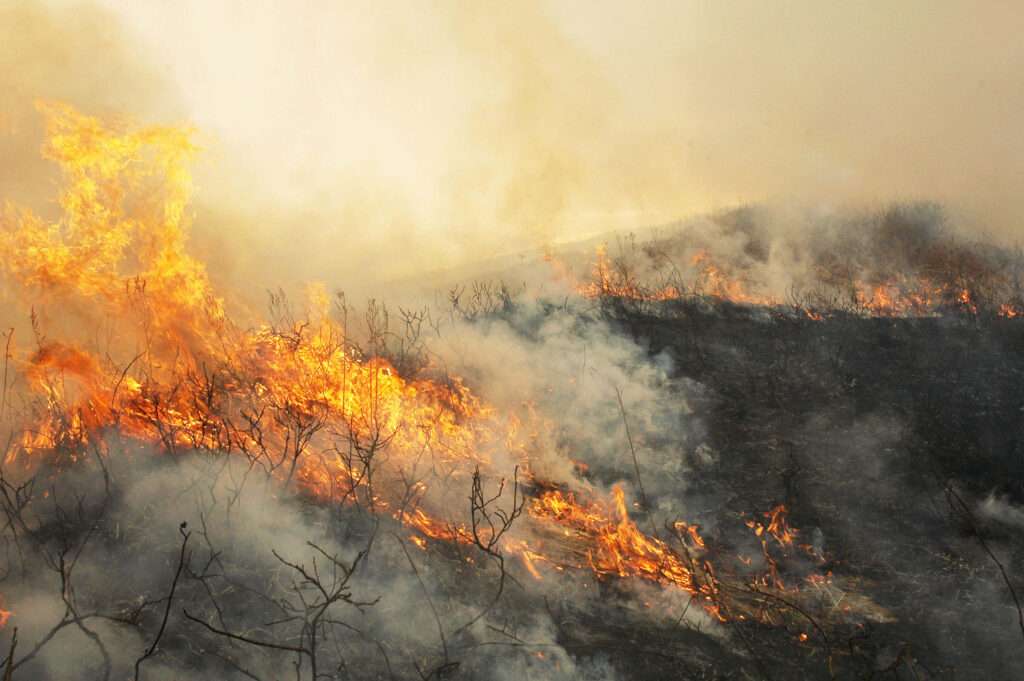
In Japan, too, there is a wealth of accumulated knowledge and techniques regarding “controlled burning” to preserve grasslands. Satoshi Tsuda, who formerly served as an associate professor at the Center for Watershed Science at Gifu University, is recognized as a leading expert in this field.
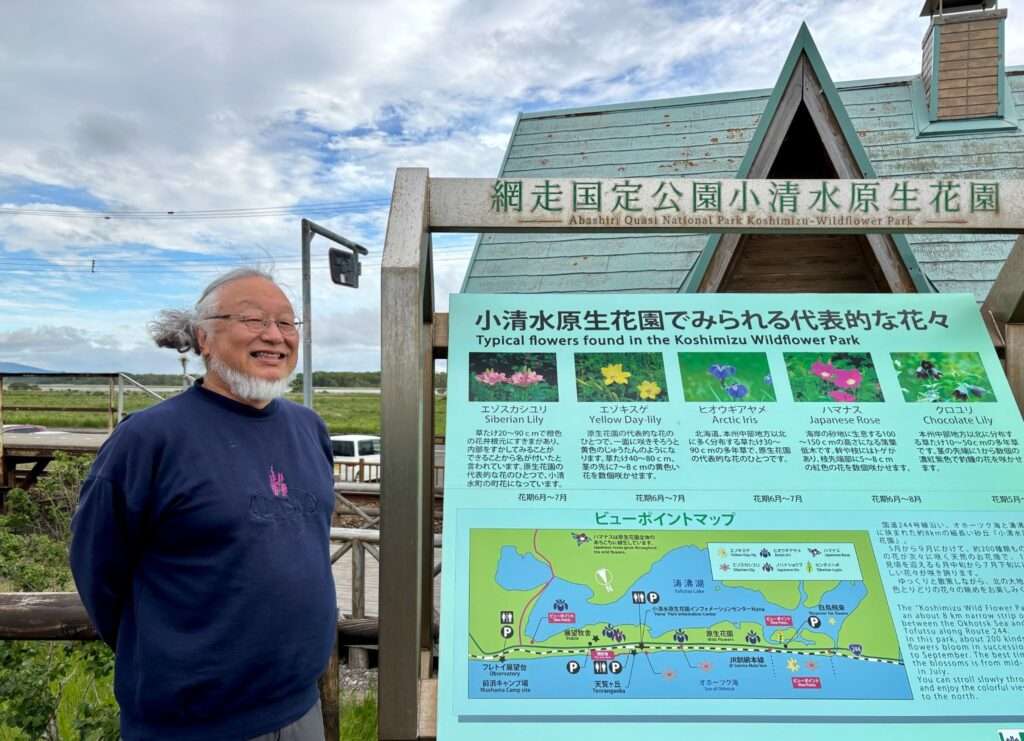
For over 30 years, Mr. Tsuda has been involved with the Koshimizu Wilderness Garden in Koshimizu Town, located in the Abashiri region of eastern Hokkaido.
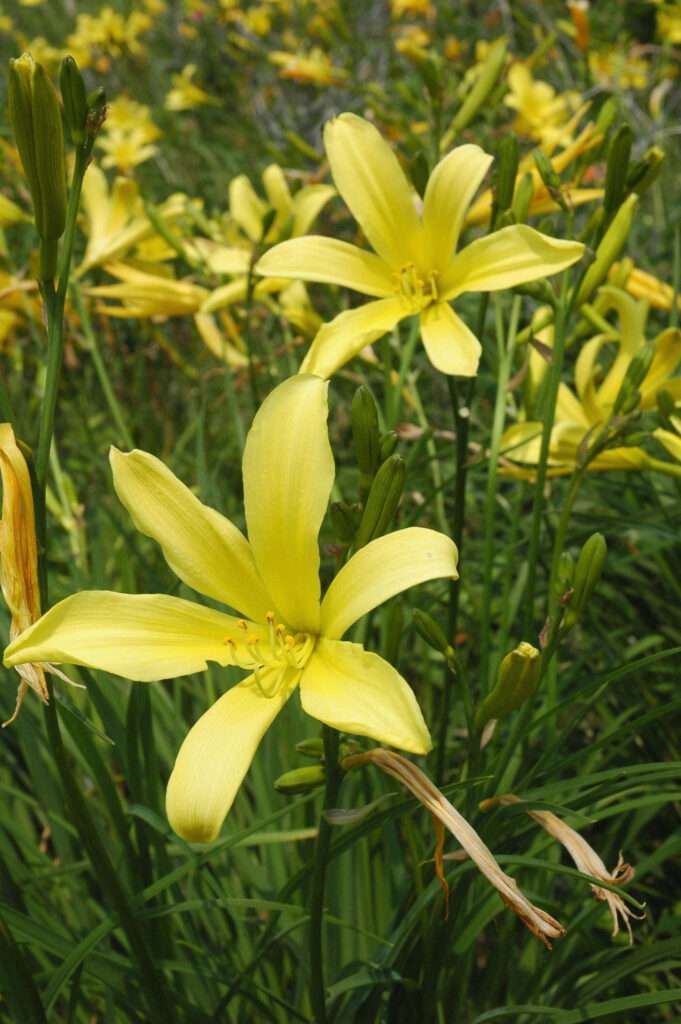
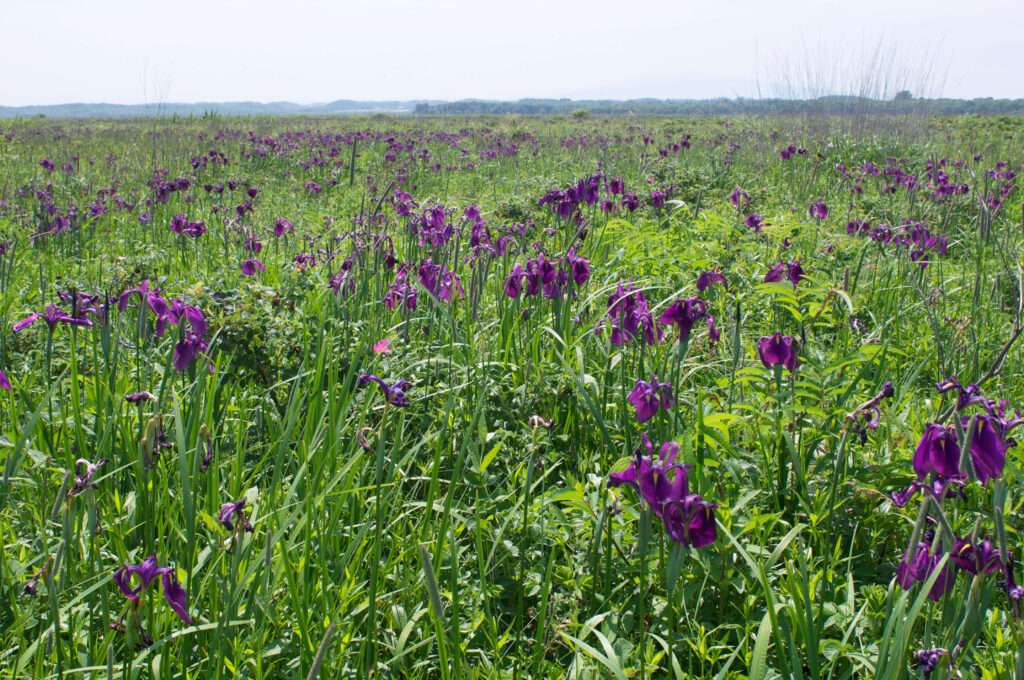
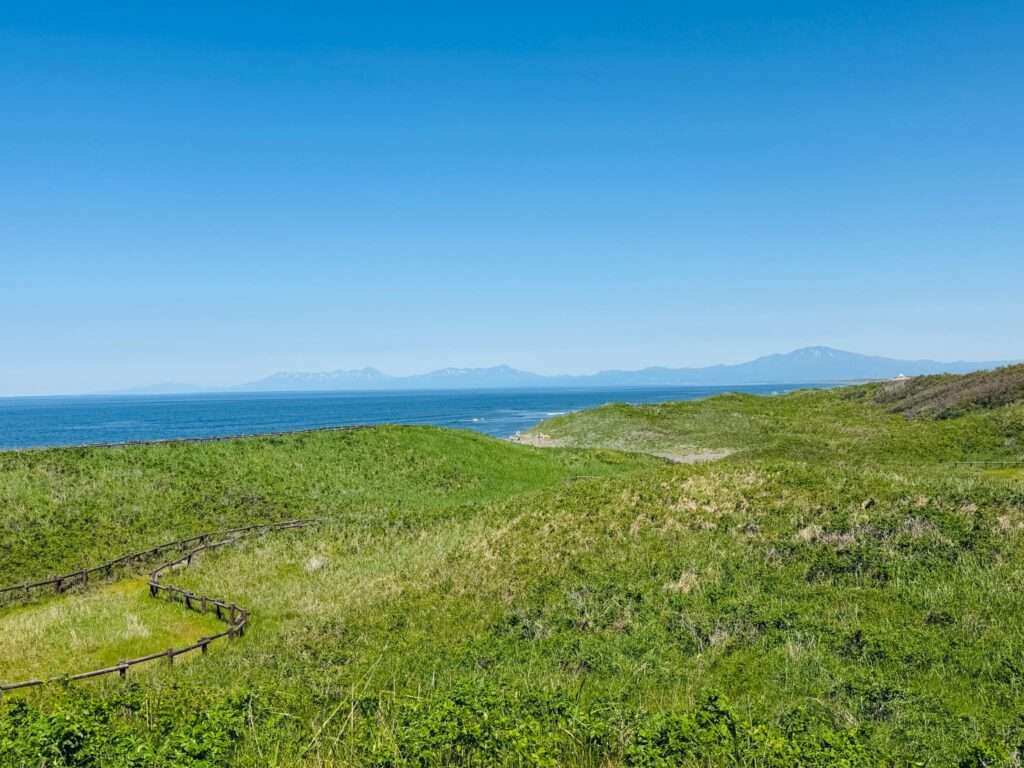
The Koshimizu Wildflower Garden stretches across approximately 7 km of sand dunes nestled between the Sea of Okhotsk and Lake Tofutsu. From June through August, some 40 species of flowers, including the Ezo lily and beach rose, bloom in full splendor. Designated in 1958 as part of the Abashiri Quasi-National Park and selected as a Hokkaido Heritage site, it is one of the most iconic scenic spots in eastern Hokkaido.
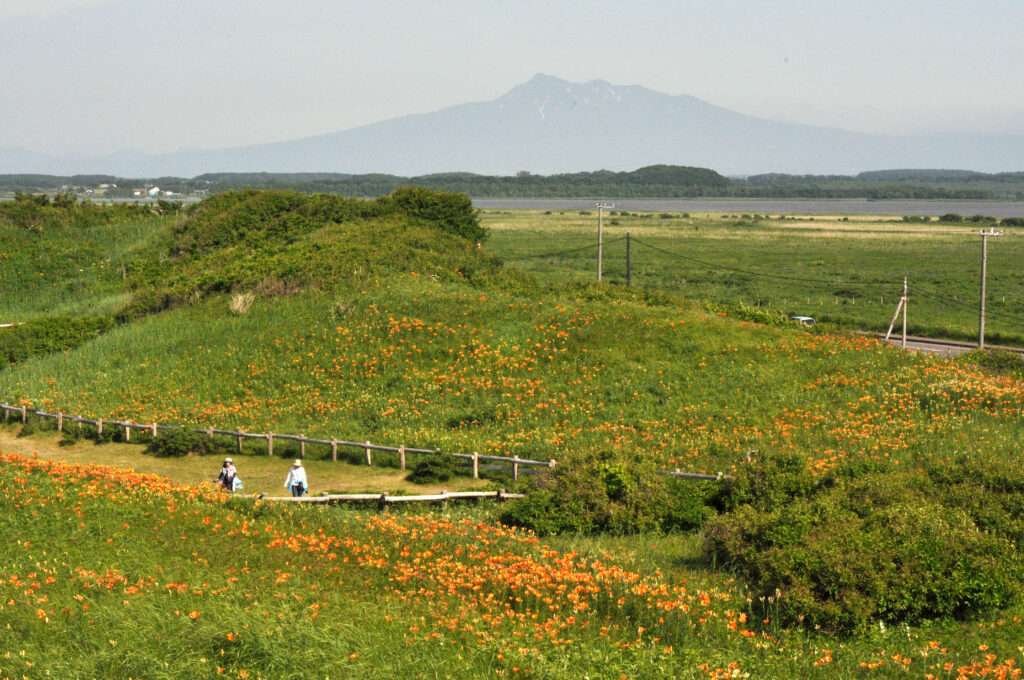
However, in the 1980s—contrary to the name “Primitive Flower Garden”—the flowers disappeared for a time. What was needed to restore the landscape to its former beauty was not to leave it to nature, but rather to continue setting fires, much like “controlled burns.”
Moderate stimulation helps preserve the beauty of the natural flower garden.
The Koshimizu Primeval Flower Garden, which stretches across the sand dunes facing the Sea of Okhotsk, is believed to be a natural grassland that took root in this area long before human activity began. It is said that coastal plants thrived on the sandbar separating Lake Tofutsu from the sea, and that this formed the prototype for the primeval flower garden.
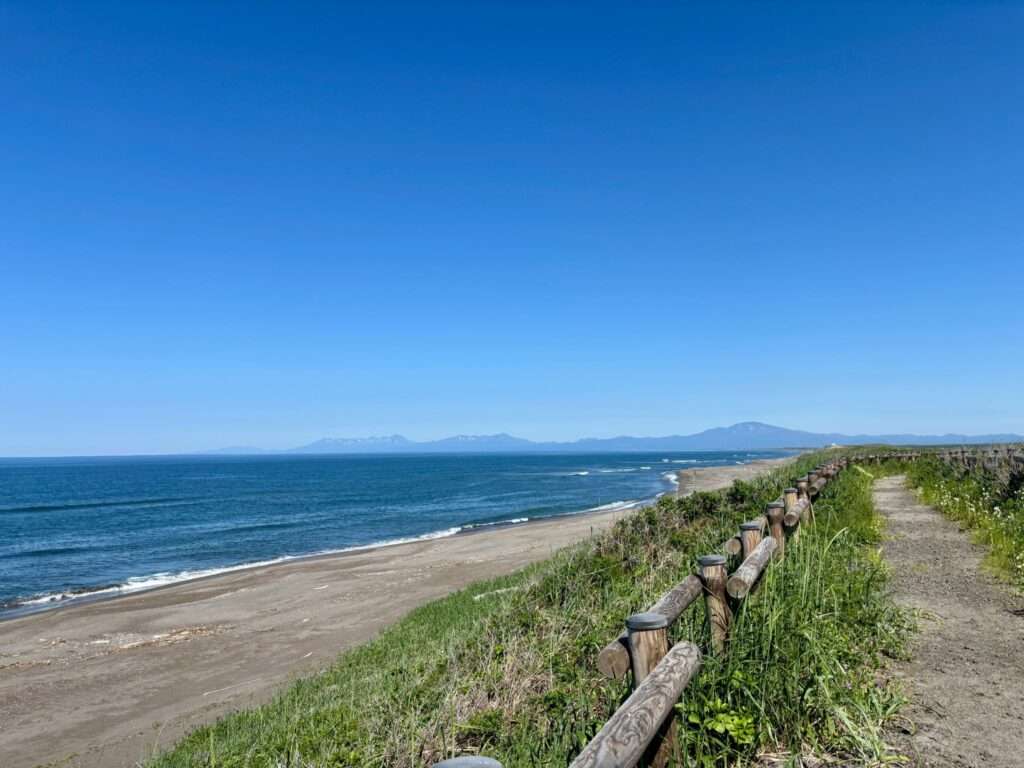
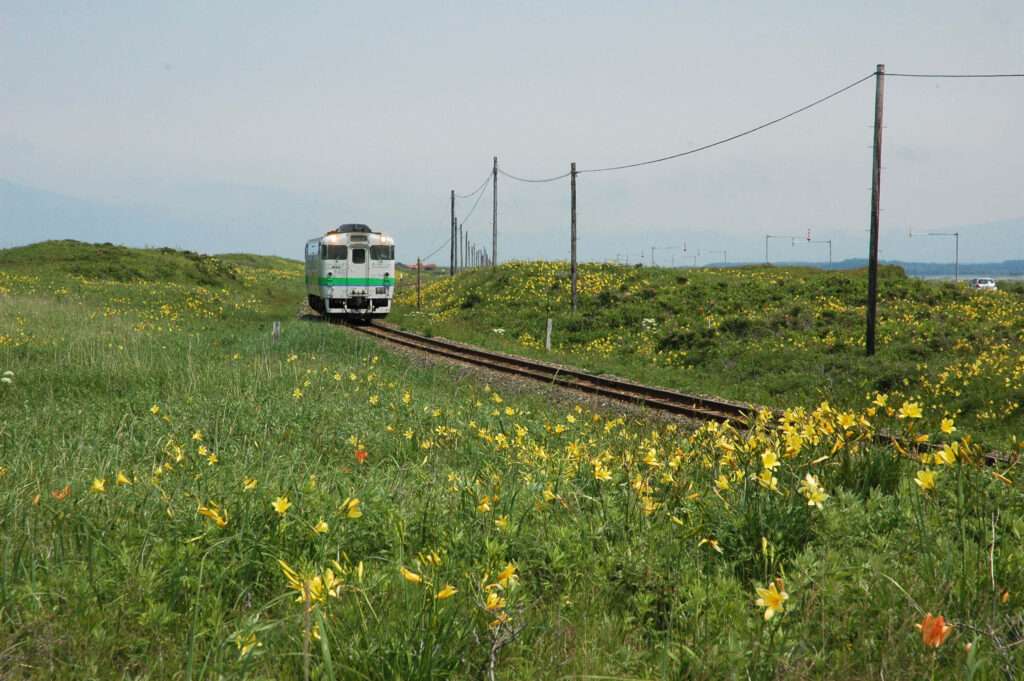
As the name “Primitive Flower Garden” suggests, this coastal grassland was a scenic spot where vibrant flowers—such as the Ezo lily and beach rose, which are representative of Hokkaido—bloomed in abundance.
In 1958, it was designated as the Abashiri Quasi-National Park, and it began to gain great popularity as a tourist destination. At that time, its beautiful scenery was preserved even without any special management measures.
However, around 1980, invasive forage grasses such as Kentucky bluegrass and timothy began to spread throughout the Koshimizu Wilderness Garden, gradually spoiling its once-beautiful landscape.
As a result, by the 1990s, the vibrant flowers had all but disappeared, and it became commonplace for visiting tourists to leave disappointed, remarking, “There aren’t any flowers blooming anywhere.”
For Koshimizu Town, the wildflower garden was a tourist attraction that symbolized the region, and the disappearance of the flowers was a matter of life and death that threatened the very foundation of the town’s economy.
Driven by this growing sense of crisis, discussions aimed at restoring the natural flower garden have become a frequent topic in both the town administration and the town council in Koshimizu Town.
In 1983, Koshimizu Town consulted with a professor at Hokkaido University and began conducting experiments in “controlled burning” in the wetlands on the Lake Tobetsu side. Although research aimed at restoring the vegetation in the primeval flower garden continued until 1987, efforts had not yet extended to the sand dunes facing the Sea of Okhotsk at that stage.
Subsequently, building on this “open burning” initiative, a professor at Hokkaido University—commissioned by the Hokkaido Prefectural Government—launched a full-scale survey of nature parks throughout eastern Hokkaido. This survey and research were then taken over by a group of researchers led by Mr. Tsuda, who was studying wildfires at the time.

津田さんら研究グループによる調査の結果、名勝や国定公園に指定される以前と、花々が姿を消した1980年代の状況を比較すると、幾つかの違いがあることがわかった。
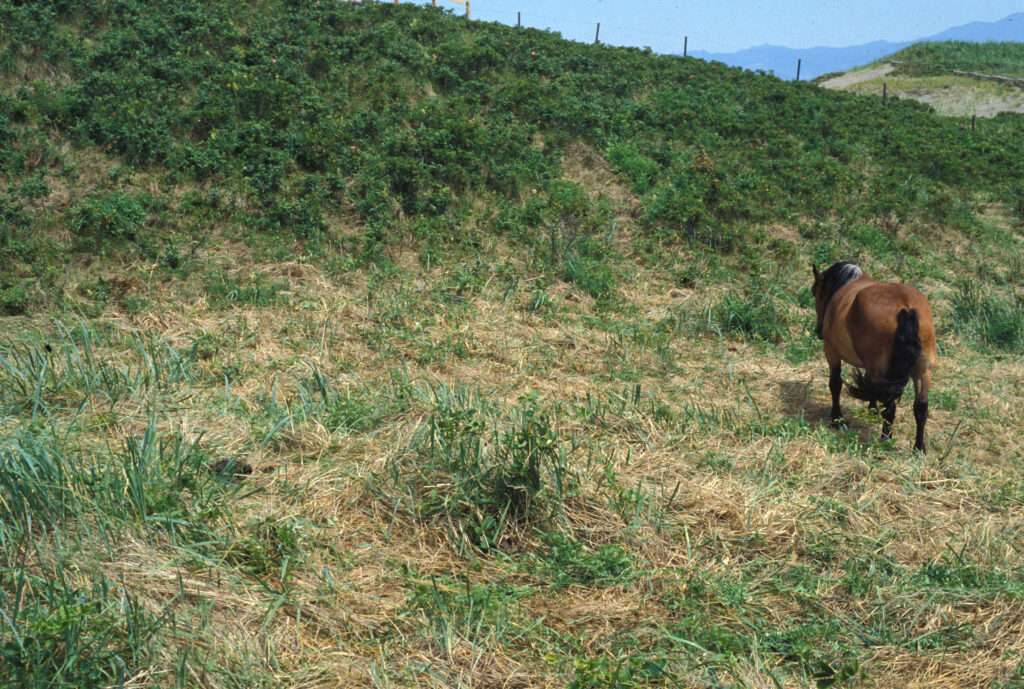
Before the designation, horses used to haul fishing boats ashore were grazed around the watchhouse, and cattle were also grazed there for food.
When cows and horses graze on grass on a daily basis, the tall grass is kept short. This allows sunlight to reach the shorter flowers, preventing any single type of grass from growing unchecked and helping to maintain a healthy grassland ecosystem.
Furthermore, when these livestock are not out to pasture, they spend their time in barns and other enclosures eating non-native grasses. When these cattle are released back into the native flower garden, the seeds of these grasses are scattered along with their manure. As a result, non-native grasses have come to thrive throughout the native flower garden.
Furthermore, on the current JR Senmo Main Line, which runs through the primeval flower garden, steam locomotives once operated. Sparks from those locomotives would scatter across the grasslands, causing spontaneous wildfires several times a year.
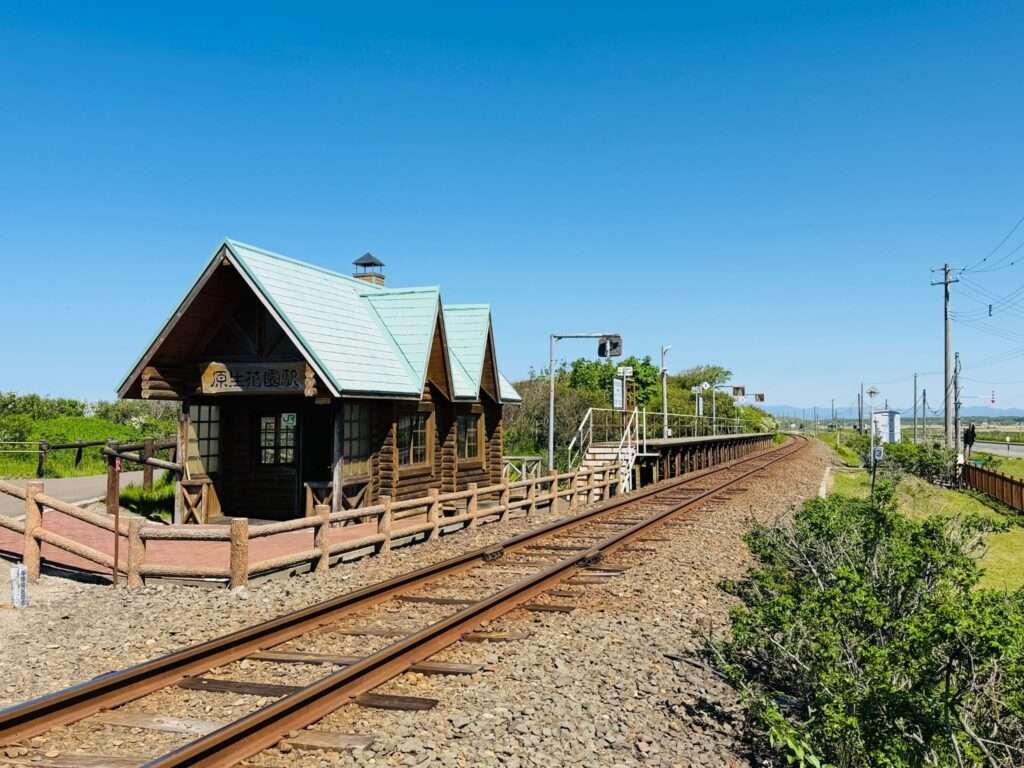
The Koshimizu Primitive Garden was originally a coastal grassland. In the past, large amounts of sand were carried from the surrounding rivers to the sandbar, but as river improvement projects progressed, the amount of sand flowing into the sandbar began to decrease.
Factors such as wildfires, livestock grazing, and even blowing sand—which at first glance might seem to be damaging the grasslands—were thought to have actually contributed to the decline of the primeval flower garden, as they disappeared one after another starting from that point in time.
A research group led by Mr. Tsuda has determined that the beauty of the former Koshimizu Primitive Garden was due to the presence of moderate “disturbances,” such as wildfires and grazing.

“Disturbance” refers to a physical process that stimulates a natural ecosystem to bring about change and prevent the overgrowth of specific plants.
Based on these findings, the introduction of artificial “disturbances” has begun to be considered as an approach to restore the rich ecosystem of the primeval flower garden and pass on its beauty to future generations.
Examples of human-induced disturbances include mowing and grazing, but “controlled burning” is the most convenient method for managing large areas.
As an initial experimental effort, we decided to artificially recreate the “wildfires” that once shaped the landscape and conduct a detailed investigation into the resulting changes in vegetation.
However, when Mr. Tsuda and his research team traveled to Koshimizu Town to prepare for the “open-field burning” experiment and offered to assist with the survey, the town was not immediately ready to accommodate them. This was because practical arrangements—such as securing lodging—took longer than expected.
Although a proposal to look for a survey site in neighboring municipalities was raised, after persistent discussions, an agreement was ultimately reached to proceed with a full-scale survey in Koshimizu Town.
Controlled Burning to Protect Flowers
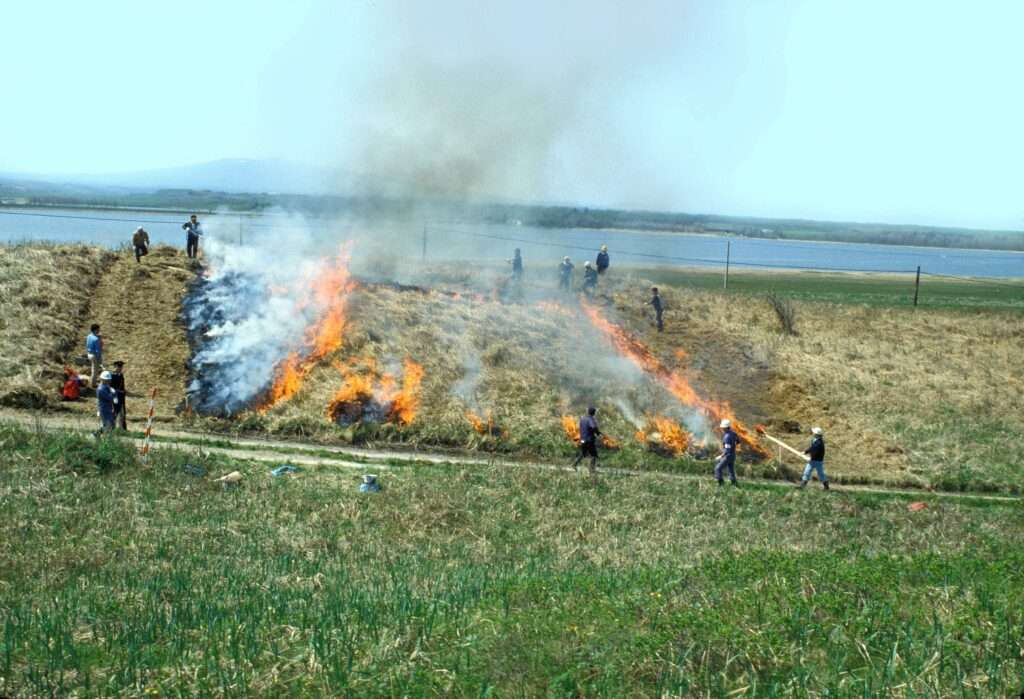
In 1990, a research group led by Mr. Tsuda established a 10-meter-square experimental plot in an area near Hamakoshimizu Station and finally attempted a “controlled burn.”
翌1991年には、調査区を20メートル × 60メートルに拡大し、枯れ草がどれだけ積もっているか、地表の温度がどう変化するかを継続的に計測していった。
When invasive grass species grow rampantly, the growth of wildflowers native to the natural flower garden is significantly hindered. This is because wildflowers grow slowly and take their time to bloom, whereas these grasses grow very rapidly and produce yields that are orders of magnitude greater.
As a result, as the season passes, large amounts of dead grass—known as “litter”—come to completely cover the ground. When this thick layer of dead grass blocks out the light, new shoots cannot emerge from the ground, and even if seeds fall to the ground, they cannot germinate.
Therefore, it was necessary to scientifically verify how the environment would change once this retort was reliably reduced through firing.
The results of the experiment were clear. In the burned areas, the grass species of the Poaceae family that had previously covered the grassland decreased noticeably.
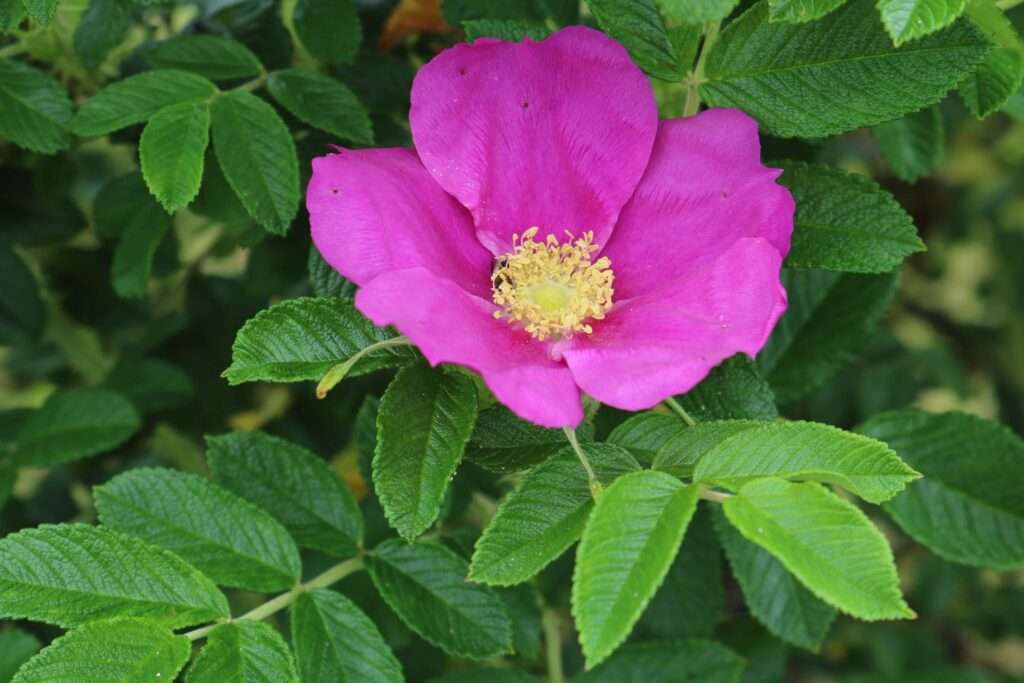
Meanwhile, the number of new shoots on the wild rose—the flowering shrub that symbolizes the landscape of the primeval garden—steadily increased. That was the moment when the signs of regeneration brought about by controlled burning were confirmed by concrete data.
It was also found that the temperature rise caused by burning is confined to the area near the surface and has little effect on the temperature deep within the soil.
The Koshimizu Primeval Garden is home to the rare “Sakhalin grasshopper,” a species found almost exclusively in this area nationwide. The fact that controlled burning causes virtually no change in soil temperature means that the eggs laid in the soil remain unaffected, and this safety has been thoroughly confirmed.

In light of these results, the Abashiri Subprefectural Office, Koshimizu Town, and the Abashiri Southern Forest Management Office joined forces in 1993. This initiative went beyond mere research surveys; it became an official project in which the government continuously allocated funds and personnel, and full-scale “controlled burning” began in the primeval flower garden.
This controlled burning is entirely different in nature from the traditional “wildland burning” that has been passed down through generations, such as the grasslands stretching across Aso (Kumamoto Prefecture) and Akiyoshidai (Yamaguchi Prefecture).
In recent years, as the country has faced the crisis of urban decay, this has become one of the few groundbreaking cases in Japan, as the approach was developed from scratch through a series of scientific experiments and verifications.
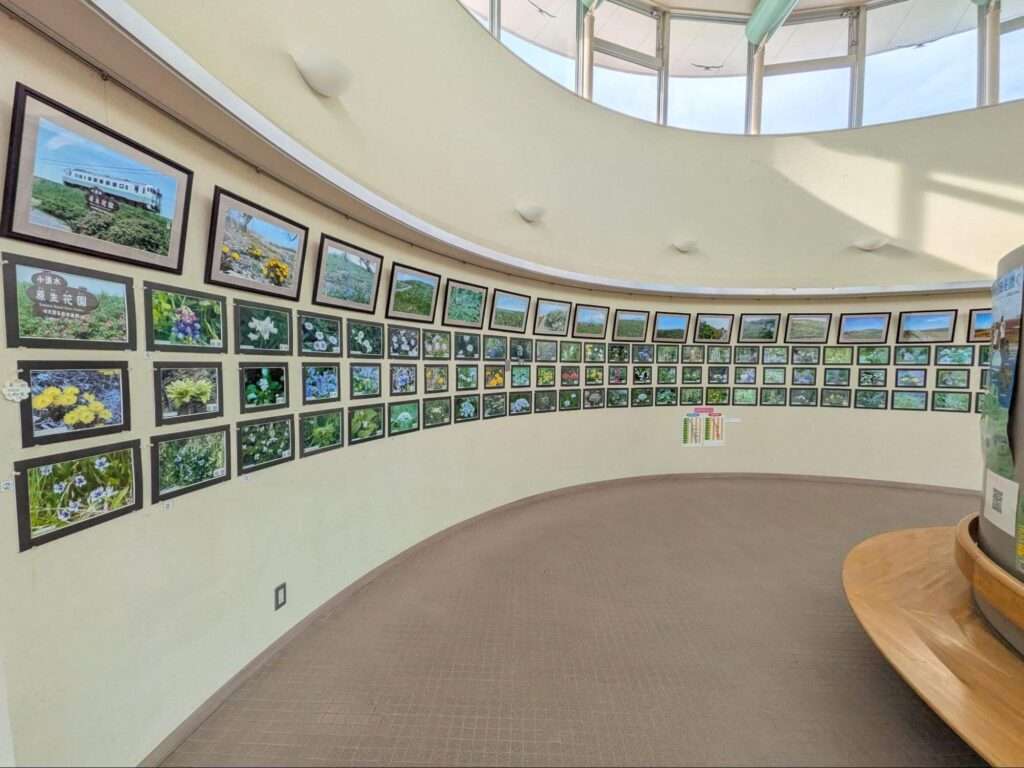
Protecting Ecosystems Through Sustainable “Controlled Burning”
Controlled burning is not an endeavor that can be sustained by the enthusiasm of a single researcher alone. It involves Hokkaido, which manages the national park; the Forest Management Office, which owns the land; and the local town of Koshimizu.
Precisely because this land involves multiple stakeholders, it was impossible for a single person to take the initiative; instead, a “system” was needed to ensure that all parties involved shared the same policy and continued to implement it.
In November 1994, the “Abashiri Quasi-National Park Koshimizu Primeval Garden Landscape Restoration Measures Council” was established to serve as the organizing body for these efforts. It is an official forum where government officials, researchers, and relevant organizations gather to share plans and results regarding controlled burns.
Mr. Tsuda and other researchers joined this council as “experts.” Their role is to contribute data from experiments and surveys and conduct scientific verification—which is often overlooked when viewed solely from an administrative perspective—to determine whether these initiatives are truly contributing to grassland restoration. The members have been holding meetings twice a year to coordinate information.
However, just because a framework like the council was established does not mean that a strong relationship of trust was immediately formed. At the time, Mr. Tsuda was enrolled at a university in Aichi Prefecture and commuted from Nagoya to the worksite in Hokkaido.

I am a researcher who is, so to speak, an “outsider” from outside the area—I have no roots here, nor do I have any regular contact with local government.
Looking back, Mr. Tsuda notes that it took about 10 years before the government began approaching him naturally to discuss these matters. Although he initially felt a certain distance from the officials in charge, as the years passed and he patiently continued the dialogue, their relationship gradually began to change.
Based on this experience, Mr. Tsuda reportedly advises his students, “Once you find your field, stick with it for at least 10 years.” This is because an attitude that leads to pulling out as soon as research funding runs out will never earn the trust of those in the field.
Mr. Tsuda, who speaks of this, has continued to form deep connections not only with Koshimizu but also with various other places, such as Karuizawa in Nagano and Oga in Akita, and in 2022, he finally moved to Koshimizu Town.
The controlled burns currently being conducted cover an area of approximately 6 km out of the 7 km total length of the primeval flower garden. However, it is not realistic to carry out work over such a vast area all at once, given the limitations on available personnel and scheduling.
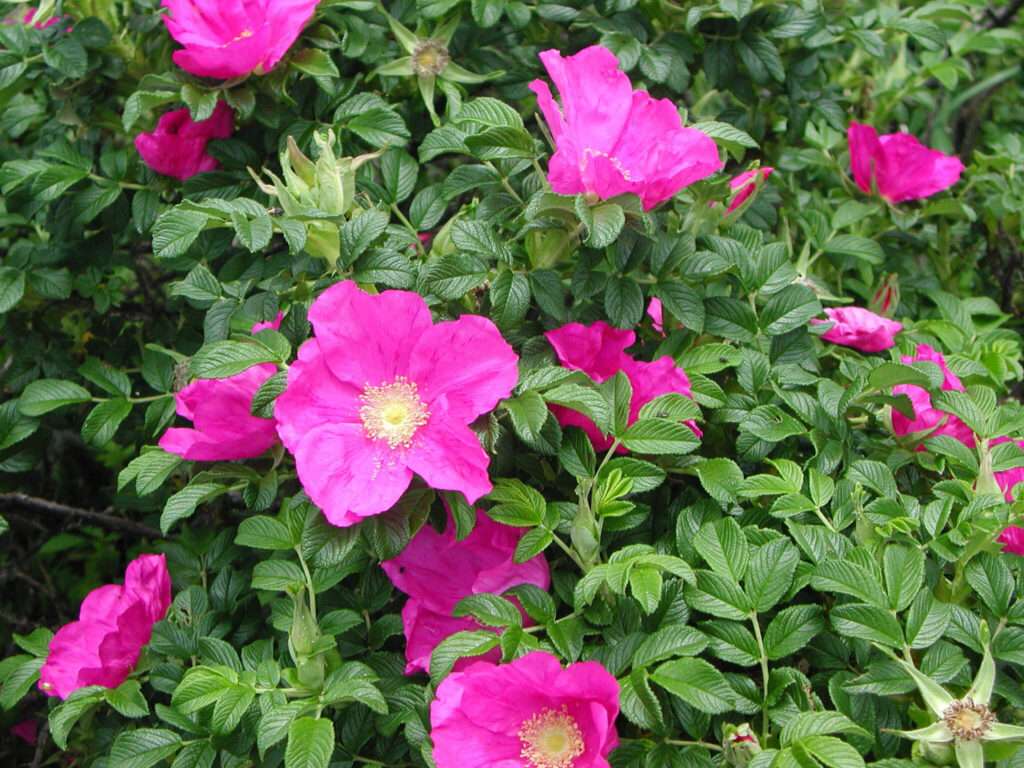
Furthermore, while it is possible to burn the entire area at once in grasslands dominated by pampas grass, such as those in Aso and Akiyoshidai, the situation is different at the Koshimizu Primeval Garden. This is because the wild roses—the main feature here—are “woody plants (trees)” that grow by extending trunks and branches, rather than as grasses.
ススキのような草本植物であれば、地上の部分が焼けても、地下の根さえ生きていれば翌年には再び芽を吹き出す。
However, since the wild rose is a woody plant, the branches extending above ground are themselves a testament to its growth over the years, and if they are burned, it will have to be grown from scratch again.
If you burn the same spot every year, the wild roses will suffer repeated damage before they have a chance to fully mature, causing the plants themselves to stunt and resulting in poorer flowering.
That is why, at the Koshimizu Wilderness Garden, in order to protect the wild roses—which are a symbol of the landscape—the controlled-burn areas are divided into four large blocks and further subdivided into a total of 10 sections, each 150 meters apart. These burns are carried out systematically on a rotational basis, with intervals of several years between each one.
By limiting the burning of each plot to once every few years, we ensure that the wild roses have a “preparation period” during which they can grow strong branches and bloom vibrantly once again.
By carefully limiting the area burned and leaving some of the dead vegetation (litter) on the ground unburned, we can help protect valuable nesting habitat for migratory birds.
Efforts to maintain healthy vegetation—and, in turn, healthy ecosystems—ultimately help protect the habitats of the wildlife that live there.

Responsibility for the controlled burn is divided among designated plots: the forest management office overseeing the land is in charge of three, the Okhotsk Subprefectural Bureau, which manages the national park, handles three, and Koshimizu Town takes care of four. According to Mr. Tsuda, around 150 people took part in the most recent burn, which covered about eight hectares.
Even with this system in place, not everything was resolved. At one point, coordination with the railway operator proved difficult, particularly over when to start the burn and how to ensure everyone’s safety.

With railway tracks running right alongside the wildflower garden, any controlled burn must take train operations into account. On this occasion, however, the two sides were unable to reach an agreement, putting the burn itself in jeopardy.
They also had to consider how the burn might affect nearby residents, not just train operations. Taking everyone’s circumstances into account and coordinating with each stakeholder must have been far from easy.
What needs protecting is the ecosystem itself, not just the scenery.
Mr. Tsuda is also considering how the way visitors walk through the grassland can affect it. There are several ways to disturb the grassland to maintain its landscape, each with a different level of intensity.
One of the most intense forms of disturbance is grazing. Goats, for example, can pull grass up by the roots, right down to ground level.
If visitors walk throughout the park, their footsteps could provide just the right amount of disturbance to the vegetation, potentially benefiting the grassland.
At the same time, care is needed to keep visitors from crowding around a few photogenic spots and repeatedly trampling the same ground. Those areas can wear down into informal footpaths, with the disturbance becoming too intense.
Mr. Tsuda’s research group has also conducted experiments involving disturbances more intense than controlled burning. In 1994 and 1995, they tested combinations of burning and grazing, as well as grazing for two consecutive years.
The results, however, were not what they had expected.
Instead, pasture grasses became more abundant, and even non-native species such as white clover—which had not previously grown in the wildflower garden—began to thrive.
In 2004, they conducted another large-scale experiment, using heavy machinery to dig up and disturb the soil. Although this reduced non-native pasture grasses, it triggered a rapid increase in other plants—white clover, lamb’s quarters, and giant mugwort—that were also not part of the wildflower garden’s natural vegetation.
More intense disturbance does not necessarily lead to better results. If it is too severe, it can actually encourage undesirable plants to grow.
The flames may make controlled burning look like the most drastic approach. But in terms of its impact on vegetation, it is far gentler than grazing or mechanical disturbance—a measured intervention that works with nature.
Protecting an ecosystem means safeguarding the lives and natural rhythms of every plant and animal within it.
The controlled burns practiced here have been shaped through careful testing, guided by a commitment to protecting not only the striking landscape but also the biodiversity that thrives here.
It is not as simple as reducing pasture grasses or making sure flowers bloom. We must take a holistic view of the effects on insects, wild birds, and every plant and animal living there.
Efforts to restore nature through active stewardship are likely to spread across Japan. Their success will depend on whether universities and research institutions—the academic community with specialized expertise—can continue to work in close partnership with government and the private sector.
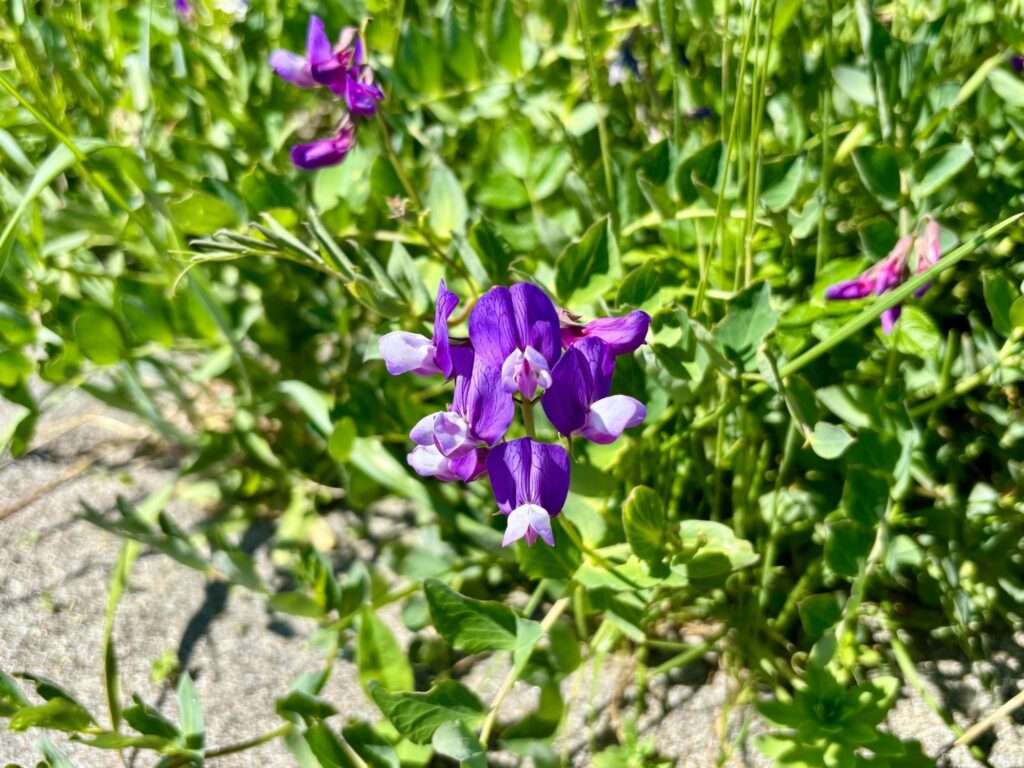
At Koshimizu Wildflower Garden, flowers bloom for only about a month each year. This fleeting, almost miraculous season makes the place all the more special.
Flowers do not bloom to serve anyone. They cannot be used for timber or put food on the table. And yet people travel from far away to see them flourishing in this wildflower garden.
We bring flowers to those who are ill and lay them in tribute to those who have passed away. The way we cherish flowers for their beauty is deeply connected to the tenderness we feel for others.
Ultimately, could it be this same warm, deeply human sensibility that has driven people to protect and pass this grassland on to future generations?
May future generations, too, gaze upon these colorful flowers and be moved by them just as we are.

