

Sustainable business models do not necessarily depend on continual economic growth. Population decline, resource depletion, climate change: even as Japan faces the reality of a shrinking society, many companies and local governments remain trapped by the belief that growth is the only way forward. How long will we keep chasing growth targets that remain out of reach?
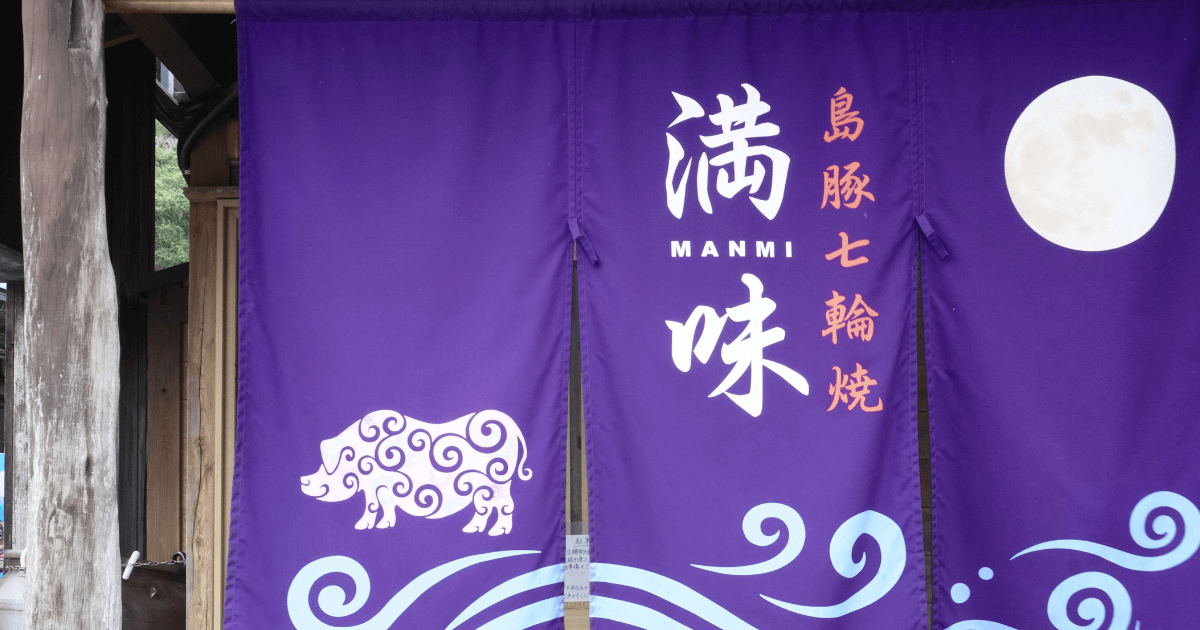
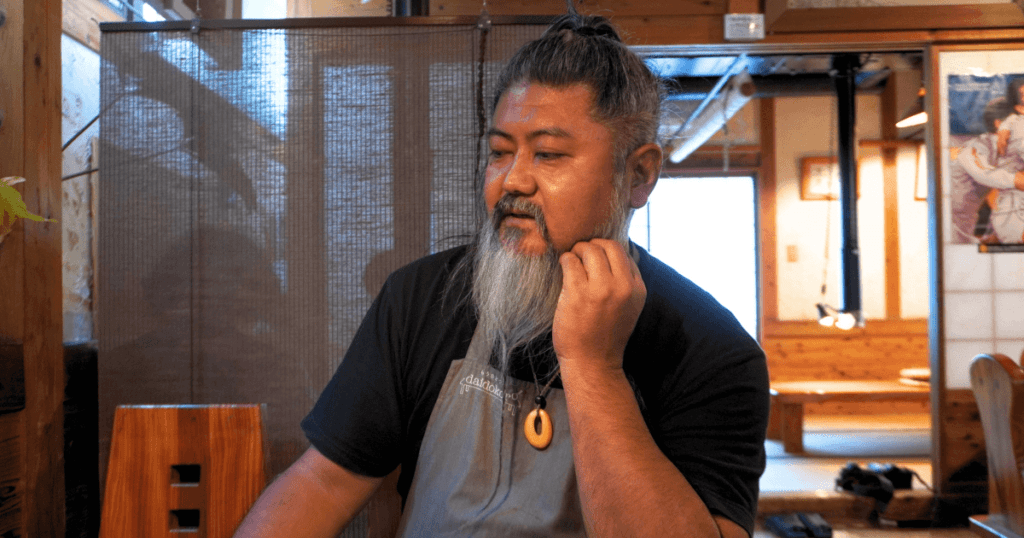
Yet one business owner has deliberately chosen to step off that treadmill: Mr. Shogo Manna, owner of Shimabuta Shichirin-yaki Manmi, nestled in the hills of Nago, Okinawa. This popular restaurant, which draws a steady stream of reservations from across Japan, embraces what Manna calls “the philosophy of a gradual descent.” It is a sophisticated survival strategy for building a resilient foundation that can withstand external pressures.
Why is a gradual descent necessary in the tourism industry today? Through Okinawa’s traditional landscapes and the essence of its pork culture, we explore the deeper roots of Manna’s business philosophy.
Shimabuta Shichirin-yaki Manmi
A restaurant specializing in island pork raised in Yanbaru and served right here in the region. The welcoming, traditional-style interior features tatami seating, and guests can enjoy yakiniku and shabu-shabu made with exceptionally fresh island pork. The menu also offers a wide variety of Okinawan and Korean dishes made with plenty of local ingredients.
251 Isagawa, Nago, Okinawa 905-1152, Japan
Mr. Shogo Manna
The Unease and Turning Point He Found at the End of the Growth Path
Yanbaru, in the northern part of Okinawa Island. Mr. Manna’s restaurant sits amid lush greenery, but he, too, once found himself on the front lines of expansion.
After starting his business in his late twenties, Mr. Manna took on the mantle of promoting Agu, Okinawa’s native pig breed. He traveled from one department store food fair to another across Japan, pursuing growth with an eye toward opening multiple locations.
But amid that competition, he began to feel a deep unease. Behind the glossy displays at the food fairs, his Agu brand was being treated on the same footing as vendors who processed and sold imported meat under the Agu name. He was frustrated to see the pigs he had raised with such care reduced to little more than a label for easy consumption. At times, he reportedly vented his anger, with nowhere for it to go.
The harder he pushed for growth, the further he drifted from what mattered, and the more he was drawn into a market rife with counterfeits. A growing fear took hold: that his work would be reduced to “content made simply to be consumed.”
The turning point came one evening at dusk. Worn down by the relentless preparations for a food fair, Mr. Manna looked out and spotted a sabani—a traditional Okinawan sailing boat—floating in Nago Bay.
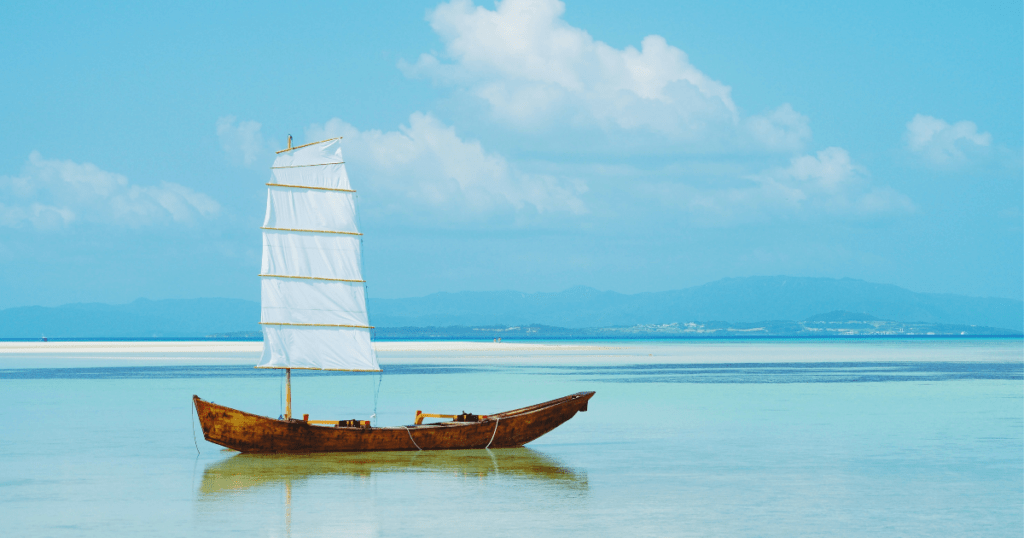
“I’m so envious. I wish I could spend all day aboard a sabani.”
What welled up from deep within him was a longing for a world far removed from efficiency. A sabani has no engine; it moves solely with the wind and the tides. Yet, gliding across the sea in the glow of the setting sun, it looked incomparably more beautiful and fulfilling than a life spent chasing numbers.
“What if I slowed down and worked with the sea close by?” In that moment, something shifted within Mr. Manna. He eased off the accelerator and changed course.
His resolve soon turned into action. Mr. Manna set out in a sabani and traveled from Yonaguni Island to Miyazaki. As he visited the islands and encountered the many foods and values rooted in each place, he came to a conviction: rather than creating tourist destinations that draw people to a single spot to consume, tourism should gently weave itself into the everyday life of a place. That, he felt, was what best suited Okinawa.
While many business owners define success as “scaling up,” Mr. Manna put authenticity first. Instead of spreading his company’s resources thin, he chose to concentrate them and go deeper. In the end, that approach shaped a distinctive brand value for Manmi—one that other businesses could not imitate.
The Courage to Step Away from “Growth”: The Abundance Found in a Philosophy of Gradual Descent
Mr. Manna’s “philosophy of a gradual descent” is not simply about shrinking a business or returning to a slower way of life. It also reflects a more urgent, strategic approach to risk management.
Mr. Manna: “People blame changes in the sea on global warming. But is that the whole story? I feel that local factors closer to home—such as excessive development and wastewater from our daily lives—may be having a greater impact.”
Mr. Manna has witnessed firsthand how dramatically the sea around his hometown of Bise has changed over the past few decades. The waters of Bise were once abundant with marine life. Children would bring rice cookers to the shore, catch sea urchins, and make sea urchin rice bowls right there. If they told a fisherman, “We caught too many, so you can have some,” he would laugh and say, “They’re a pain to crack open. There’ll be plenty next week, so just leave them.”
The sea was once so rich that it seemed impossible to harvest everything it had to offer. But little remains of that abundance today. Synthetic detergents and household wastewater, coastlines paved over as infrastructure expanded, and even herbicides sprayed to preserve the scenery—all have disrupted the flow of water to the sea and fundamentally changed its ecosystem.
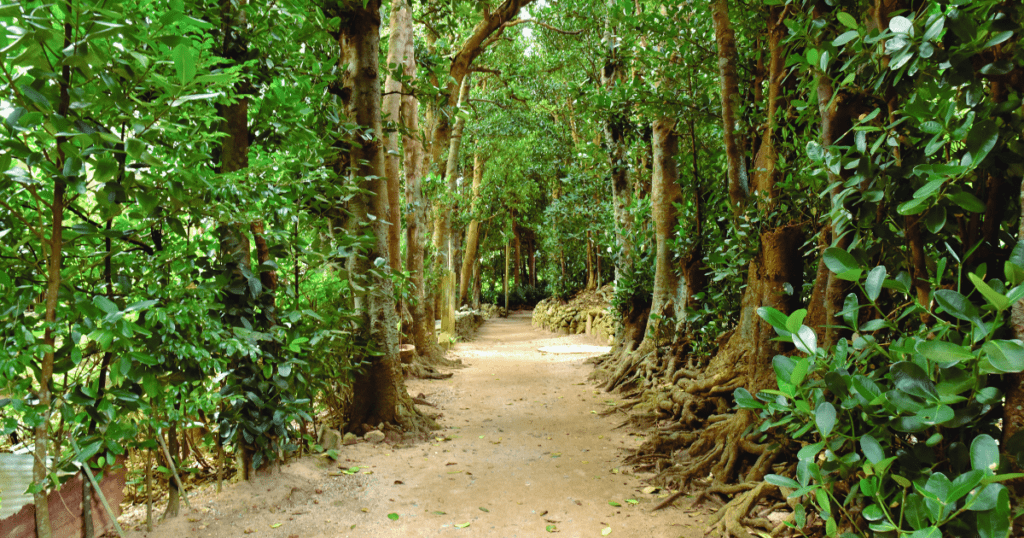
Mr. Manna warns that the shallow reef, or ino, is losing the rich “scent of life” it once held. Natural resources are finite. For Okinawa, the natural environment is its greatest asset and the source of its appeal to visitors. If that foundation is depleted, the tourism industry built upon it cannot survive either. The environmental crisis is directly linked to the survival of the local economy.
Mr. Manna: “Rather than waiting to be pushed down by circumstances, we should build our own steps and descend gradually. I believe it’s important to embrace a ‘philosophy of a gradual descent.’”
What drives Mr. Manna is a sense of responsibility to the next generation. He says he does not want to become the kind of adult who speaks of lost abundance only in the past tense: “It used to be beautiful” or “Agu used to taste good.”
To achieve that, simply maintaining the status quo—the goal of “sustainability”—is not enough. He believes it is the role of adults to restore damaged nature and culture, and pass them on in a state of renewal.
At first glance, this approach of “gradual descent” may look like business contraction. In reality, it is a highly rational and resilient business strategy for reducing dependence on unpredictable external conditions.
An aggressive push for growth can increase reliance on outside capital, global supply chains, and volatile inbound tourism demand. By bringing the business to a more appropriate scale and deepening its ties to local resources, a company can build an autonomous regional economy less vulnerable to global events.
So how does this work in practice? Manmi’s strategy comes down to a thorough commitment to “circulation” and “deep local roots.”
Eating Everything but the Footprints: The Practical Wisdom of a Tradition That Uses Every Part of the Animal
At Shimabuta Shichirin-yaki Manmi, the menu goes beyond premium cuts such as pork belly and loin. Every part of the pig is put to use, from the organs, skin, ears, and blood to the fat.
Mr. Manna: “In other parts of Japan, people say you eat everything but the pig’s squeal. In Okinawa, it’s different. We even make use of its squeal, so that all it leaves behind are footprints.”
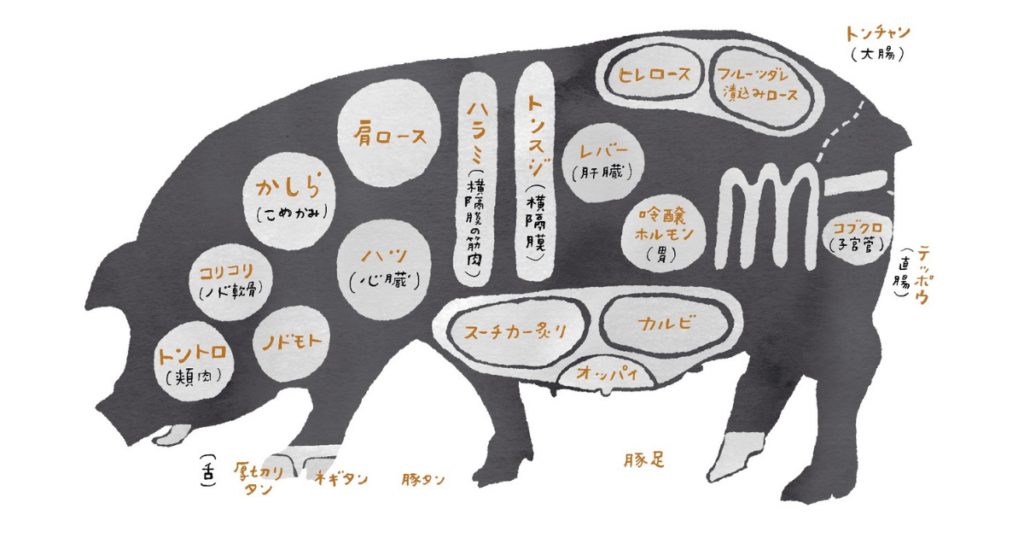
In the past, pigs in Okinawa were a precious resource not only for their meat, but also for the high-quality fat, or lard, they provided. On a small island where plant-based oils were difficult to obtain, pork fat was a vital source of energy that helped sustain people’s lives.
Pigs were also deeply woven into Okinawa’s spiritual culture, beyond their role as livestock. They were once kept in a fūru—a pigsty latrine—at each household, living alongside people as part of their daily routine. Notably, the fūru also served as a place for rituals to call back a person’s mabui, or soul.
When a child was injured or someone became emotionally unsettled, people in Okinawa might say that their mabui had fallen away. The ritual performed in such cases was called mabuigumi, or “calling the soul back.” The person would be taken to the fūru, where a pig was deliberately made to squeal loudly. Its powerful cry was believed to drive away evil and call back the lost soul.
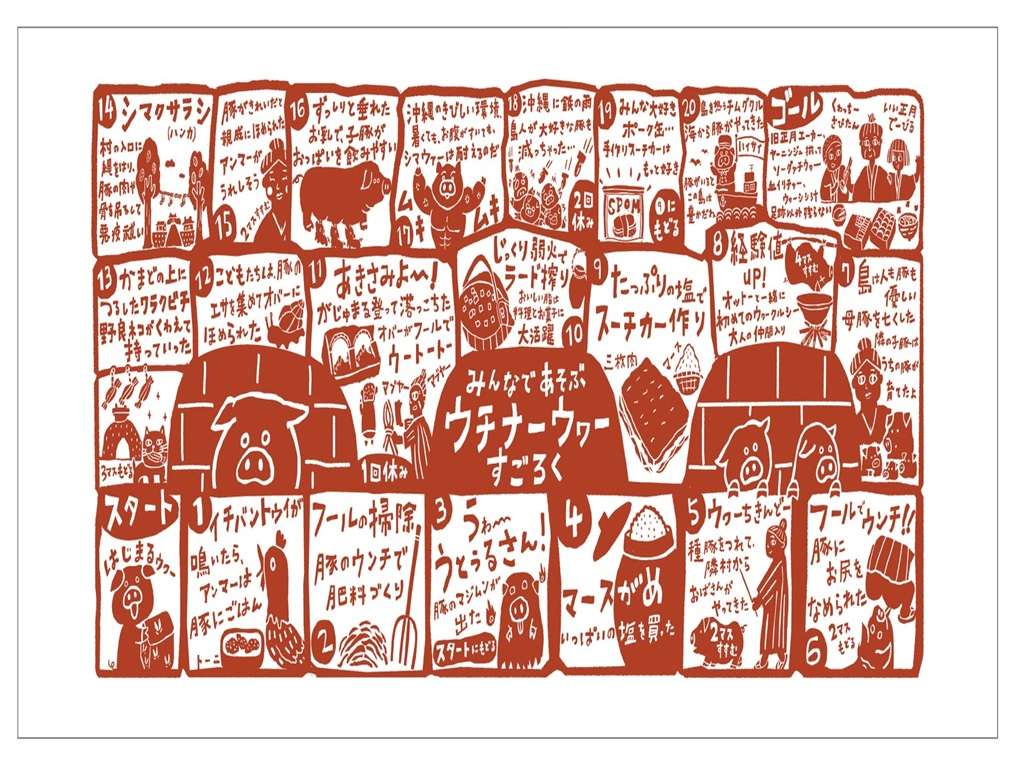
Pigs also served as substitutes for human beings. One custom that symbolizes this role is Dabiwa (literally, “cremation pig”), which is still practiced on Miyako Island. When someone who has lived to the age of 75 or older dies, relatives gather to share a meal of pork as part of the funeral rites.
At ordinary celebrations, food is usually shared with neighbors. Dabiwa, by contrast, is reserved for family members. The pig is regarded as a substitute for the deceased, and by taking its life into their own bodies, relatives are believed to inherit the deceased’s spirit and vitality.
From spiritual protection to physical nourishment, this practice makes full use of the life of a single animal. In today’s terms, it might be described as nose-to-tail eating or zero waste. But for Mr. Manna, it is no passing trend. It is a deeply humane and remarkably practical “system for the circulation of life,” grounded in the wisdom of past generations.
A Supply Chain Built on Personal Relationships, All Within 15 Minutes
The pigs served at Shimabuta Shichirin-yaki Manmi are carefully sourced, and distance is a key part of that commitment. The restaurant, its partner farm, Ganaha Livestock, and the slaughterhouse are all within a 15-minute drive of one another.
Ganaha Livestock deliberately limits the number of pigs it raises to suit the slow-growing Agu breed. This allows producers to keep a close eye on each animal and care for them responsibly. The pigs are fed a custom blend that includes mugwort, seaweed, and fossilized coral, along with natural water from Yanbaru. Mr. Manna, who takes responsibility for the lives of these stress-free, carefully raised pigs, also makes the most of the farm’s close proximity.
Mr. Manna: “Pork changes flavor with shifts in the climate, so close communication with the producers is essential to serving it at its best. We couldn’t open a restaurant just like Manmi somewhere far away. These pigs can only be raised by people who are deeply connected to Yanbaru’s nature, climate, and culture. We want people to enjoy them here, in Yanbaru. That is our unwavering principle.”
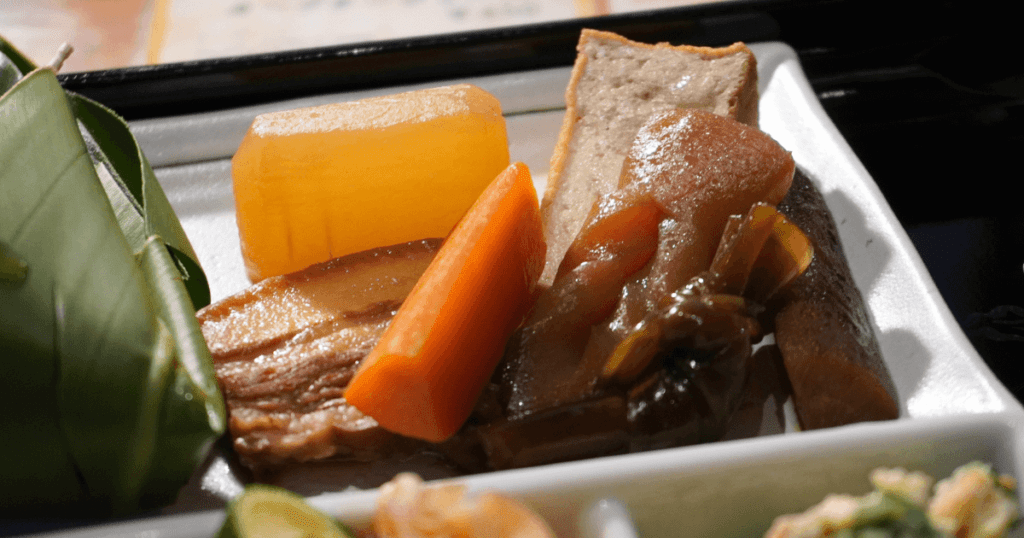
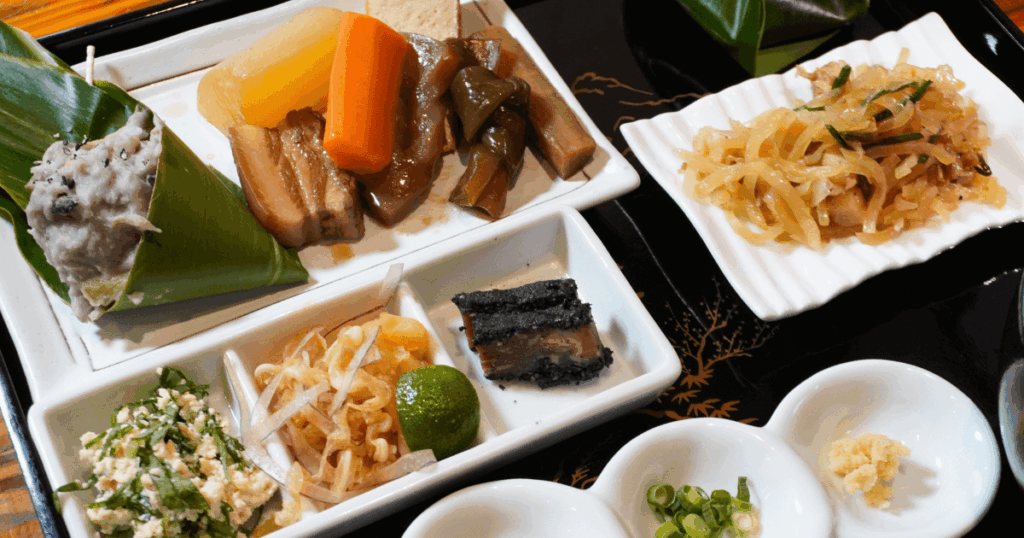
That philosophy extends beyond pork. Vegetables, sugarcane, rice, and salt are all nurtured by Yanbaru’s subtropical forests and red soil—an environment rare in the world. To capture all the flavor and joy of Yanbaru, Manmi carefully chooses local ingredients down to the seasonings. This is more than simply buying and eating local. It brings economic activity and relationships back into the community, helping the land itself to thrive. It is regenerative in practice.
When diners connect with the nature and people behind their food, they begin to see them as part of their own story. That closeness builds a deeper kind of trust—one that goes beyond figures such as transportation costs and carbon emissions. In a world where global supply chains can easily break down, a local cycle of mutual support, built on relationships between people who know one another, offers remarkable resilience.
The local community, the producers nearby, and the ingredients on the plate: Manmi brings this entire cycle together within just a few kilometers, without compromise. This level of care and attention is what sets Manmi apart from superficial environmental claims and offers a practical, grounded path to regeneration.
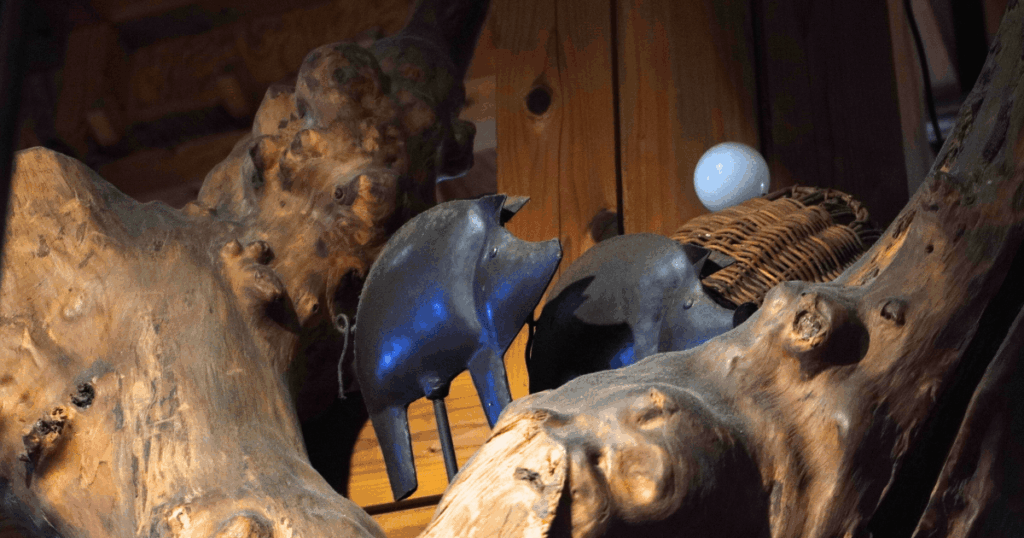
From the Digital to the Embodied: The Learning and Joy Tourism Can Offer
Mr. Manna’s concerns reach beyond tourism and food. He sees a vulnerability in modern society: the loss of embodied experience. He first questions how we learn today. From an early age, children are taught that success means winning the competition and getting a job at a major company. Does this process deepen our emotional distance from people whose lives are closely tied to nature—farmers who harvest the land’s gifts, or uminchu (fishers) who live by the sea?
Mr. Manna: “We’re quick to embrace terms like ‘SDGs’ and ‘CO₂ reduction,’ but sometimes it seems we’re just following a trend. A circular way of life and care for the environment were once ordinary parts of our everyday lives. Now they’ve been reduced to something we learn about in theory, and they’ve lost their connection to reality.”
One sign of this is the loss of our ability to “read nature.” In the past, people in Okinawa could sense signs of what was to come from the direction of the wind, the movement of clouds, and the tides. “Those clouds mean it’ll rain in two hours.” “You can tell which way to go by watching the birds.” They read these signs through direct experience and set out to sea.

The spread of infrastructure such as electricity and gas is, historically speaking, a very recent development. In exchange for convenience, we have forgotten how to light charcoal and tend a wood fire. Could this mean that we are losing the ability to survive when the need arises?
Mr. Manna: “In an emergency, there’s a difference in our ability to cope compared with people before the war. They knew how to survive on their own: extracting starch from potatoes, or slaughtering livestock to sustain themselves. But if a disaster struck today, we might find ourselves doing nothing but waiting for supplies to arrive.”
A visit to Manmi is more than a leisure activity centered on consumption. Through the fundamental act of eating, it awakens the instinctive, embodied side of ourselves that modern life has made us forget. What Mr. Manna is practicing is a quiet process of regeneration—transforming visitors from tourists who simply consume into travelers who reflect on their own lives.
A “Gradual Descent” Is a Landing on New Ground
At the end of the interview, Mr. Manna spoke about the YouTube channel he runs. He never promotes the restaurant there; instead, he shares everyday moments of life in Yanbaru, enjoying the local way of life and its food. It is his quiet but proud response to the outside perception that northern Okinawa is an economically poor region.
Mr. Manna: “We are by no means poor. Here, we have abundant nature, wisdom, and time around the table with friends—things that money alone cannot measure. In response to development that only drives consumption, we want to keep speaking out about what true wealth means.”
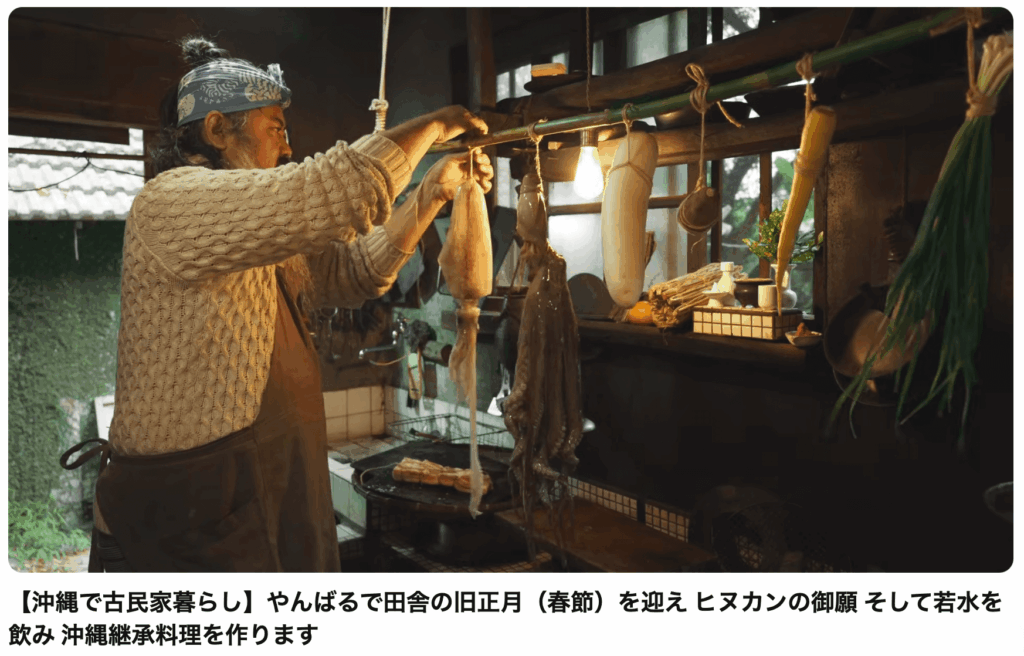
The “philosophy of a gradual descent” is not a retreat. It means stepping down from the mountain of endless growth and, with clear intention, landing on the ground where we are truly meant to live.
The tourism industry has reached a point where it must redefine its purpose. Should it continue chasing numbers detached from reality? Or should it bring its scale into balance and shift toward a cycle that protects and nurtures the local resources around it?
The way Shimabuta Shichirin-yaki Manmi does business offers a clear path forward for companies seeking to survive in a shrinking society.
Reference: Shimabuta Shichirin-yaki Manmi
Interview supported by: Okinawa Convention & Visitors Bureau (OCVB), Kinki Nippon Tourist Okinawa

