
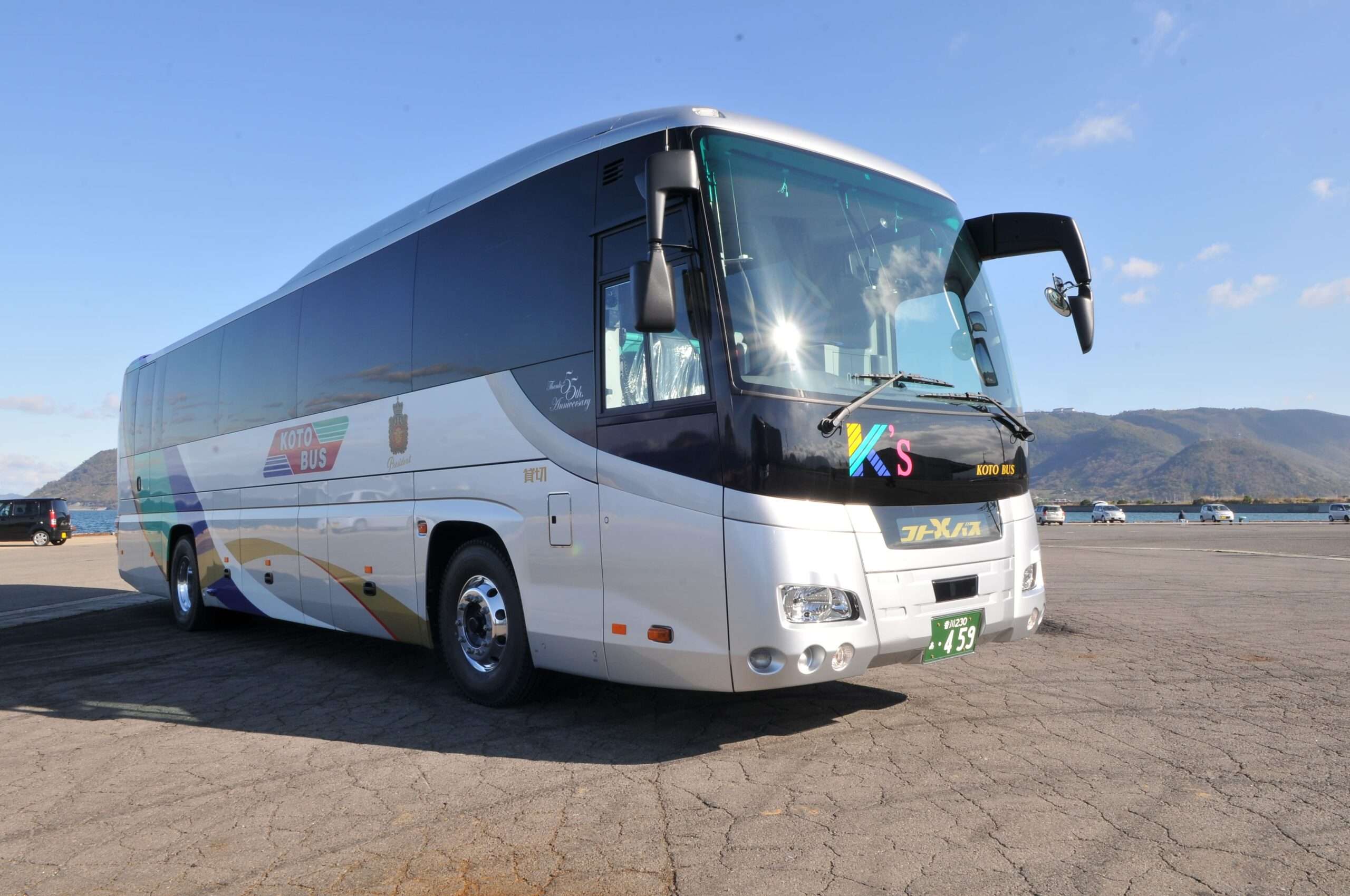

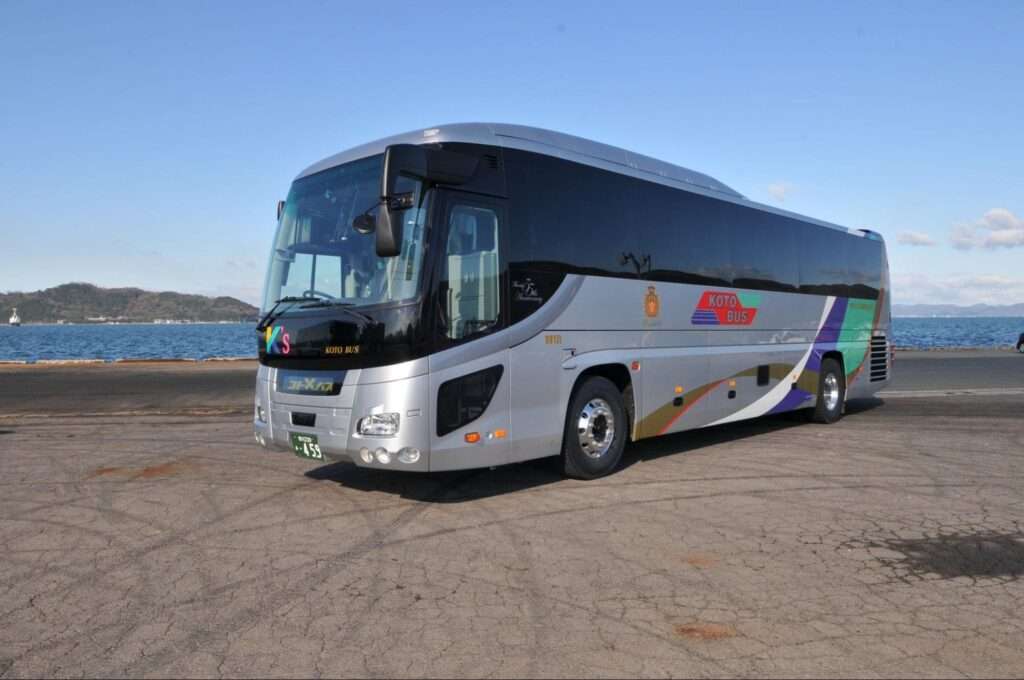
Kotohira Town, the town at the foot of “Konpira-san” in Kagawa Prefecture. In this town, which has welcomed many travelers since ancient times, a new form of tourism focused on the region’s future is now taking shape. At the center of this effort is “Kotohira Bus,” which will celebrate its 70th anniversary in 2026.
Going beyond the traditional role of a transportation provider—which is simply to “provide a means of transportation”—the company is continuously designing systems that create value for the local community, such as attracting digital nomads through its coworking space and hostel “Kotori” and implementing a unique points-based economy that exchanges contributions to the community for lodging.
The driving force behind this is a sense of the challenges facing tourism in Kotohira today, combined with the DNA of challenge—“continuing to respond to the demands of the times (Something New)”—passed down from my grandfather’s generation. It is also the mindset unique to Kotohira, a town teeming with centuries-old establishments, of “passing the baton of the town on to the next generation.”
We explore insights into regenerative tourism through the efforts of Kotohira Bus to transform Kotohira from a “once-in-a-lifetime tourist destination” into a “place you’ll want to visit again and again.”
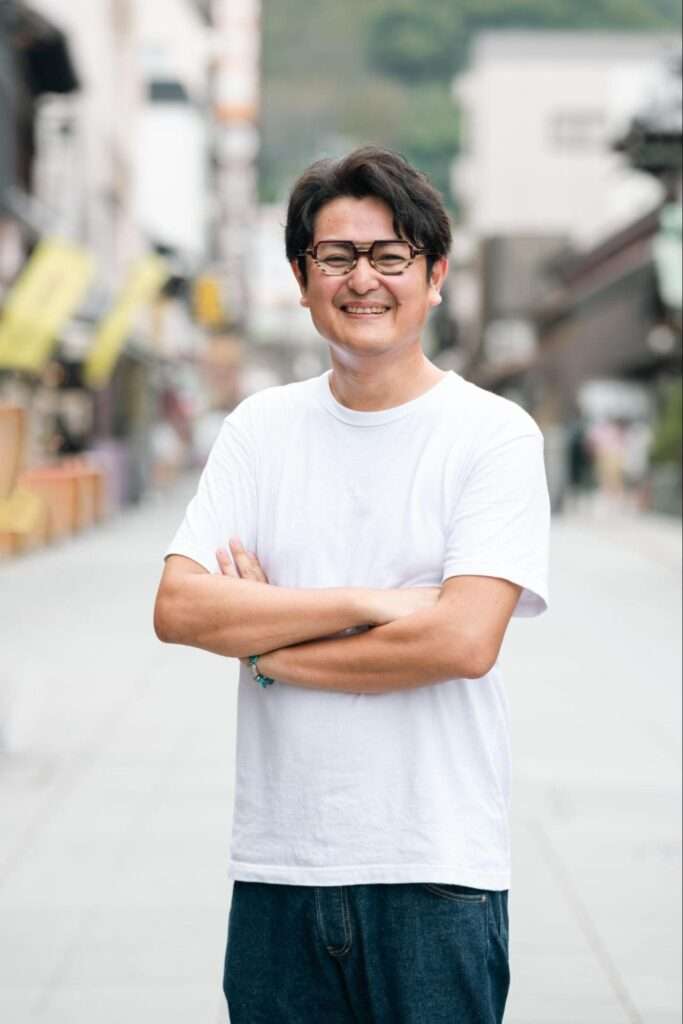
Taijiro Kusunoki
Born October 2, 1977
- Kotohira Bus Co., Ltd. Representative Director
- Representative Director, Kotobus Communications, Inc.
- Director, Kotobus MX Co., Ltd.
- Chairman, Japan Local Taxi Association
- Sharing Economy Association, Kagawa Regional Director
- Secretary, Japan Digital Nomad Association
With a focus on “transportation and tourism,” the organization tackles regional challenges through private-sector-led initiatives. Building on its express bus business, it has launched “Kotori Coworking & Hostel”—a stay hub for digital nomads—as well as “Kotohira mobi,” an AI-powered on-demand transportation service, and “Udon Taxi.” Aiming to transform the tourist destination of Kotohira Town from a “once-in-a-lifetime” destination into a “town you’ll want to visit again and again,” the company is promoting sustainable regional development through co-creation and the creation of a “related population.” Recipient of the Japan Service Grand Prix Minister of Regional Revitalization Award and the Kagawa 21st Century Grand Prize. Hobbies include visiting udon restaurants.
70 Years Since Its Founding: The “DNA of Challenge” Carried On by Kotohira Bus
─── First, could you tell us about Kotohira Bus’s business overview and its history?
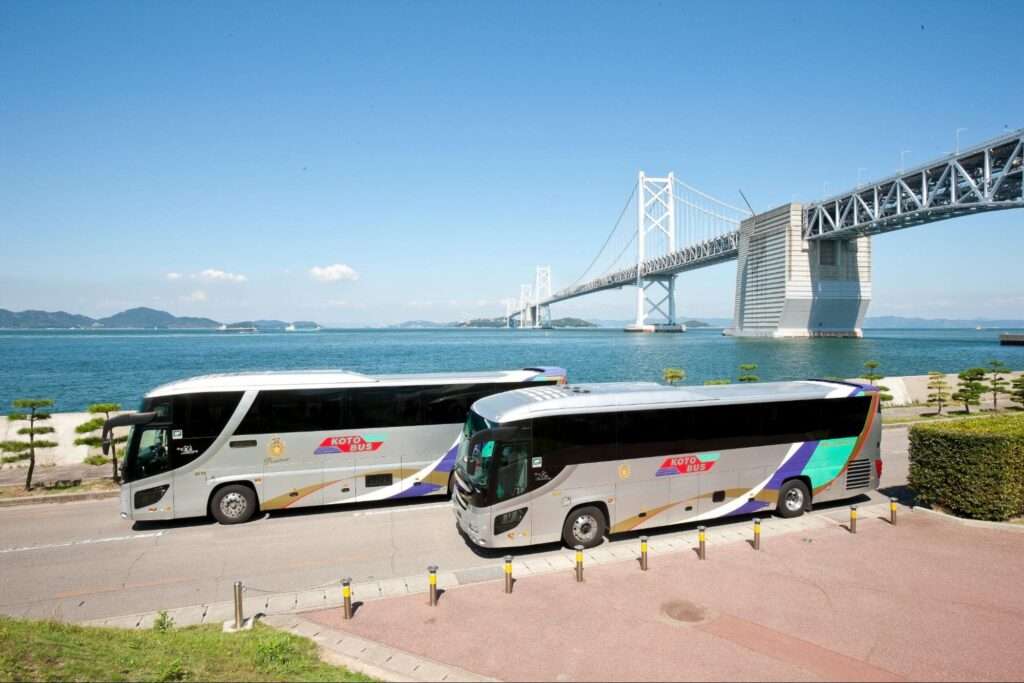
Mr. Kusunoki: Kotohira Bus will celebrate its 70th anniversary in 2026. The company was founded by my grandfather, and I am the third-generation president. As the name suggests, our main business is the bus industry, with express buses and tour buses serving as our two main pillars.
In addition, we operate a taxi service covering the Kotohira area and, as a local transportation initiative stemming from that, we provide an AI-powered on-demand transportation service called “Kotohira mobi.” These constitute our mobility business.
In addition, since the COVID-19 pandemic, we have launched a new lodging business called “Kotori Coworking & Hostel,” which we refer to as “coliving.”
In addition, we have launched other initiatives, such as online bus tours, “Udon Taxi”—a taxi service dedicated to touring udon restaurants—and, more recently, “KOTOHIRA TRAVEL,” a regional OTA (a region-specific online travel booking platform that allows users to book and pay for experiences, activities, and transportation[1]). With transportation and tourism as our core focus, we are broadly addressing regional challenges through our business operations.
─── Looking back at your past initiatives, I understand that around the 1980s, you operated chartered buses equipped with mahjong tables and buses with reception rooms.
Mr. Kusunoki: Yes, that was an initiative started by my grandfather’s generation. That spirit is still deeply rooted today, and a culture of “doing things a little differently,” “doing things that set us apart from others,” and “taking on new challenges” is alive and well throughout the entire company.
Why Do “Travel” Professionals Create “Stays”?
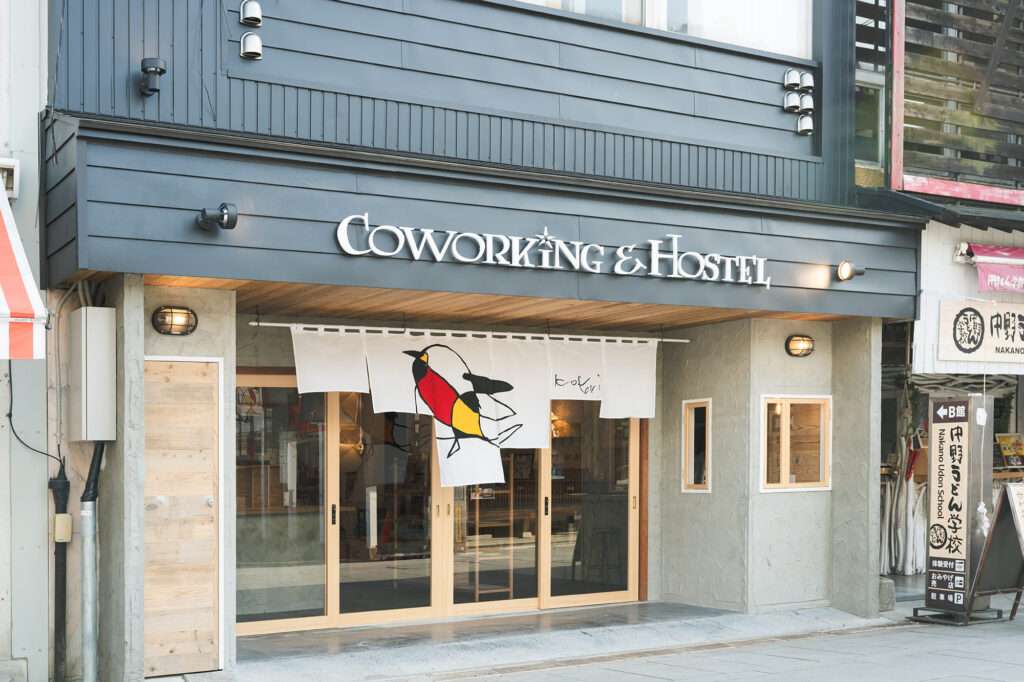
─── What prompted Kotohira Bus—which has long focused on the mobility business—to launch a co-living business?
Mr. Kusunoki: There are several reasons, but first and foremost, I wanted to address the local challenges facing Kotohira Town. I wanted to transform it from a place people say you should visit “once in a lifetime” into a town “you’ll want to visit again and again.”
In 2019, before the COVID-19 pandemic, approximately 2.6 million travelers visited Kotohira Town. However, about 80 percent of them were day-trippers or stopped by for only a few hours, and the proportion of travelers who stayed overnight is currently just under 20 percent of the total. [2] Many visitors simply climb the stairs, pay their respects, and leave; to put it bluntly, it’s even possible for their total spending to be zero.
It is generally said that there is a threefold difference in economic impact between day trips and overnight stays. Therefore, the reality is that no matter how many tourists visit, the local economy will not benefit sufficiently unless they stay overnight.
Furthermore, the average length of stay at that time was 1.13 nights (according to a visitor survey conducted in 2016 and the “Kotohira Town Basic Tourism Plan” [3]), meaning that most visitors stayed only one night. Therefore, as part of our regional planning efforts, local businesses came together to discuss a strategy for increasing the proportion of overnight stays and extending them from multiple nights to medium- to long-term stays.
Why We Chose to Target Digital Nomads
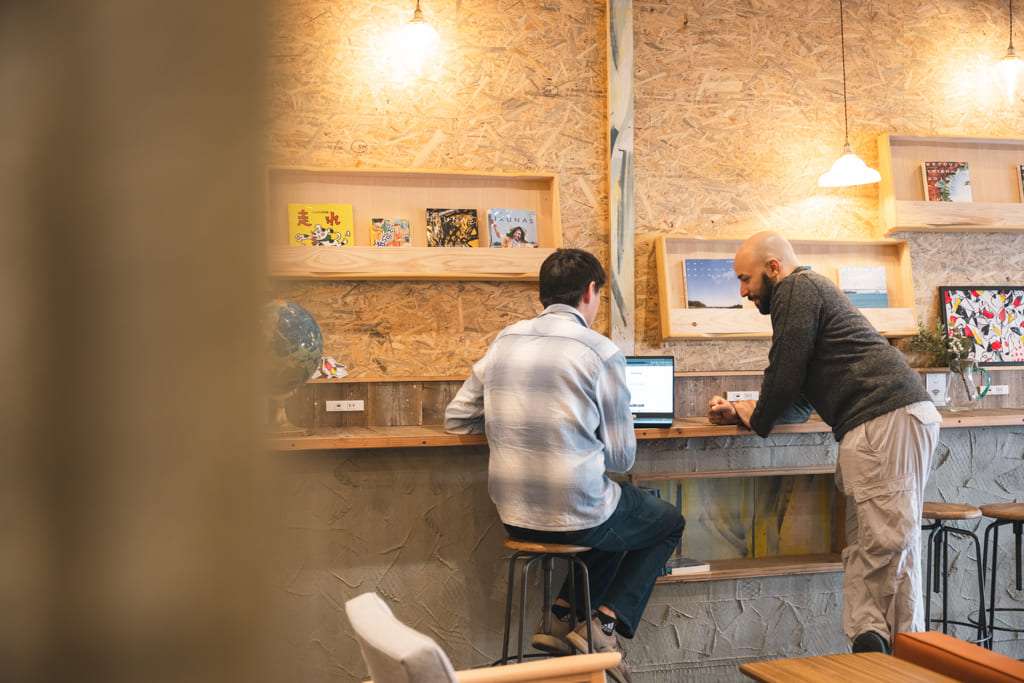
─── To encourage medium- to long-term stays, what kind of travelers did you target?
Mr. Kusunoki: As we considered what kind of people might stay here for the medium to long term, we focused on those known as “digital nomads.” We then set the goal of “making Kotohira a mecca for digital nomads.”
Digital nomads are people who use computers, smartphones, and other devices to work without being tied to a specific location. They are not merely tourists; because they stay in a region for a certain period of time, effectively “living” there, they are expected to generate economic benefits for the entire community—not just for lodging facilities, but also for restaurants, coworking spaces, and other local businesses.
Mr. Kusunoki: Personally, I also saw great potential in the lodging industry from a business perspective. The online bus tours I launched during the COVID-19 pandemic gained a lot of attention, and as I was invited to various regions, I met someone who was running a subscription service for lodging.
I found the concept so interesting that I signed up as a member myself and actually tried out the “nomad worker” lifestyle—working online while moving from one guesthouse to another in Kyushu.
─── Based on your own experience, what insights did you gain?
Mr. Kusunoki: It was really inspiring to be able to interact with everyone at the guesthouse—including the owner—regardless of age.
Unlike traditional inns or hotels, these types of accommodations allow you to forge deep connections with the local community through the owner. The appeal of this approach to hospitality was one of the reasons I wanted to get into the lodging business.
Planting flags while running. A commitment to being “faster than anyone else.”
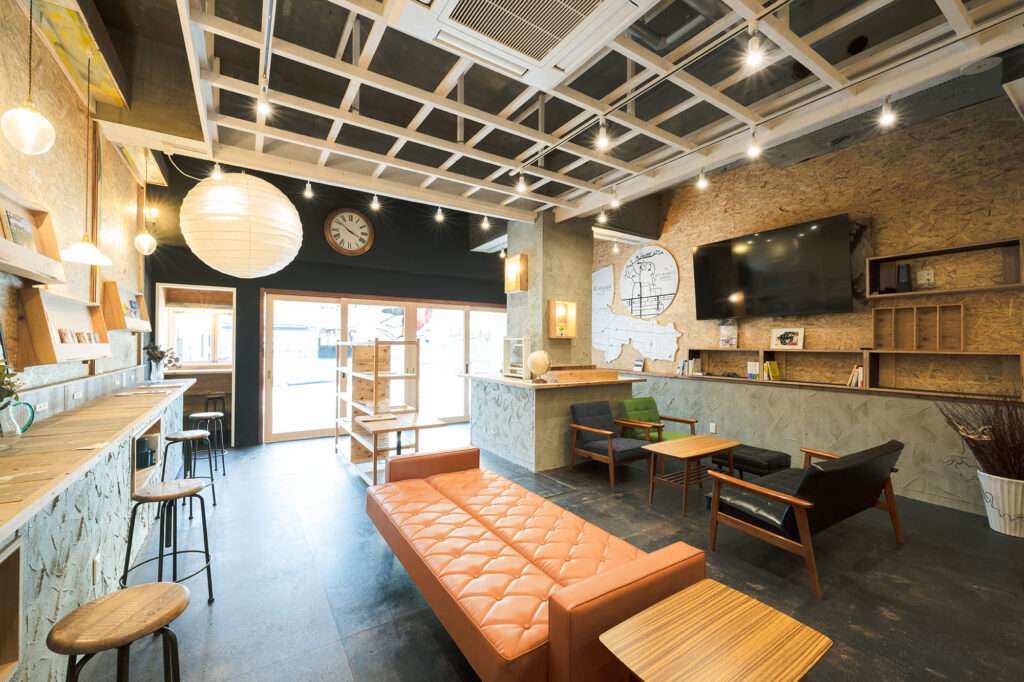
─── I understand you started in the hospitality industry with no prior experience. What were the biggest challenges you faced?
Mr. Kusunoki: Back then, there were so many things I didn’t understand, so everything was really tough. Looking back now, the term “digital nomad” wasn’t very well known at the time, so we were really just feeling our way forward.
However, a new trend was already taking shape, with Japan also planning to introduce a new digital nomad visa. At such an early stage—one might even call it the dawn of this movement—the only way for a small town like Kotohira to attract these digital nomads was to “be the first to plant its flag.”
As a rural bus company, we believe the main reason we gained attention for our online bus tours was that we “got started earlier than anyone else.” We’ve also approached our co-living business with the belief that being the first in the region to enter this market is of the utmost importance.
The Power of Community to Combat “Loneliness” | Turning Kotohira into a Mecca for Digital Nomads
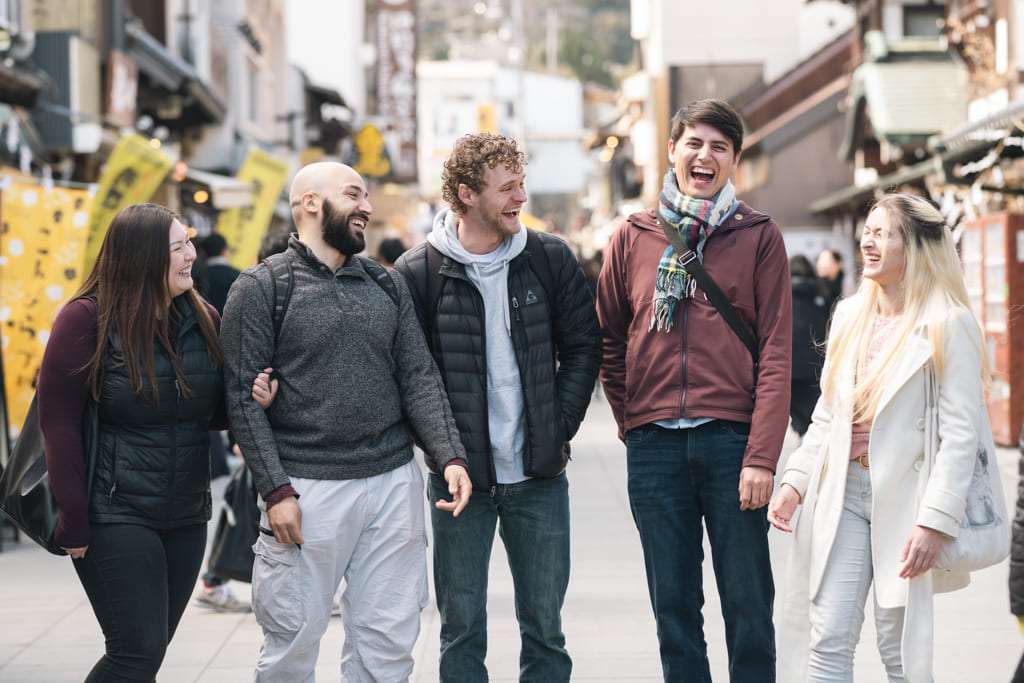
─── What do you think are the potential and appeal that could make Kotohira Town a mecca for digital nomads?
Mr. Kusunoki: I strongly feel that Kotohira is a town with tremendous potential as a destination. In particular, I believe that the fact that “within this small town, there is a close-knit community where everyone knows each other” is a unique strength—something that seems common but is actually quite rare.
I myself get together with my local friends—the people I work with—all the time, and the reasons for getting together are often quite trivial. The existence of this kind of everyday community is extremely effective in attracting digital nomads.
An 8-square-kilometer community where everyone knows each other
Digital nomads travel the world with ease, but behind their free-spirited lifestyle lies a pressing problem: “loneliness.” This is because a life spent moving from place to place without a permanent home can easily lead to a lack of social connections.
Mr. Kusunoki: A common theme that comes up in interviews with digital nomads is “loneliness.” Even after staying in a place for several months, they often fail to form connections with anyone, and they constantly worry about what they’ll do if they end up all alone.
To mitigate that risk, they choose co-living spaces with a sense of community. In the case of Kotohira, while there hasn’t yet been an explosive influx of digital nomads, the biggest advantage is that the existing local community serves as a welcoming environment for them.
─── So it’s not just the facility itself—the entire neighborhood functions as a community.
Mr. Kusunoki: We often hear from travelers who have actually stayed here say, “I never expected to be able to interact with so many local Japanese people and make friends.” Kotohira is a small town with an area of about 8 square kilometers, and you can get around the tourist area almost entirely on foot.
When I walk down the approach to the shrine, I run into nothing but friends and acquaintances—even when I haven’t planned to, I’m bound to bump into someone. I feel that this sense of closeness is a major draw for digital nomads.
Kotohira: Connecting with the World. Ripples Spreading from Chiang Mai
─── Have there been any positive changes resulting from the visitors blending into the local community?
Mr. Kusunoki: Yes, the digital nomads who have stayed here have really taken a liking to Kotohira, and this has created a trend where they’re sharing their experiences on their own initiative.
We’re currently partnering with “Alt_,” a co-living facility in Chiang Mai, Thailand, and travelers who’ve stayed with us have been telling everyone around them, “Kotohira was a wonderful place,” after returning to Chiang Mai.
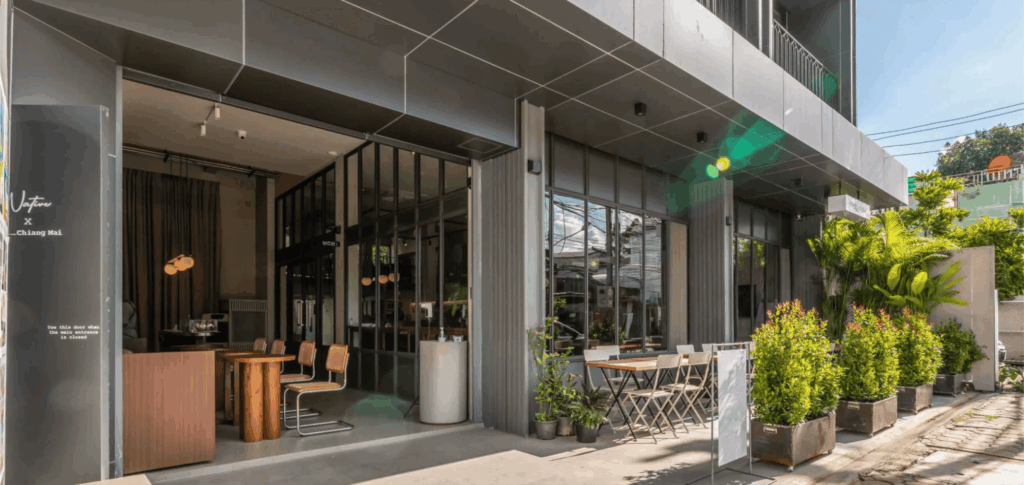
A Japanese visitor who came to Alt_ from another area reportedly mentioned to the local community that he was “from Japan,” only to be asked, “So, do you know Kotohira?” I was surprised to hear this story, which shows just how well-known Kotohira is within such communities, even among the many regions of Japan.
We are truly grateful that people who have actually stayed here are helping to spread the word about the area’s charm.
The Challenge of “Regenerative Development” with an Eye Toward the Next 100 Years
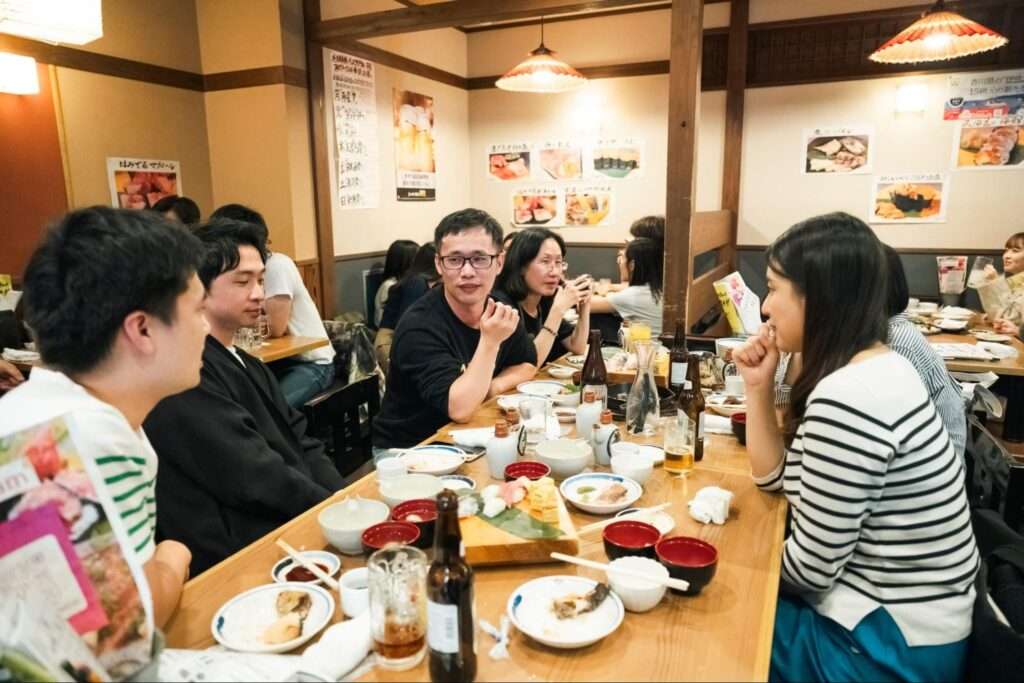
─── When taking on new initiatives, such as attracting digital nomads, what steps do you take to involve local businesses and residents?
Mr. Kusunoki: First of all, I feel that the people of Kotohira have a temperament that makes them very “open to new things.”
Above all, the most important factor is that the region shares a common goal: to become “a town people want to visit not just once, but many times” and to “transition from a tourist destination to a place where people want to stay.”
It is precisely because we share a common goal that a collaborative relationship—where people say, “If this were my business, I could help out in this area”—naturally develops. So, I don’t feel like I’m doing anything particularly special.
─── I heard from Ryutaro Ike of “Gonin Hyakusho Ike Shoten”—whom I interviewed previously during the Regene Trip—that Mr. Kusunoki has been hosting social gatherings for young local entrepreneurs. What prompted him to start these gatherings?
Mr. Kusunoki: It all started in February 2021, when I invited a friend who was traveling all over the country to host a study session. Since I had some free time back then due to the COVID-19 pandemic, it was more of a casual, “Come over and chat a bit” kind of thing.
As we held these meetings several times, we began to understand what each of us wanted to do. Whenever someone wanted to start a new project, a natural collaboration would emerge—with people saying, “I can help with this part”—and together we started planning exciting new ventures.
The Mindset of “Passing the Baton,” Learned from a Long-Established Business with a History Spanning Several Centuries
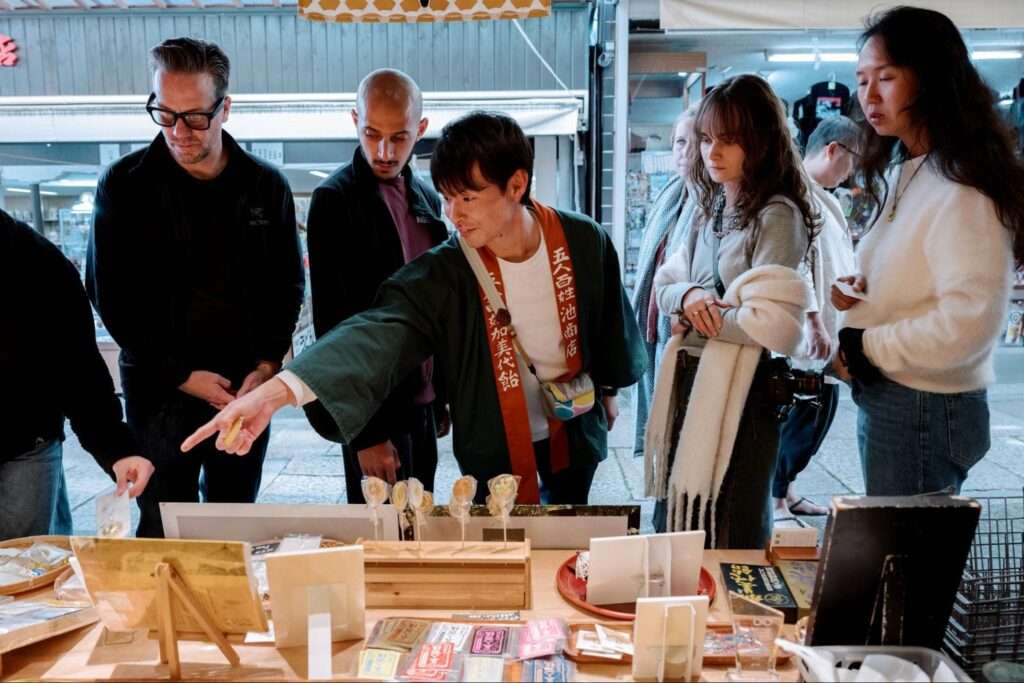
─── It seems that business owners in Kotohira are very committed to improving the town as a whole. What do you think is the reason for that?
Mr. Kusunoki: Since everyone here is a businessperson and a business owner, their own businesses are, of course, important. However, I think there’s a strong sense throughout the town that sustainable growth and passing the baton to future generations are more important than short-term profits.
In Kotohira, there are numerous companies and shops that have been in business for generations, such as the “Yachiyo” inn, which has a history of over 300 years, and “Ike Shoten,” which has been in operation for over 780 years. While our company will celebrate its 70th anniversary in 2026, in Kotohira—where it’s common for businesses to operate for over 100 years—we’re still considered a “newcomer.”
It is precisely in a town like this that a sense of being a part of its long history naturally begins to take root.
For my business to thrive in the long run, the town itself must thrive. That’s why I believe our commitment to the town runs deeper than in other regions—we don’t just pursue immediate profits.
I, too, have been inspired by those senior colleagues, and they constantly remind me that “I shouldn’t just think about my own generation—I need to take a longer-term perspective.”
Long before the term “sustainability” came into widespread use, the philosophy of “passing on to the next generation” was already deeply rooted in Japan’s long-established companies. It is this commitment—not merely to pursuing the company’s own profits, but to protecting and nurturing the ecosystem of the entire region—that can be said to be the very foundation of true regenerative development.
Redefining the Norms of Transportation and Building a Unique Economic Ecosystem | Kotohira Bus’s “Next Challenge”
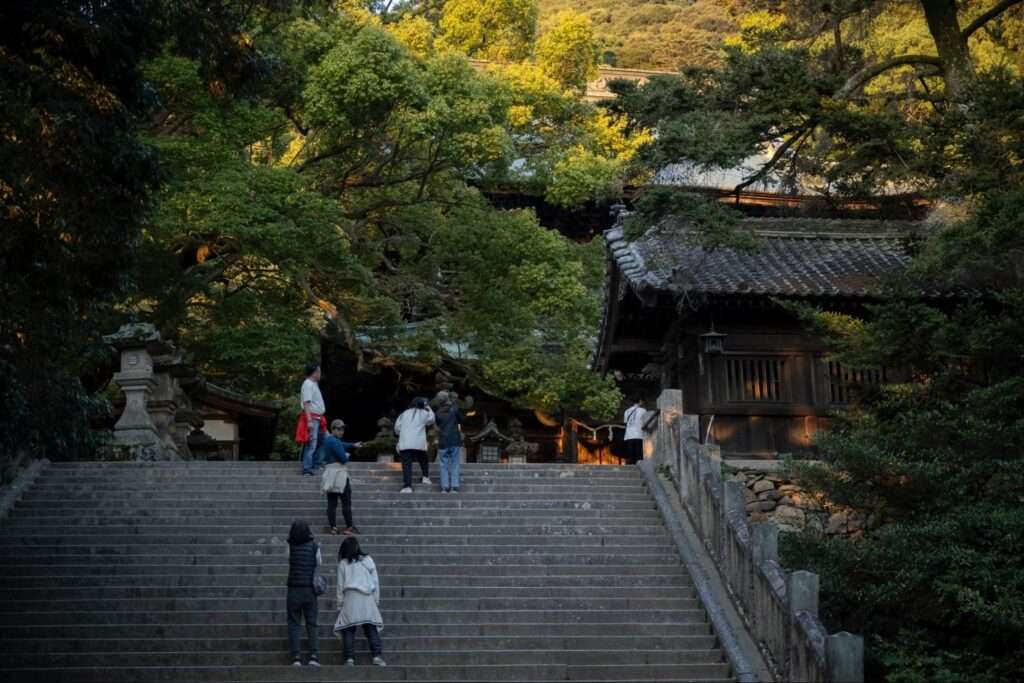
─── Do you have any new ideas you’d like to pursue in the future to increase the number of medium- to long-term visitors to Kotohira?
Mr. Kusunoki: We are currently working to promote “living in two regions.” Our goal is to increase the number of medium- to long-term visitors who choose Kotohira as their second home. In connection with this, we have launched a pilot program called “Kotohira Digital Residents,” which is a token economy system.
For example, when trying to attract young entrepreneurs or artists to a region, travel and accommodation costs can be a major obstacle.
The Kotohira Digital Townspeople program is a system designed to solve the problem of people wanting to visit Kotohira but being unable to do so due to lack of funds. By earning “Thanks Points” through community service activities in Kotohira and using those points to book vacant hotel rooms or bus seats, the program aims to facilitate an exchange of value that does not involve money.
“Surplus resources”—such as vacant rooms and empty seats during the off-season—are utilized as ‘rewards’ for people who help solve local issues. By creating a unique economic ecosystem that does not rely on fiat currency, a new relationship of “mutual support” is established between travelers and the local community.
─── What specific types of “community service activities” are carried out in Kotohira?
Mr. Kusunoki: To give a simple example, there’s an event where “bamboo lanterns” are lined up along the approach to the shrine.
Since many hot spring inns in Kotohira offer packages that include one night’s lodging and two meals, there tend to be fewer people out and about in town at night. So, we organized this event to give people a reason to come out onto the approach to the shrine at night and encourage them to spend money at izakayas and bars.
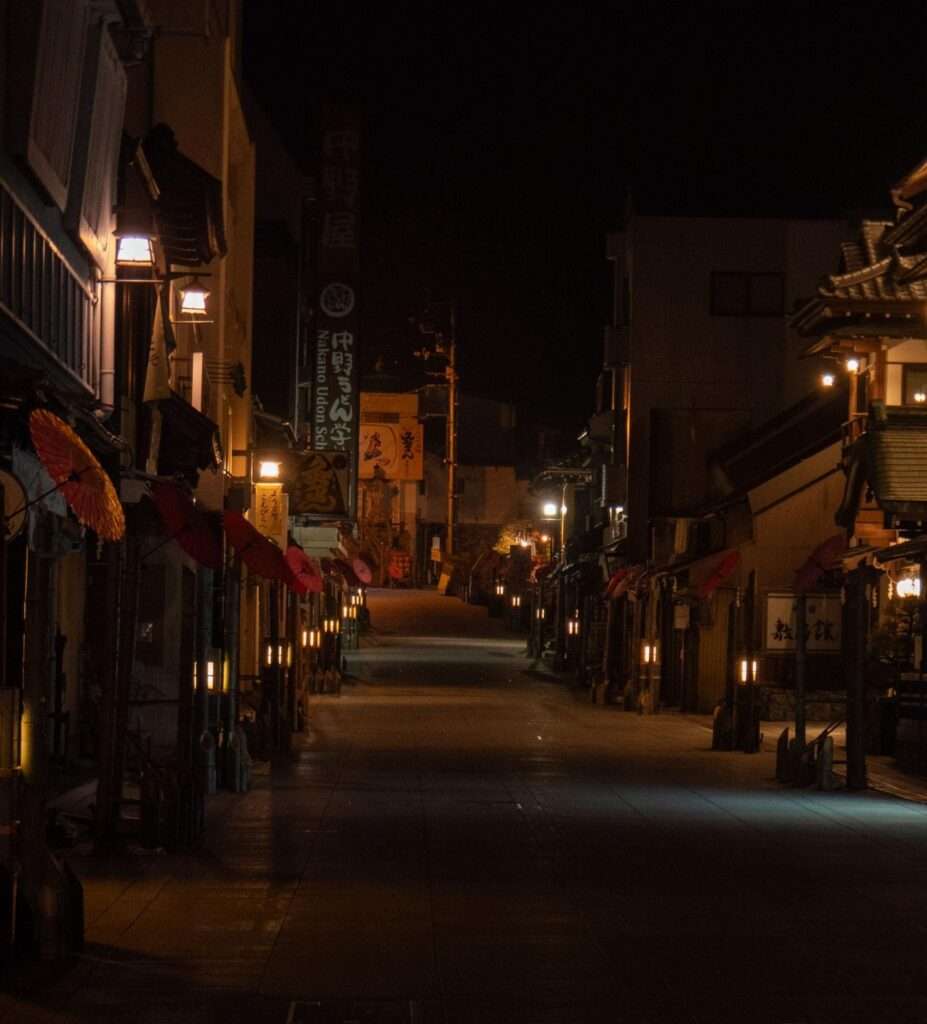
Mr. Kusunoki: However, making and arranging the bamboo lanterns requires manpower. So, we award points to people who help with these tasks, which they can then use to cover their lodging expenses.
─── It seems like digital nomads could make good use of this system, too.
Mr. Kusunoki: Yes. We’re starting out by targeting Japanese users, but eventually we’d like to make use of this points system for digital nomads staying here as well.
Under Japan’s current system, there are cases where it’s difficult to pay people directly for their activities. However, when they hold workshops or similar events, it is possible to express our gratitude in the form of points. We hope to make this a reality in the near future.
The Goal Behind the “Shikoku × Hokuriku” Overnight Bus Route That Defies Conventional Wisdom
─── I heard that you recently started operating bus routes to the Hokuriku region. Why did you choose to operate routes connecting regional cities rather than major cities?
Mr. Kusunoki: Since we specialize in medium- to long-distance overnight bus service, we leveraged that expertise to launch service to the Hokuriku region.
Currently, transportation options connecting Shikoku and Hokuriku are very limited. We believe that developing a transportation network that directly connects the two regions would significantly improve convenience for both areas.
However, if we base our assessment solely on current “transportation needs,” the reality is that it is difficult to make routes connecting regional cities viable as a business.
That is precisely why, as we launch this route, we need to generate “new demand for travel” that will encourage people from both areas to visit each other. To that end, we are implementing initiatives to connect the two regions in conjunction with our bus service.
It is difficult to gauge the potential demand for interregional travel, so the development of transportation infrastructure in these areas is often put on the back burner for financial reasons. However, the creation of direct routes holds the potential to foster tourism and business exchanges that did not previously exist. This represents a shift in thinking—from “providing transportation where there is demand” to “creating demand by providing transportation.”
─── From a financial standpoint, this is a major challenge—one that not everyone can easily take on.
Mr. Kusunoki: When our service was featured in a newspaper, someone from another bus company commented, “I don’t think there’s any demand for this.” If you think about it logically, that’s probably what most people would think.
However, since “Something New”—taking on challenges that no one else has attempted—is one of our company’s core values, I believe that deliberately taking on such challenges is what makes Kotohira Bus unique. We are committed to this because we believe it represents the value that society expects from us.
[Conclusion] A Future for Our Community in Which We Embrace “People of the Wind” and Walk Together
─── What do you think is essential for tourism to revitalize the Kotohira region moving forward?
Mr. Kusunoki: Before the COVID-19 pandemic, Kotohira welcomed tourists, but at the same time, there was a somewhat exclusive atmosphere toward people trying to launch new businesses or projects there. This may be a common challenge faced by historic tourist destinations across the country.
However, I believe that rejecting new ideas can cause a community to fall behind the times. That is precisely why it is so important to have mechanisms in place to involve outsiders in the community.
In community development, the terms “people of the wind” and “people of the earth” are often used. We actively welcome the “people of the wind” (outsiders) and invite them to join us by saying, “Let’s do this together.” I believe this is the most significant change that has taken place in Kotohira recently, and it will continue to be an important aspect moving forward.
─── Finally, please share a message for tourism and transportation operators, local governments, and others across the country who are working to promote sustainable tourism.
Mr. Kusunoki: We’re still in the process of tackling various challenges, and we’re gaining many insights through interactions and dialogue with people from other regions. I’d really like to invite business owners across the country who have read this article to come visit Kotohira at least once.
In that case, we hope for a trip that goes beyond mere sightseeing—one in which travelers truly engage with the community and can play a role within it.
References
[1] Japan Tourism Agency “Tourism DX” NEXT TOURISM SEMINAR “Utilizing OTA and Other Services”

