

“Shiretoko,” a World Natural Heritage site located in eastern Hokkaido. Drifting ice carries nutrients to the sea, salmon swim upstream, and these bounties sustain the forest’s wildlife. In this area, designated as a World Natural Heritage site, the sea and land are interconnected within a single, vast cycle.
The brown bear is a symbol of that rich natural environment. While tourists may view it as a “wild animal they’d like to see at least once,” for local residents, it is a familiar presence that is inextricably linked to their daily safety and the nature of tourism in the region.
To ensure that brown bears and humans can coexist safely, an event called “Kuma-katsu” is held every year from May through June in Utoro, Shiretoko, Hokkaido. This initiative—centered on grass cutting to reduce conflicts between humans and brown bears—is organized by “Kita Kobushi Resort,” which operates a hotel in Utoro.
Why has an initiative launched by a single lodging facility managed to engage businesses, students, and travelers alike, and continue with such vigor for seven years? Through an event held on June 6, 2026, and an interview with Haruka Murakami, who leads the “Kuma-katsu” initiative, we explore the future of tourism in Shiretoko—a future where “the more people visit, the better the region becomes.”

Haruka Murakami
Kita-Kobushi Resort, Management Strategy Office
Born in Osaka Prefecture in 1995. After graduating from high school, she attended Rakuno Gakuen University in Hokkaido. In the Department of Environmental Symbiosis, she studied wildlife, focusing primarily on the ecology of brown bears. She fell in love at first sight with Shiretoko during a visit as a senior in college, and in 2017, she joined Kitakobushi Resort and moved to Shiretoko. After gaining experience in hotel guest services, she has been in her current position since 2020, overseeing public relations and new graduate recruitment in the Management Strategy Office. She has also been involved with “Kuma-katsu” since its inception. Her hobbies include outdoor activities such as hiking and sea kayaking. She also serves as co-representative of the Shiretoko Trash Pickup Project.
The Goals of “Bear Activities” at Kita-Kobushi Resort
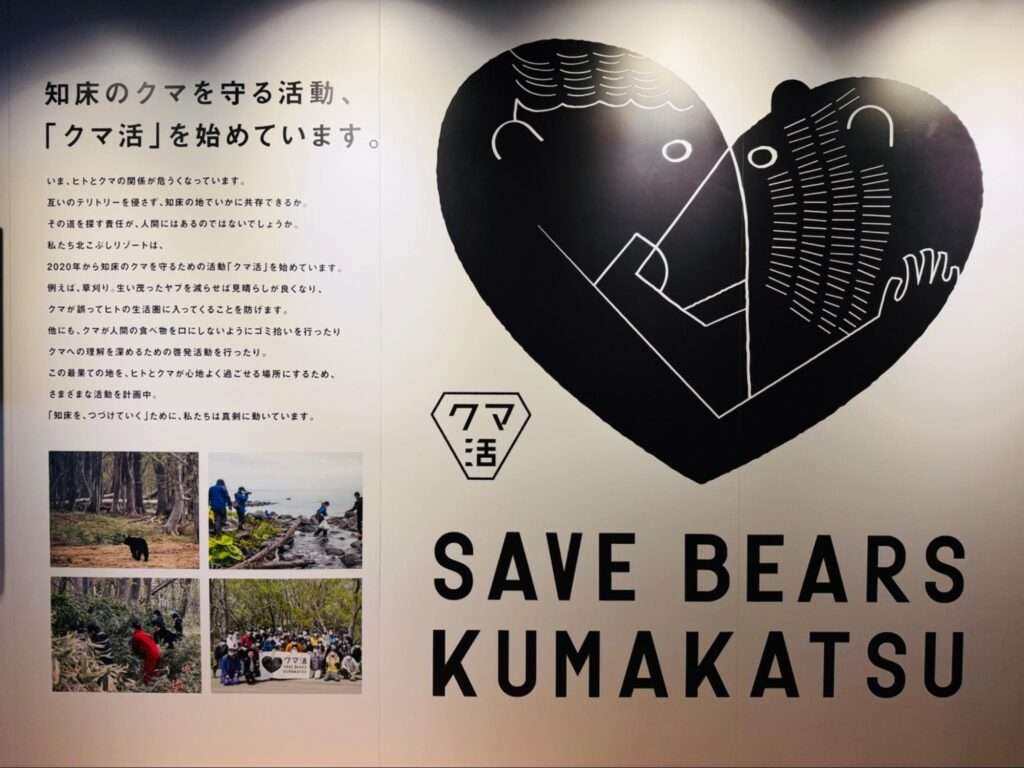
“Kuma-katsu” is an initiative that Kita-Kobushi Resort has been carrying out since 2020 to promote coexistence between people and brown bears while maintaining an appropriate distance. While the main activity is mowing grass, the resort also organizes trash pickup events called “Kuma-katsu Walks,” conducts public awareness campaigns about bears, and accepts donations.
Kita-Kobushi Resort describes its “bear-friendly activities” with the phrase, “A place where people and bears can live comfortably together.” [1] Rather than driving brown bears away, the resort aims to create a situation where brown bears can continue to live in Shiretoko’s natural environment while people can also live safely.
Our Grass-Cutting Initiative Marks Its 7th Year
Now in its seventh year in 2026, the grass-cutting initiative brings together a diverse group of participants, including travel agencies, financial institutions, sports teams, students, and local residents.

Ms. Murakami: Some participants invite others to join, while others take part as part of sightseeing or their company’s CSR activities.
Some companies participate in the “bear-watching” activities almost every year. In some cases, new employees join each year, making this a valuable opportunity to foster an ongoing relationship between the companies and Shiretoko.
Furthermore, within Kita-Kobushi Resort itself, “Kuma-katsu” has become an important learning opportunity. New graduates who join the company every April participate in “Kuma-katsu” grass-cutting as part of their employee training in May and June.
Ms. Murakami: It seems there’s an unwritten rule around here that all new employees are required to mow the lawn.
Ms. Murakami laughs as he says this. It’s probably also a time for them to learn about the region’s challenges and reflect on how their work at the lodging facility relates to Shiretoko’s natural environment.
The circle of participants is growing. We’re just one step away from reaching a total of 1,000 participants.
The grass-cutting activities, which are part of the “Bear Conservation Initiative,” have now been held a total of 28 times, including the recent events on June 6 and 7, with a cumulative total of 992 people participating so far.
However, it began as a small-scale initiative involving only employees of Kitakobushi Resort. The fact that they couldn’t invite outsiders due to the COVID-19 pandemic actually served as an opportunity to deepen understanding within the company.
Ms. Murakami: We started out with just the employees of Kitakobushi Resort. Since it was during the COVID-19 pandemic at the time, we had no other choice, but in the end, it helped foster a better understanding within the company, so I’m glad we did it.
The “Dilemma of Coexistence” Where Tourism and Brown Bear Lives Collide
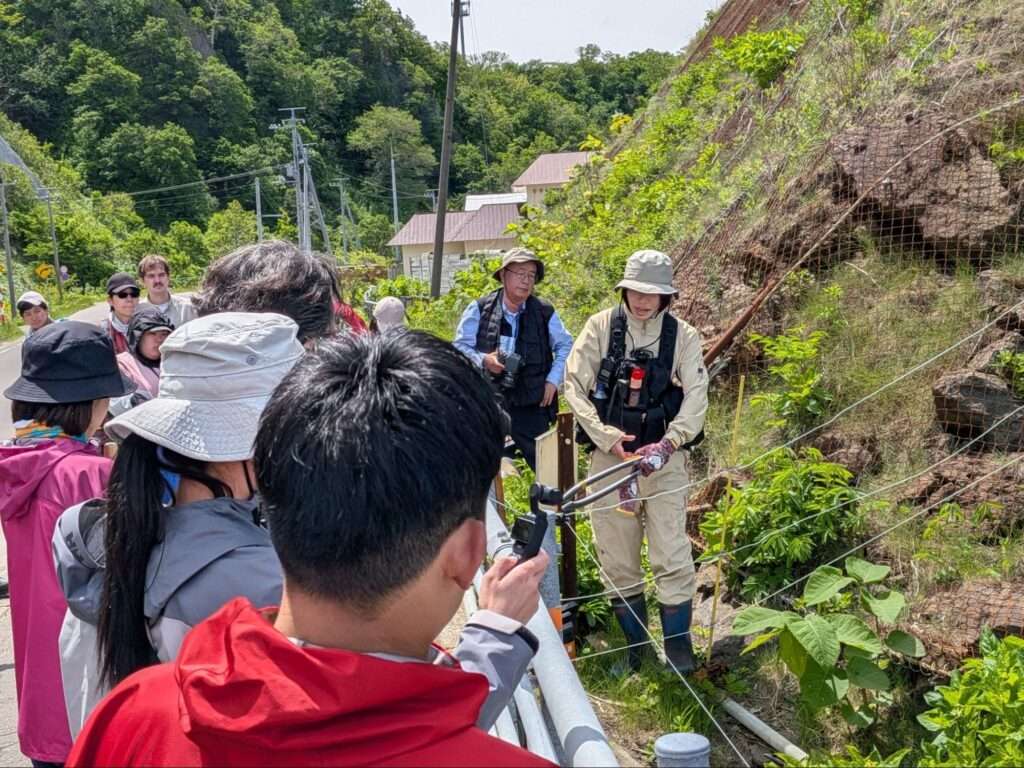
In Shiretoko, people and brown bears live in close proximity. Behind the region’s rich natural beauty, various problems have arisen due to tourists getting too close to the bears and leaving trash behind.
During the previous day’s lecture, Tomoyo Hozumi of the Shiretoko Foundation, a public interest incorporated foundation, briefed participants on the current status of brown bears in Shiretoko. Ms. Hozumi is currently involved with the Shiretoko Foundation in collecting brown bear DNA, identifying individual bears, guiding visitors at the Shiretoko Nature Center, and implementing brown bear management measures.
At the beginning of the lecture, the reasons why Shiretoko was designated as a World Natural Heritage Site were presented.
The value of Shiretoko lies not merely in the preservation of its pristine nature. It is also recognized for the “connection between land and sea”—a cycle that begins with the nutrients carried by drift ice and extends to the ocean, rivers, forests, and wildlife.
It is precisely this preservation of the connection between land and sea that defines Shiretoko’s value, and the presence of brown bears there is entirely natural. After all, brown bears are the “indigenous inhabitants” of this land, having lived here long before humans arrived, and the landscape in which they exist is the true essence of Shiretoko.
The Problem of “Human-Habituated” Brown Bears in Shiretoko
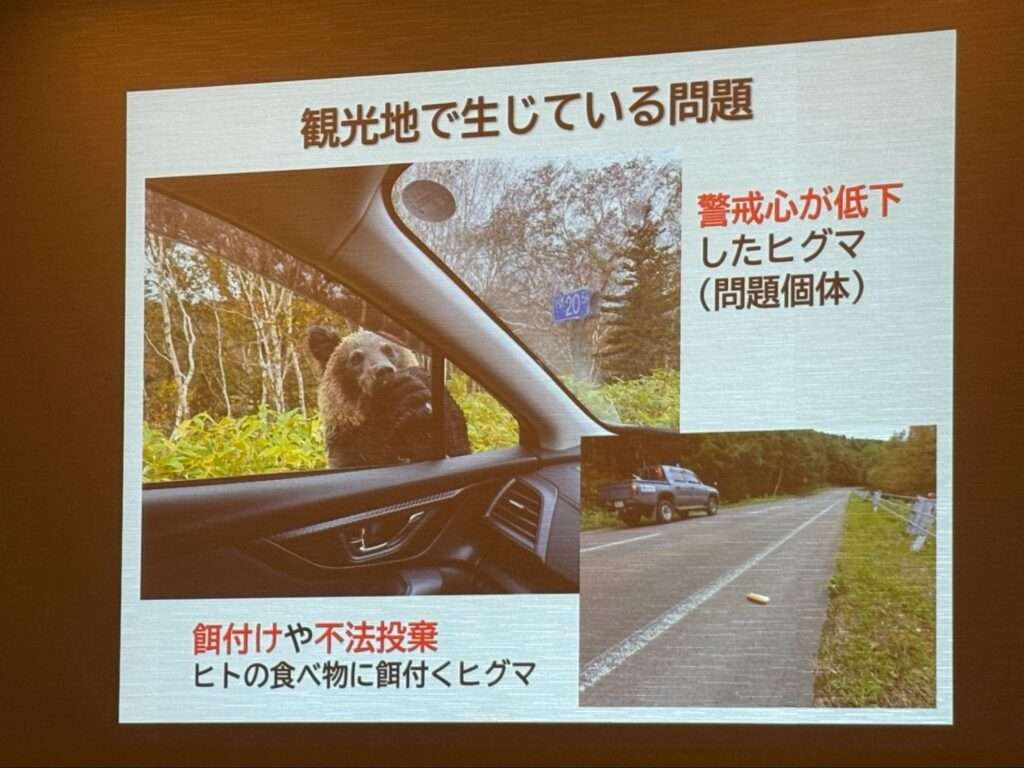
When the lecture began, Ms. Hozumi showed the participants two videos. One was of a brown bear walking through the forest. The other was of a brown bear walking along a road, completely oblivious to the cars.
Most people probably imagine a brown bear “in its natural state” as one walking through the forest. However, in Shiretoko, there are many brown bears that move about near roads and urban areas without fear of humans. Ms. Hozumi explains this as “habituation to humans.”
Tourists stop their cars to look at brown bears. They approach the bears to take pictures. If this behavior continues, the bears will stop being wary of humans. Furthermore, if the bears become accustomed to the taste of human food or trash, the situation will become even more serious.
The problem with brown bears in Shiretoko is not simply a matter of “bears being dangerous.” The fact that human behavior is what turns brown bears into a danger is the most serious issue of all.
Bear-Related Traffic Jams and the Paradox of Tourism
In Shiretoko, there are about 1,000 sightings of brown bears each year, and last year the number exceeded 2,000.
A serious problem arising from this situation is “bear traffic jams.” Tourists hoping to see brown bears stop their cars, creating lines of vehicles along the road, which in turn increases the risk of bears becoming accustomed to humans, as well as traffic accidents and injuries to people.
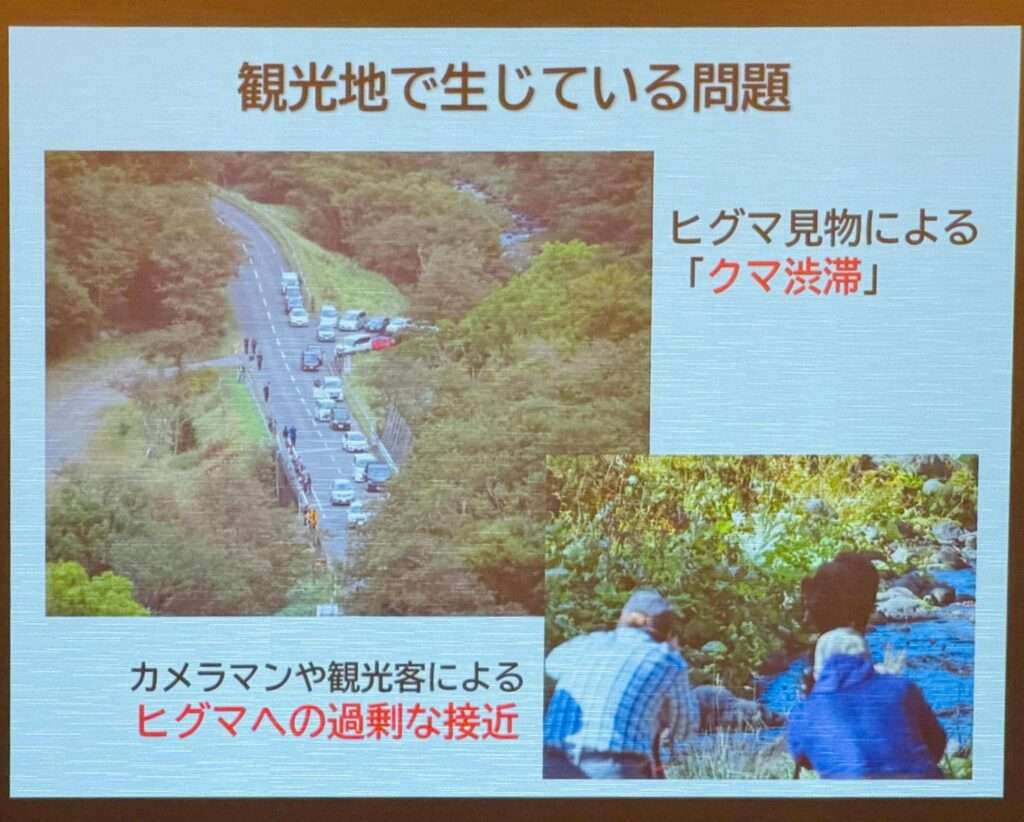
While tourism has the power to showcase a region’s charm, it can also place a strain on the region’s natural environment and way of life. Tourism in Shiretoko is currently grappling with this contradiction.
It’s not just a chore. Mowing serves as a “boundary” that protects both brown bears and human lives.
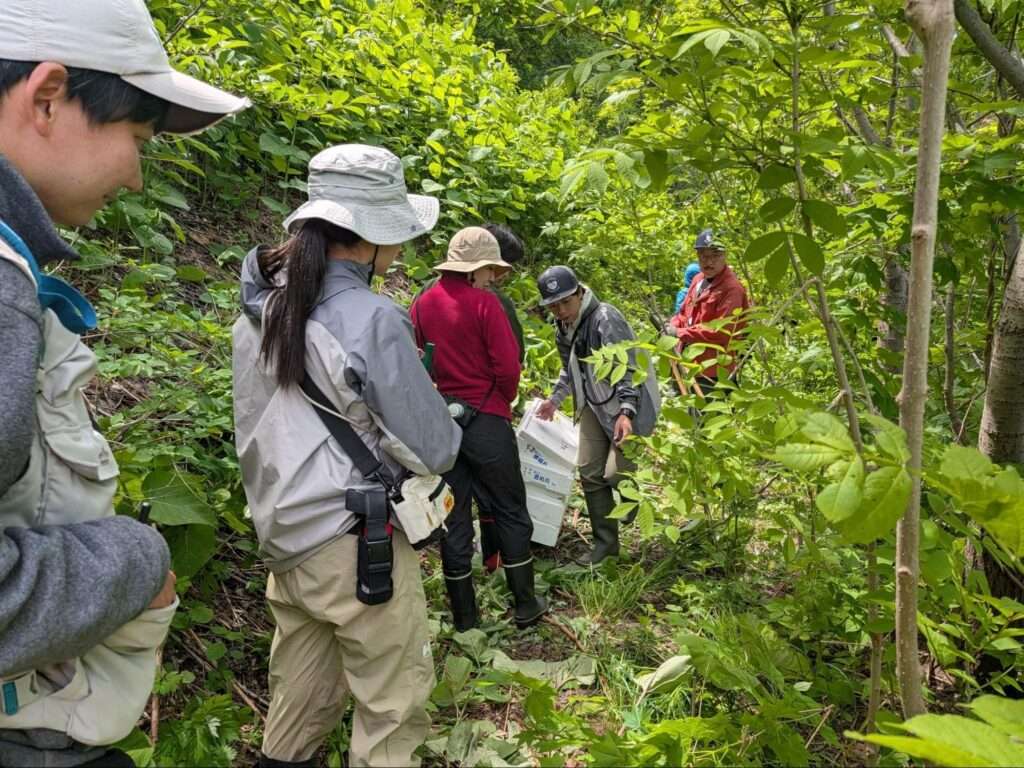
One of the core activities of the “Bear Awareness Campaign” is mowing the grass around the Utoro town center. Mowing the grass is a preventive measure designed to avoid accidental encounters between brown bears and people.
By cutting down tall plants such as giant knotweed and butterbur—which brown bears like to eat—and improving visibility, we make brown bears wary, as they perceive that “there are no places to hide, making it difficult to approach.” At the same time, this also makes it easier for people to spot brown bears early on.
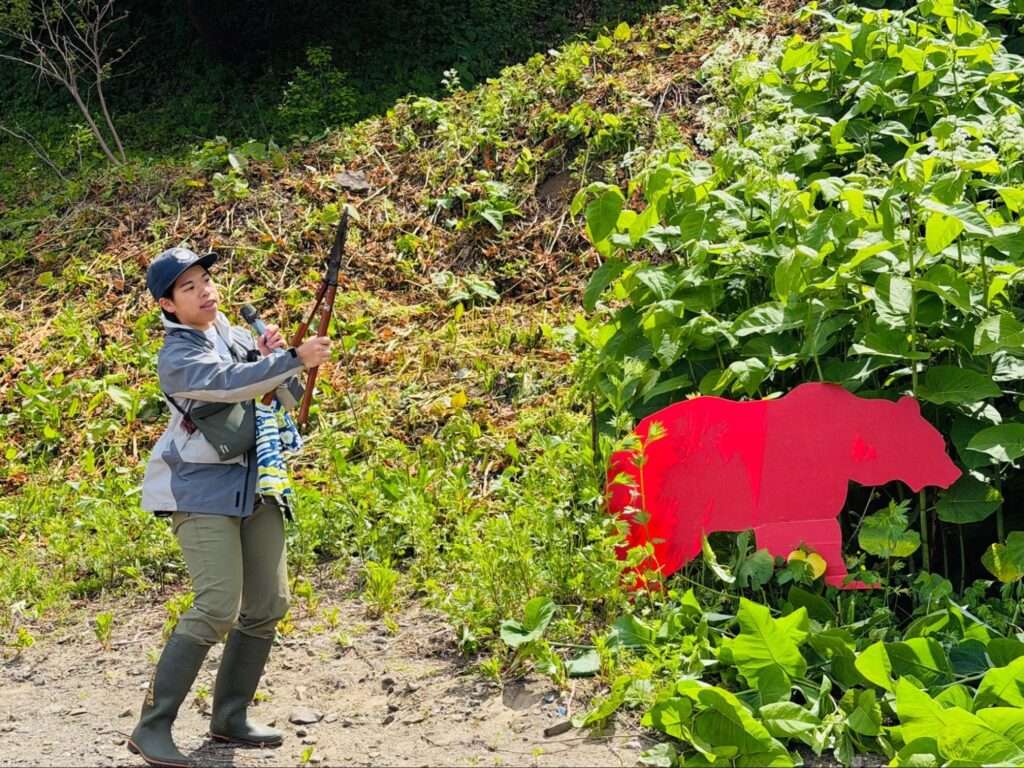
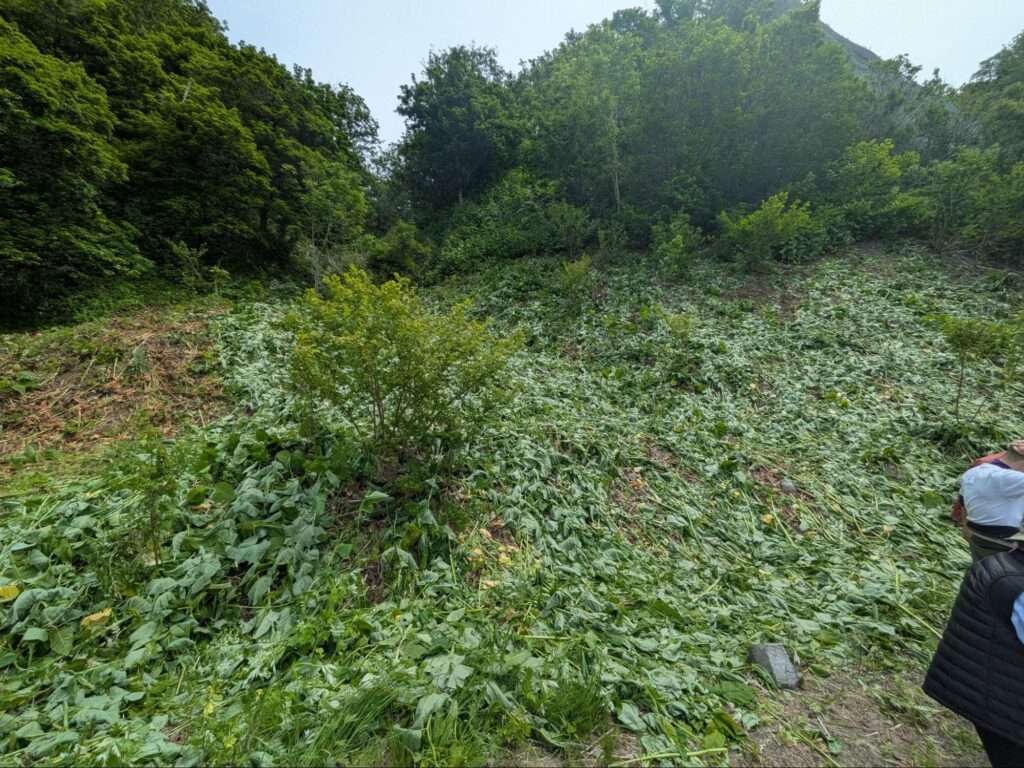
In other words, mowing is not done to drive away brown bears, but rather to maintain the environment in order to establish a safe “boundary” between humans and brown bears.
The regret of thinking, “If only I had mowed it a little sooner…”

Ms. Murakami says there is one incident he will never forget. A few years ago, at a site where he had been mowing grass as part of a bear-control effort, a brown bear was culled the very next day.
Ms. Murakami: If we had mowed a little sooner, this bear might not have had to be culled.
Each step taken during what may seem like a mundane task of mowing the grass directly contributes not only to human safety but also to protecting the lives of brown bears. That deep sense of urgency is what drives our efforts.
“Even though it’s a World Heritage Site hotel…” Ms. Murakami’s feelings, which overlapped with his desire to give back to Shiretoko
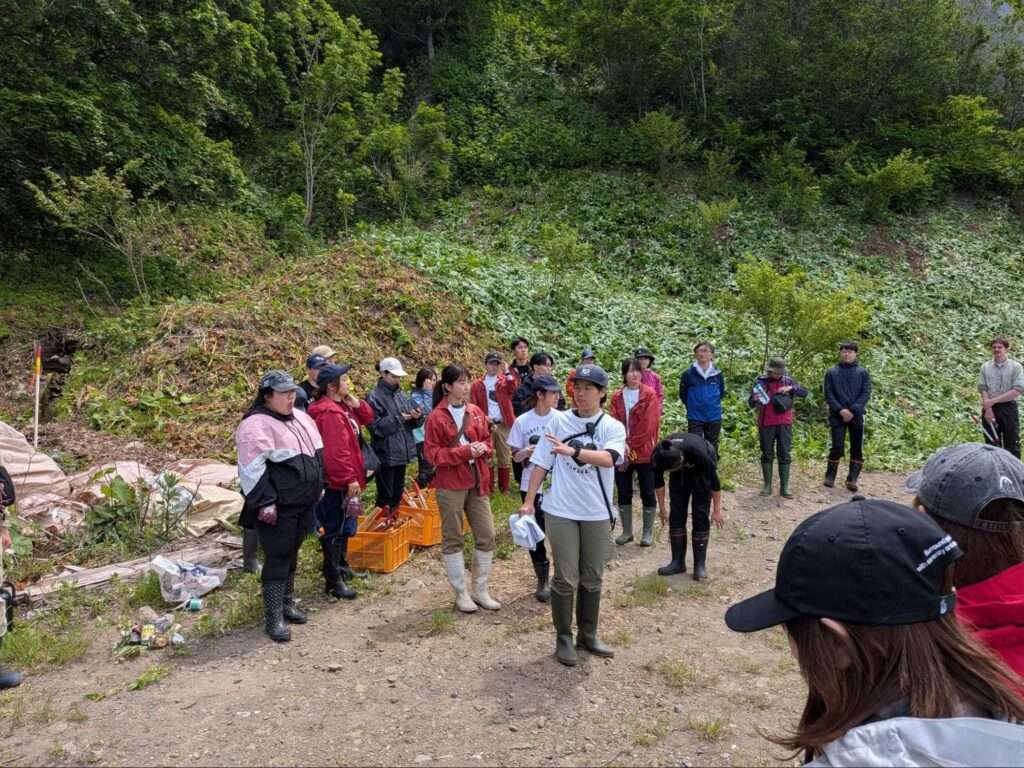
Ms. Murakami, the head of the “Bear Activity” initiative, is originally from Osaka Prefecture. While attending Rakuno Gakuen University, he became involved in research on brown bears, which led him to fall in love with the majestic natural beauty of Shiretoko; he subsequently joined the Kitakobushi Resort. However, he says that while working as a restaurant staff member in the early days, he felt a certain sense of unease.
Ms. Murakami: Even though they claim it’s a World Heritage Site, there were uneaten meals left behind, and the amenities were available for unlimited use. I found myself wondering, “Even though it’s a World Heritage Site, is this really what the hotel is like?”
When I shared those thoughts with the senior managing director at the time, he told me that the company was considering “initiatives to give back to Shiretoko” in anticipation of its 60th anniversary. Then, drawing on Ms. Murakami’s experience researching brown bears at university, I was selected to lead the “Bear Initiative.”
Giving Back to Kita Kobushi Resort
Kita-Kobushi Resort began in 1960 as the “Kuwajima Ryokan,” a small inn with just five rooms. It is said that the Kuwajima family, who settled here from Kagawa Prefecture, started farming in this area and grew alongside the local community.
Having grown alongside Shiretoko’s natural environment, the company adopted the concept of “giving back by preserving Shiretoko” to mark its 60th anniversary in 2020. “Kuma-katsu” is the embodiment of this philosophy.
Actually, the “Bear Activity” initiative wasn’t something that Kita-Kobushi Resort launched from scratch. It all began with a request from the Shiretoko Foundation—which has long been on the front lines of addressing brown bear issues—asking for help with mowing.
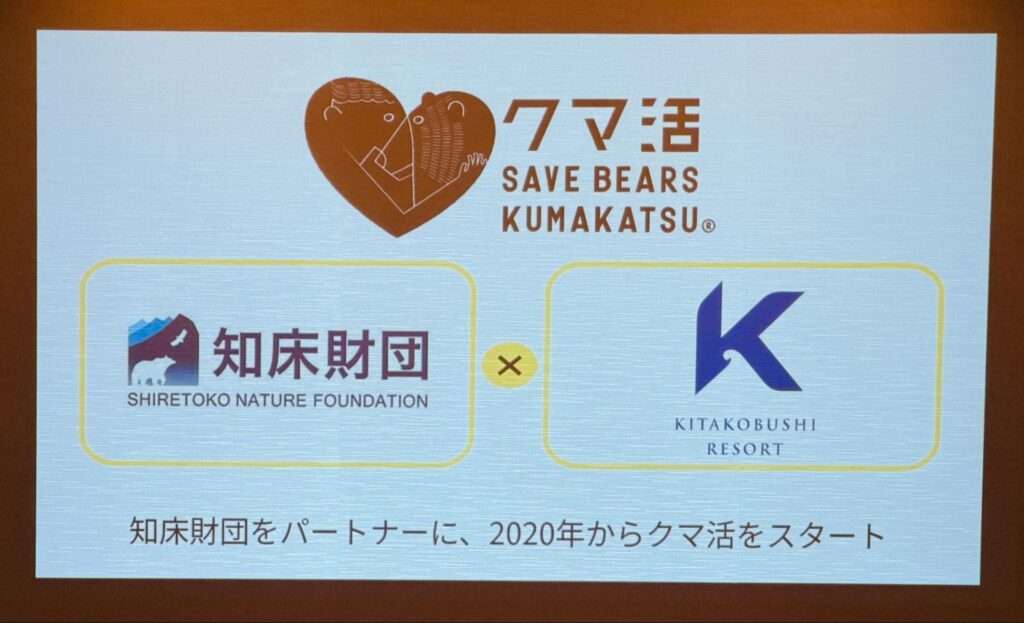
Although grass cutting is an important task for preventing conflicts between people and brown bears, its unassuming and grueling nature makes it difficult to attract participants and foster public understanding. Kita-Kobushi Resort has addressed the challenges faced on the ground by designing grass cutting into an appealing experience that allows people to participate in a way that is “stylish, fun, and easy to understand.”
The Shiretoko Foundation’s on-the-ground expertise and the “ability to engage people” possessed by the lodging facilities. “Kuma-katsu,” which brings these two elements together, is a unique way for Kitakobushi Resort to give back to the community by simultaneously addressing local challenges and promoting tourism.
Making Bear-Watching “Stylish, Fun, and Easy to Understand”
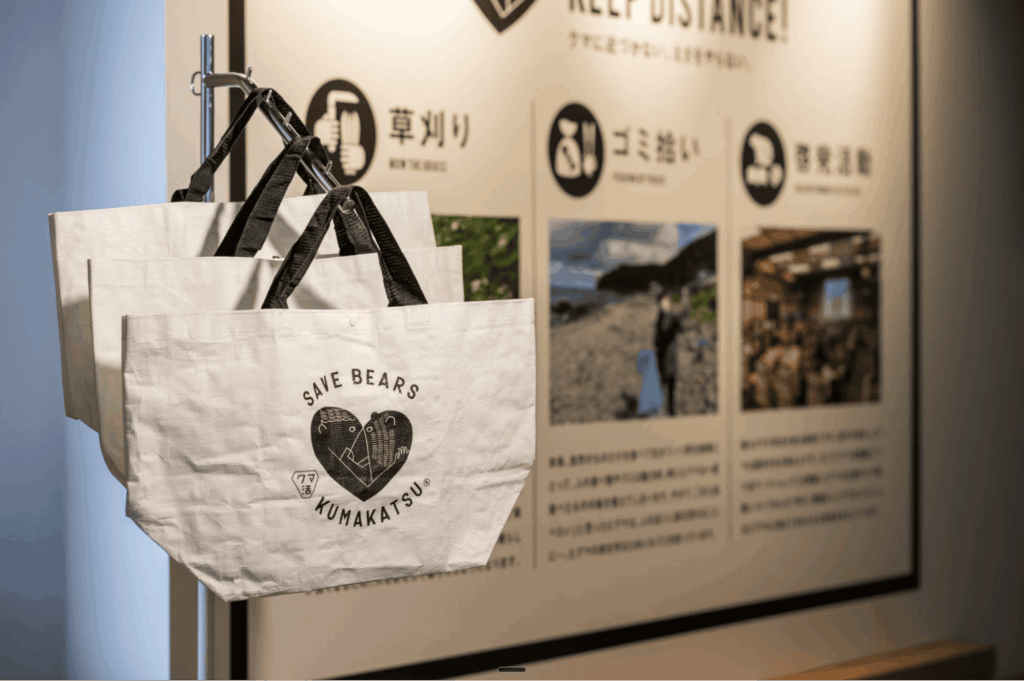
When people hear the term “bear management,” many associate it with “danger,” “hard work,” and “a field for experts.” The “bear activities” at Kita-Kobushi Resort place a strong emphasis on changing those perceptions.
The concept behind “Bear Activities” is “stylish, fun, and easy to understand.”
By carefully designing logos and names and creating an inviting atmosphere, they’ve established an accessible entry point that makes it easy even for first-timers to get involved. Furthermore, the program is meticulously designed to ensure the experience goes beyond mere fun.
Building Understanding Through Fun
Ms. Murakami: I want people to understand why this activity is necessary and how it benefits Shiretoko. “Because this is a dangerous area where bears have been spotted in the past, we’re cutting the grass this way during this season.” Only when we explain it to that extent does what might otherwise be seen as mere labor become an action that shapes the future of our community.
As these efforts continued, attitudes within the company changed significantly. Employees began to naturally focus their attention on “overgrown areas” and “signs of bears,” making comments such as, “We should mow that area too,” and “I heard there was a bear sighting over there as well.”
When tourism businesses tackle regional challenges, it is important to first change the mindset of their own staff. In Shiretoko, this shift in the mindset of staff working at Kitakobushi Resort has become a strong foundation for sustainable community development.
Reducing Waste Saves Brown Bears’ Lives
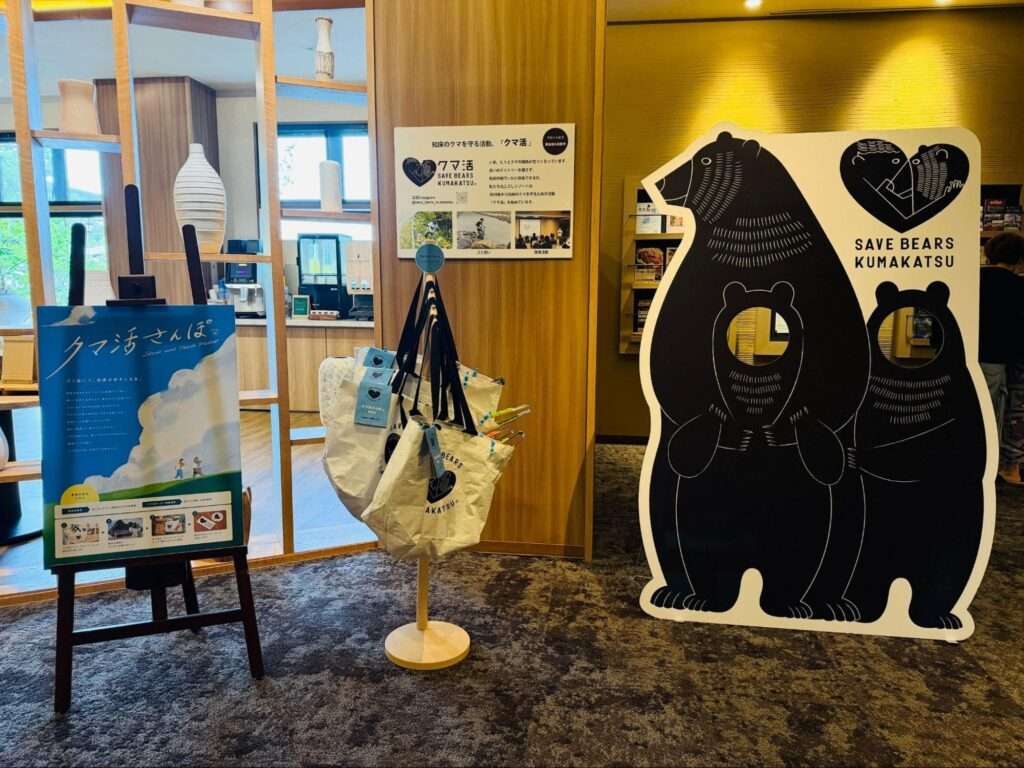
Reducing litter in the city is also an important step in establishing boundaries between people and brown bears.
Food and containers discarded on the side of the road attract brown bears into human settlements. According to Ms. Murakami, there is a lot of trash littering the roadsides in Shiretoko as well, and cans with bite marks from bears have been found there.
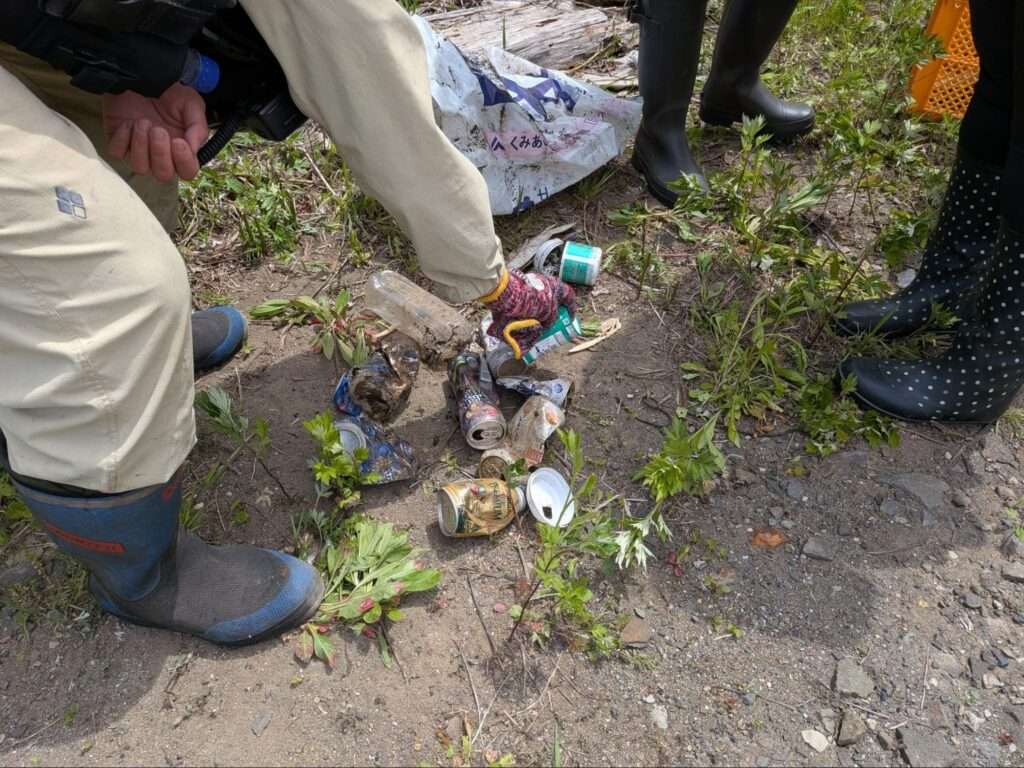
Furthermore, the problem of litter isn’t limited to brown bears.
Wild animals that have become accustomed to the smell of human food or the taste left in containers will return to search for trash, leading them to approach people and vehicles. As a result, animals that have eaten human food may die from indigestion or infectious diseases, or may wander onto roads and be struck by vehicles.
Furthermore, wild animals that have begun approaching towns and people in search of food may eventually become targets for culling.
The “Shiretoko Trash Pickup Project,” of which Ms. Murakami is a co-representative, is raising awareness about these issues from the perspective of “KEEP SAFE.”
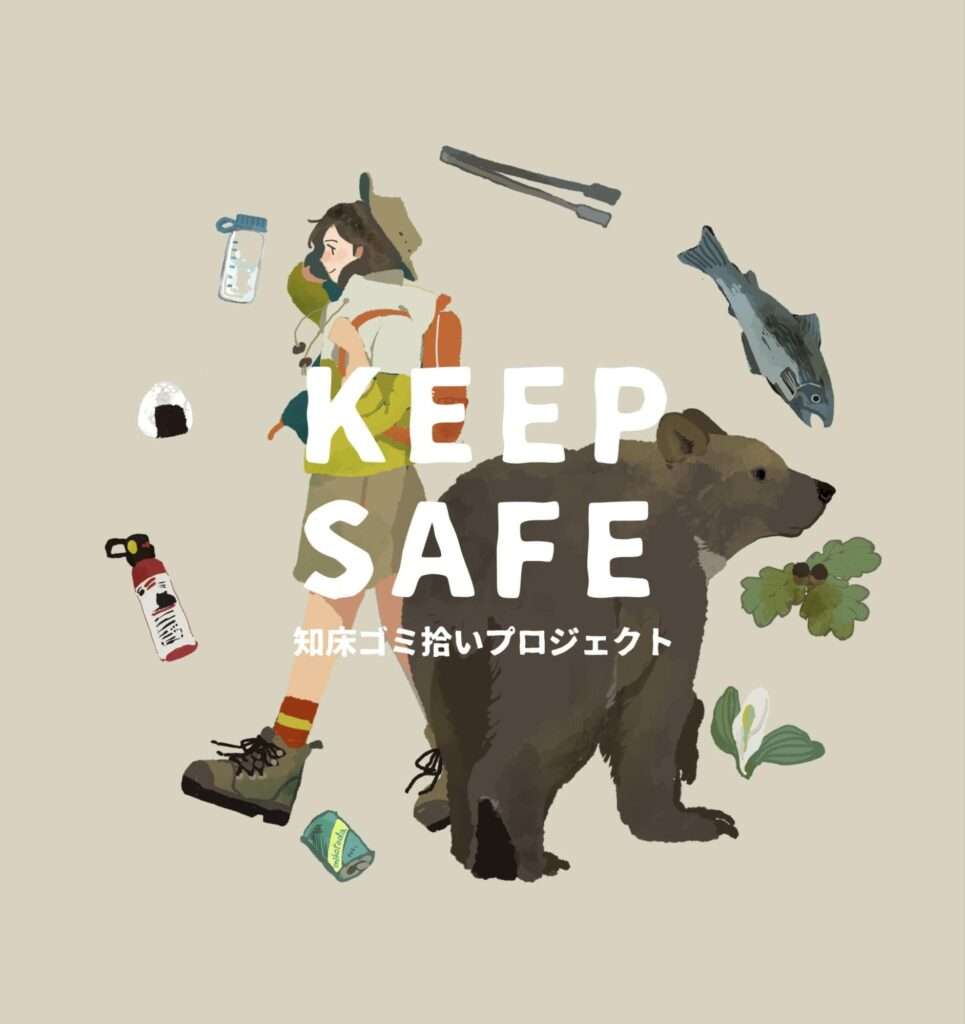
Picking up trash in Shiretoko does more than just keep the landscape clean. It also reduces unnecessary encounters between people and wildlife and helps protect lives and ensure safety.
“Bear-Watching Walk” for Hotel Guests
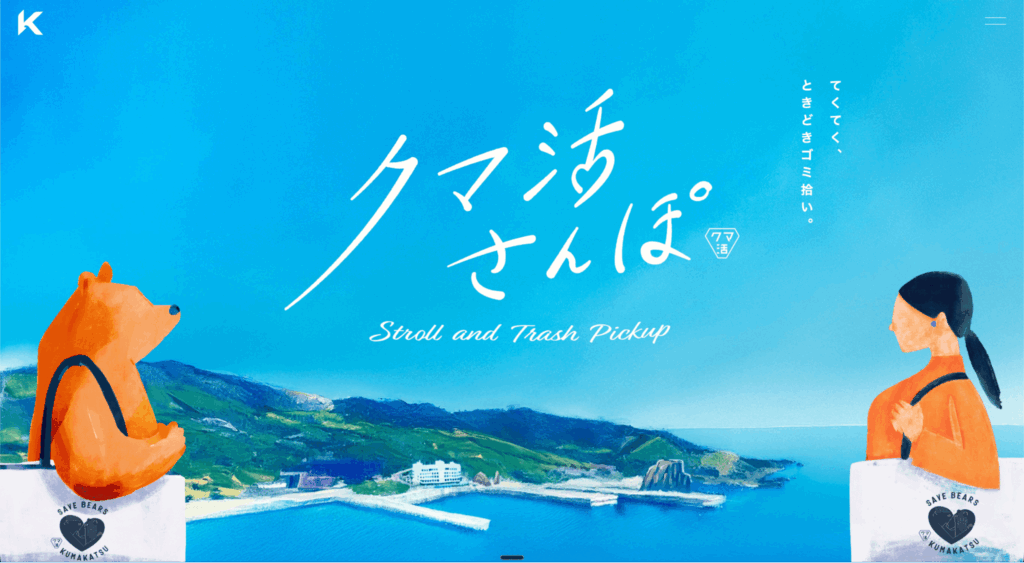
Kitakobushi Resort also offers the “Kuma-katsu Walk,” an activity that allows guests to pick up trash while taking a stroll. [2] Participants walk through the town of Utoro carrying white bags, trash pickers, and work gloves, picking up litter along the way.
For tourists, it’s an opportunity to experience the local area while walking through the town. For the local community, it leads to less litter and helps eliminate factors that attract brown bears.
“Bear-Watching Walks” is a symbolic initiative that integrates community contribution into travel.
Creating the Right Environment with “Toren Bear”
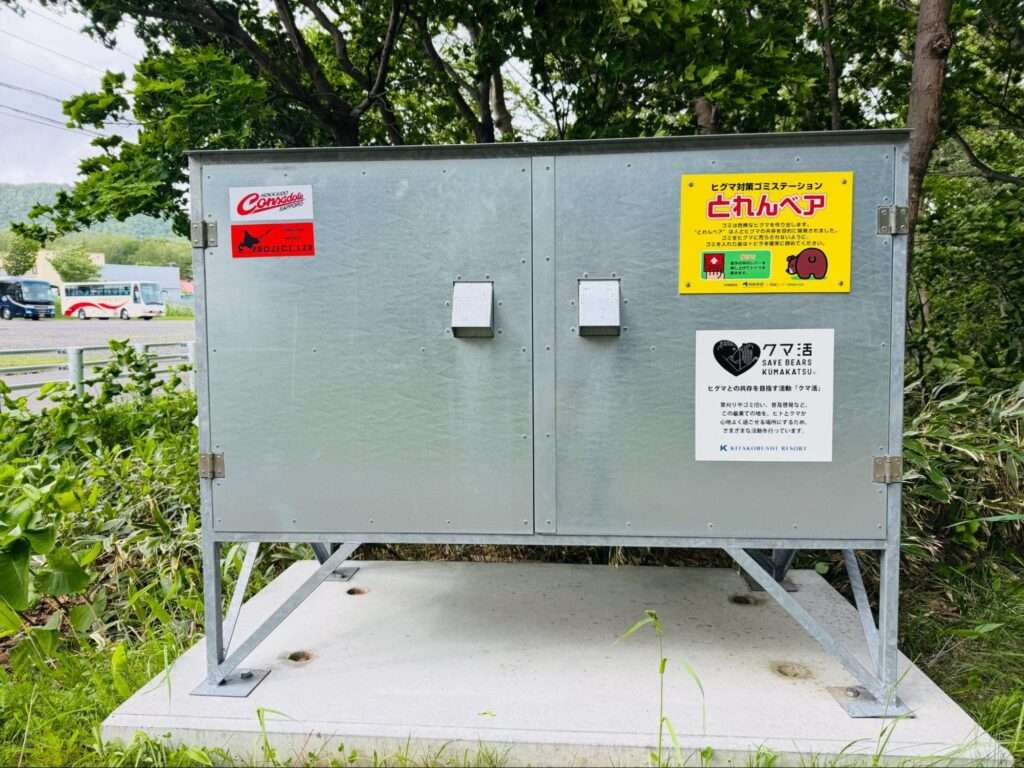
In addition, Kitakobushi Resort is using donations and contributions to install “Toren Bear” garbage stations designed to deter brown bears.
Toren Bear is a sturdy trash station jointly developed by Eco City Co., Ltd. and the Shiretoko Foundation, a public interest incorporated foundation. It is designed so that the contents are difficult to see and odors are unlikely to escape; it is also built to withstand being struck by bears and features a door that is difficult to open. [3]
“Bear-friendly activities” contribute not only to promoting individual etiquette but also to improving the environment throughout the community—by picking up trash and implementing measures that make it harder for bears to approach trash in the first place.
Toward a Future Where Shiretoko Gets Better the More People Visit
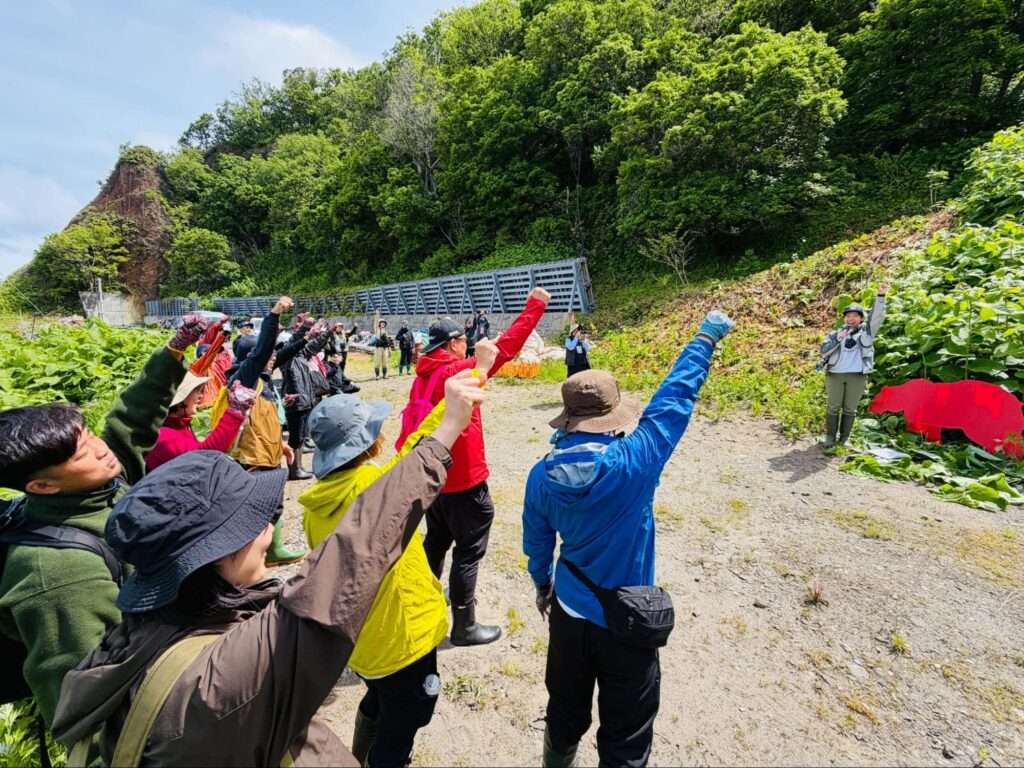
Ms. Murakami says that what he hopes to achieve in the future is “a future where Shiretoko becomes better the more people visit.”
In the past, tourism has tended to bring about increasing problems—such as litter, traffic congestion, and strain on the natural environment—the more visitors there were. While tourism brings economic benefits to local communities, its very structure places a burden on nature and daily life. Ms. Murakami says he wants to shift this toward “regenerative tourism.”
Ms. Murakami: When “people of the wind”—that is, tourists—visit, the region’s natural environment and society become richer and more vibrant. I want to create that kind of cycle in Shiretoko.
By working up a sweat mowing grass, picking up trash, and learning how to maintain a safe distance from brown bears, tourists gain an understanding of the challenges facing the local community and adjust their behavior accordingly. Through these experiences, tourists transform from mere “consumers” into “stakeholders” who help make the community a better place.
Regenerative Tourism in Shiretoko, as Exemplified by “Bear-Watching” Activities
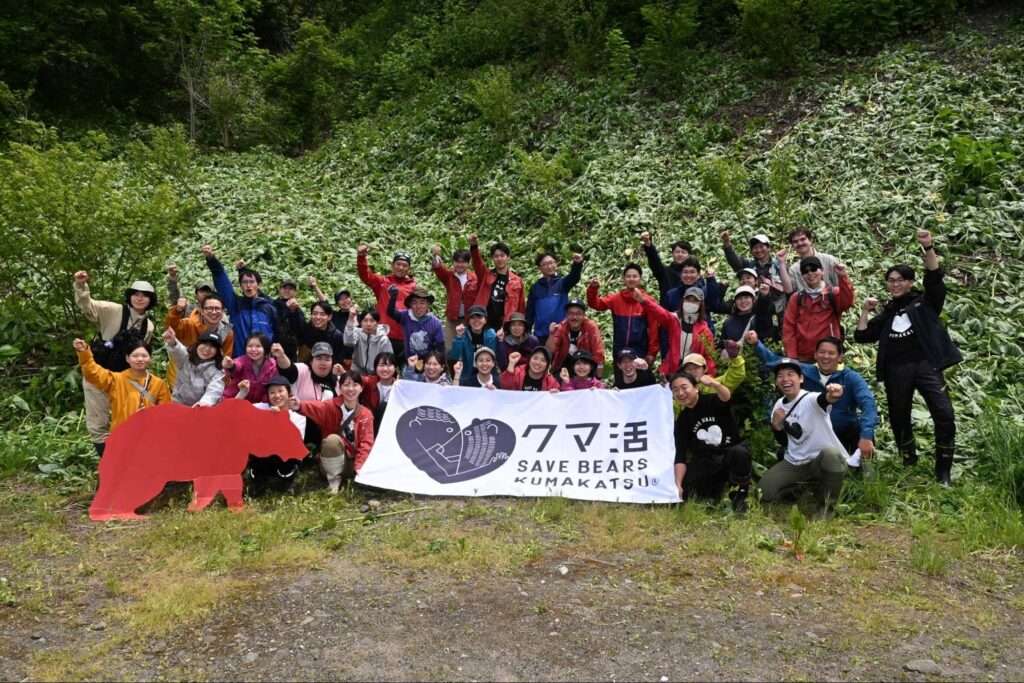
The “Bear Activities” program at Kita-Kobushi Resort goes beyond the scope of a single company’s CSR initiatives. It is a grand endeavor to reconnect the region’s nature, tourism, daily life, and corporate activities.
The more people visit, the fewer encounters with brown bears there will be, and the better nature will be protected. When such a virtuous cycle takes hold, Shiretoko will gain even greater value as a place where people and nature coexist and where visitors can feel the very breath of nature.
The small-scale grass-cutting efforts in Shiretoko are a practical way to rethink the future of tourism. From travel that consumes nature to travel that revitalizes both nature and the local community. “Kuma-katsu” continues to take steady steps toward that future.
References
[1] KUMAKATSU | Kitakobushi Resort | Official Website
[2] Bear-Watching Stroll | Kita-Kobushi Resort | Official Website

