
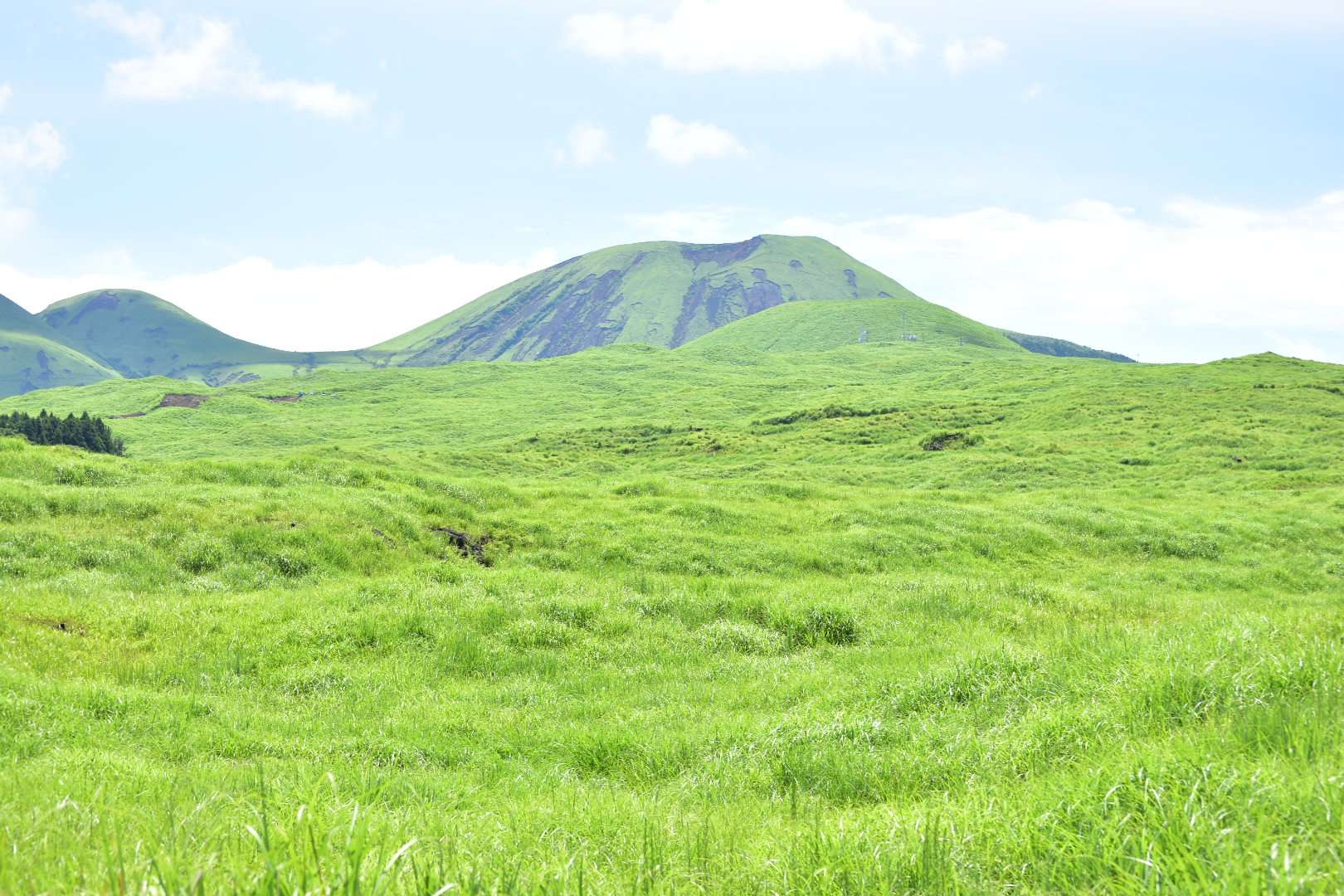

Image courtesy of the Aso Green Stock Public Interest Foundation
When you hear the term “environmental conservation,” what comes to mind? Many people likely envision an approach where “humans step back from nature”—such as leaving pristine natural environments untouched or fencing them off to keep people out. In the context of protecting pristine nature, this can certainly be considered one valid approach.
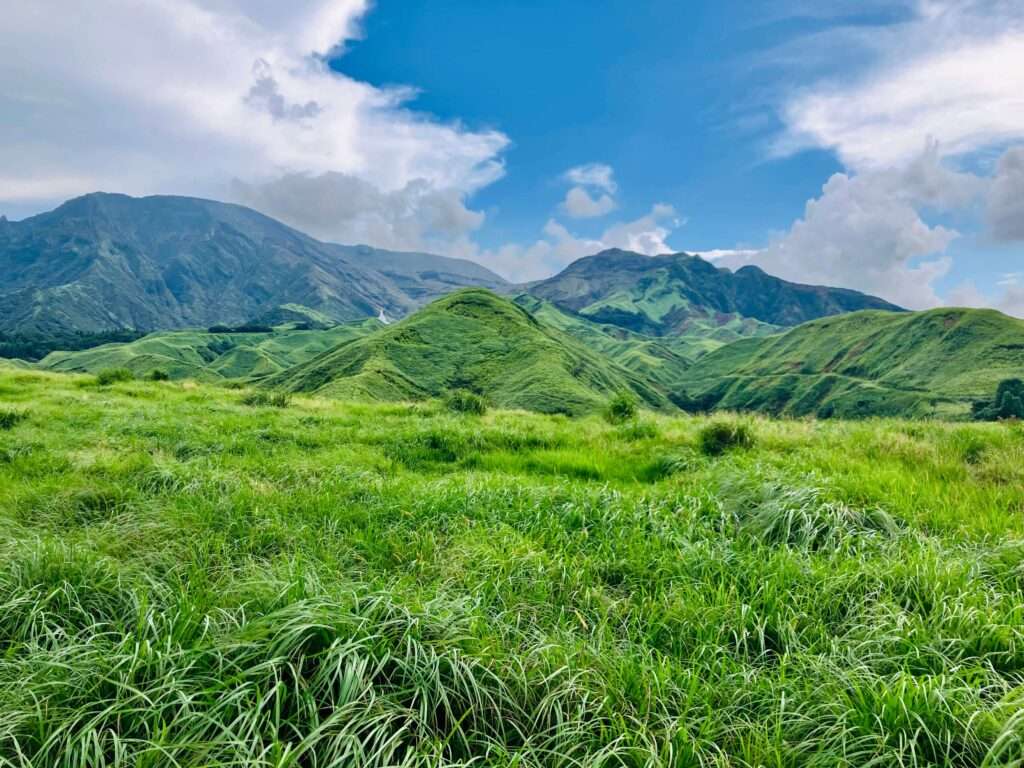
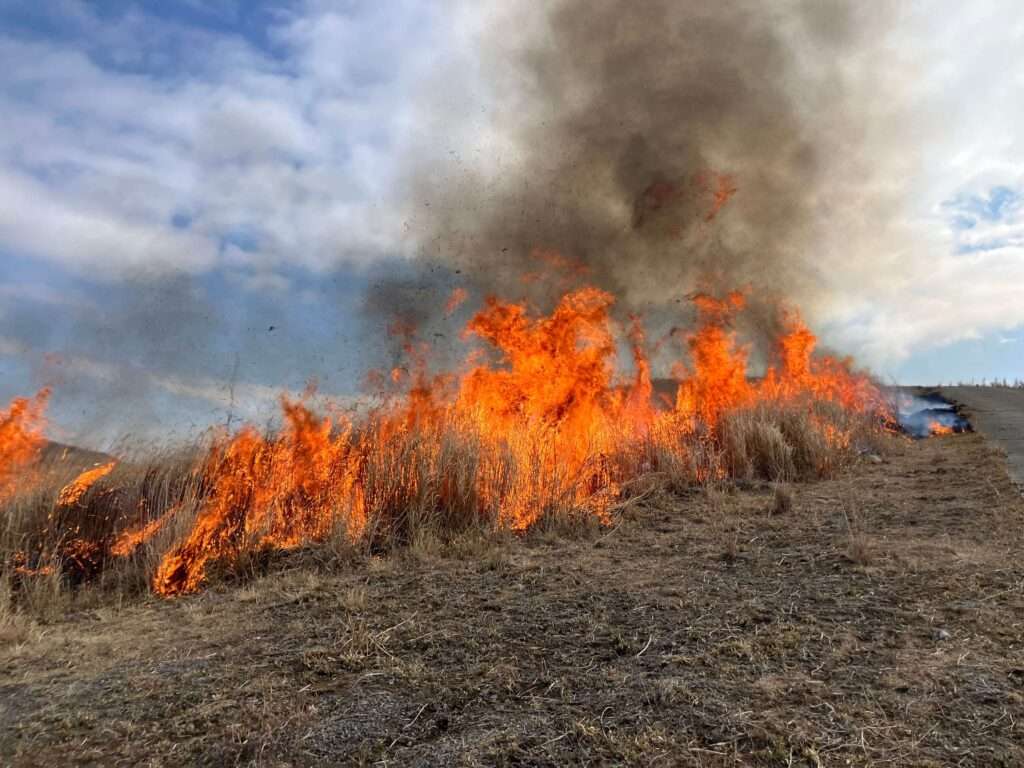
However, the grasslands that stretch across the Aso region of Kumamoto Prefecture cannot be maintained through an approach that leaves the natural environment untouched by human intervention. In Aso, “controlled burns” are carried out every year from February through March. Setting fire to the dry grass across these vast grasslands may seem destructive at first glance.
However, if this controlled burning is not carried out, trees will gradually begin to grow among the grasses, and within a few decades, the grassland will transform into a forest. It is only through this human intervention—controlled burning—that the grassland landscape can be preserved, allowing people to continue to enjoy the abundant blessings provided by the grassland ecosystem.
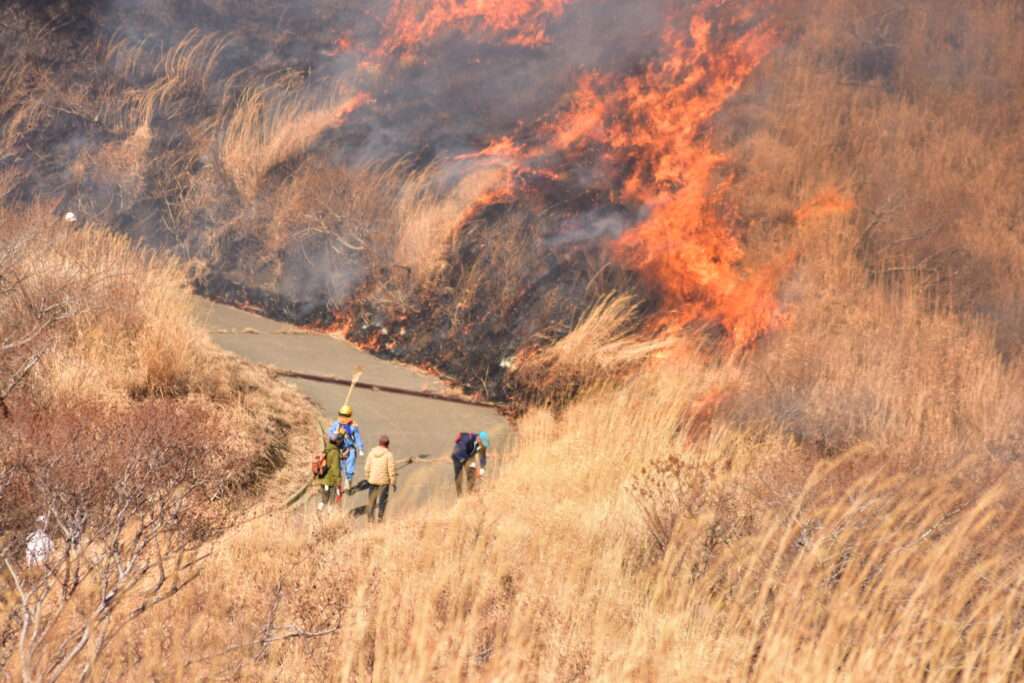
The landscape woven by Aso is not untouched, pristine nature. It is a “semi-natural” landscape that has been shaped over a long history in tandem with human activities. Through the cumulative effects of agricultural practices such as grazing, haymaking, and controlled burning, the grasslands of Aso have preserved their beauty. In other words, this landscape has been sustained precisely because the people of Aso have needed and continued to use it for hundreds and thousands of years.
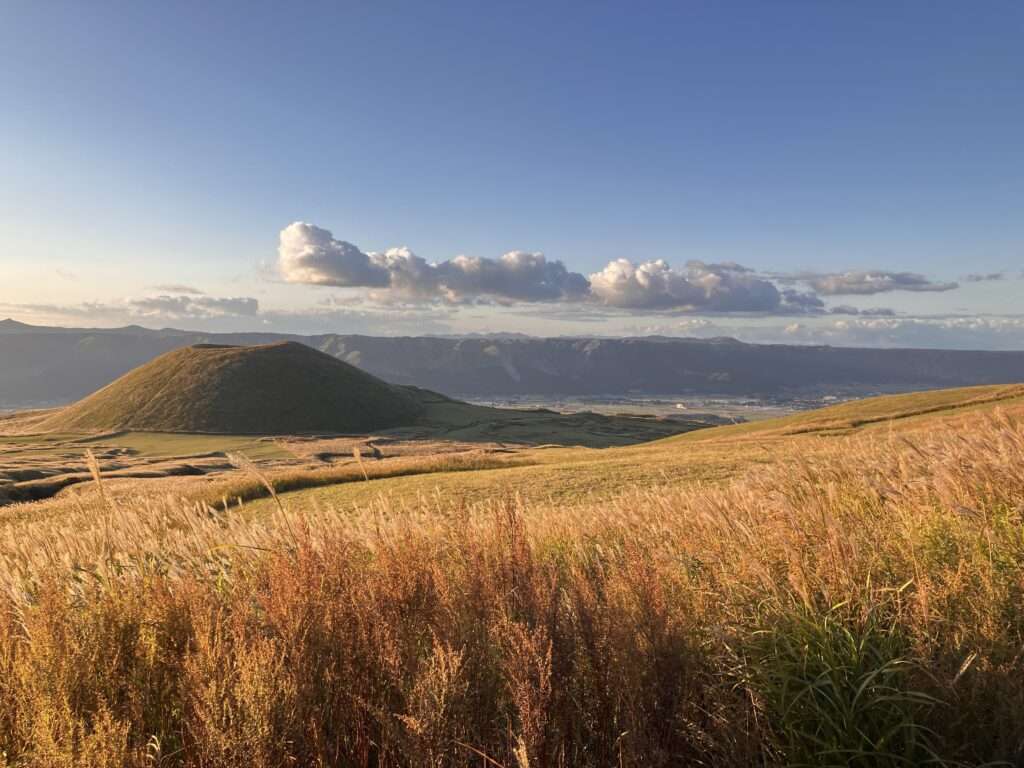
However, it has become increasingly difficult for local residents alone to maintain the grasslands. Who, alongside the local community, is protecting these vast grasslands? One of the organizations that has been responsible for their maintenance is the Aso Green Stock Public Interest Incorporated Foundation (hereinafter referred to as “Aso Green Stock”).
Since its establishment in 1995, the foundation has served as a hub for “public-private-community-volunteer collaboration,” connecting government, local communities, volunteers, and businesses. Currently, more than 50 companies are participating in its conservation activities. We spoke with Taiki Masui, the foundation’s Executive Director, about how companies can engage with grasslands.
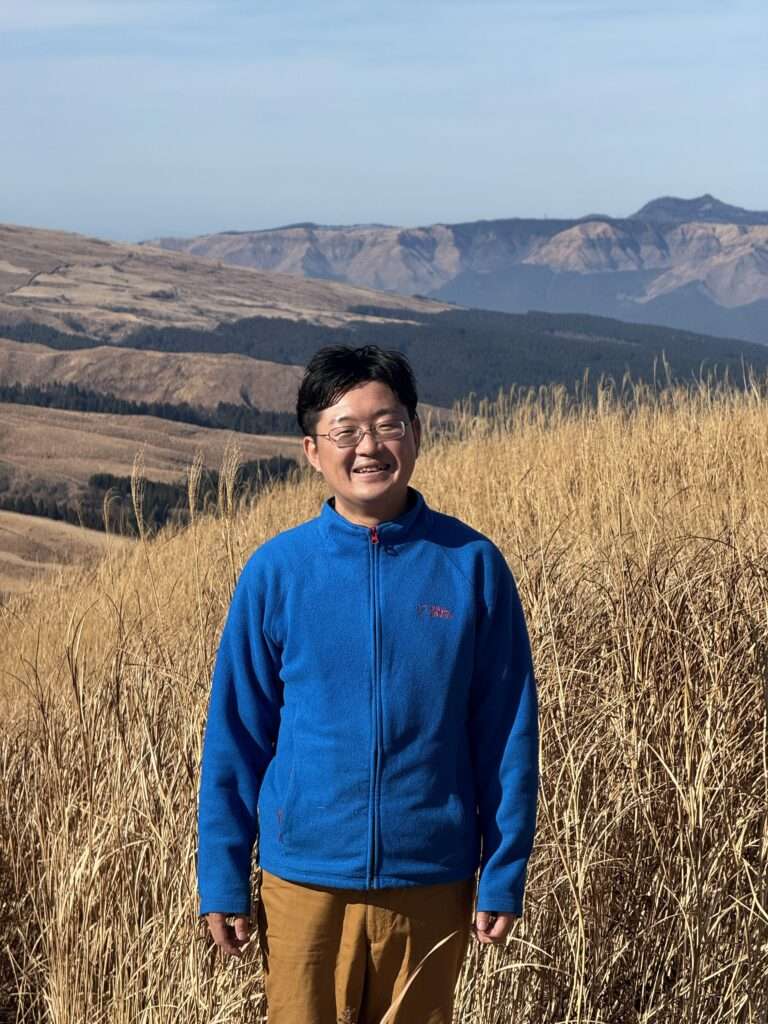
Taiki Masui / Executive Director, Aso Green Stock Public Interest Foundation
Corporate Partnerships That Begin with “I Love Aso”
In recent years, the relationship between businesses, local communities, and nature has been undergoing a period of significant transformation. In the past, corporate environmental initiatives were often discussed in the context of “corporate social responsibility (CSR),” such as donations and tree-planting campaigns. However, since the 2010s, the concept of “CSV (Creating Shared Value)—” which involves solving social issues through a company’s core business—has gained traction, leading to a movement to redefine a company’s engagement with nature as an integral part of its business strategy. Furthermore, the concept is now evolving toward “co-creation,” in which companies and local communities work together as equal partners to create new value.
So, how has the relationship between Aso Green Stock—founded in 1995—and local businesses evolved? Any discussion of this evolution must inevitably include the Kumamoto Earthquake of April 2016. The earthquake had a severe impact on the grasslands; for example, roads necessary for controlled burning were cut off, making it difficult to maintain the grasslands—a vital part of the region’s infrastructure.
At the time, support from companies and individuals was raised more for “Kumamoto’s recovery” than for “grassland conservation,” but this event served as a major turning point that reconnected the local community with businesses. For example, Kirin Brewery Co., Ltd., through its “Kirin Kizuna Project to Support Recovery,” provided substantial funding to help the Makino Cooperative maintain its access roads—a task that had become difficult due to the ban on controlled burns—and as a result, controlled burns were able to resume in quite a few Makino areas.
参照:https://www.kirinholdings.com/jp/sustainability/files/pdf/kumamoto-dayori07.pdf
Donations have remained a fundamental form of support, both 10 years ago and today. While 10 years have passed since the earthquake, given the growing environmental awareness in society, it may be an overstatement to say that the number of participating companies has skyrocketed over the past decade. However, what has definitely changed is the level of enthusiasm for “humanitarian aid.”
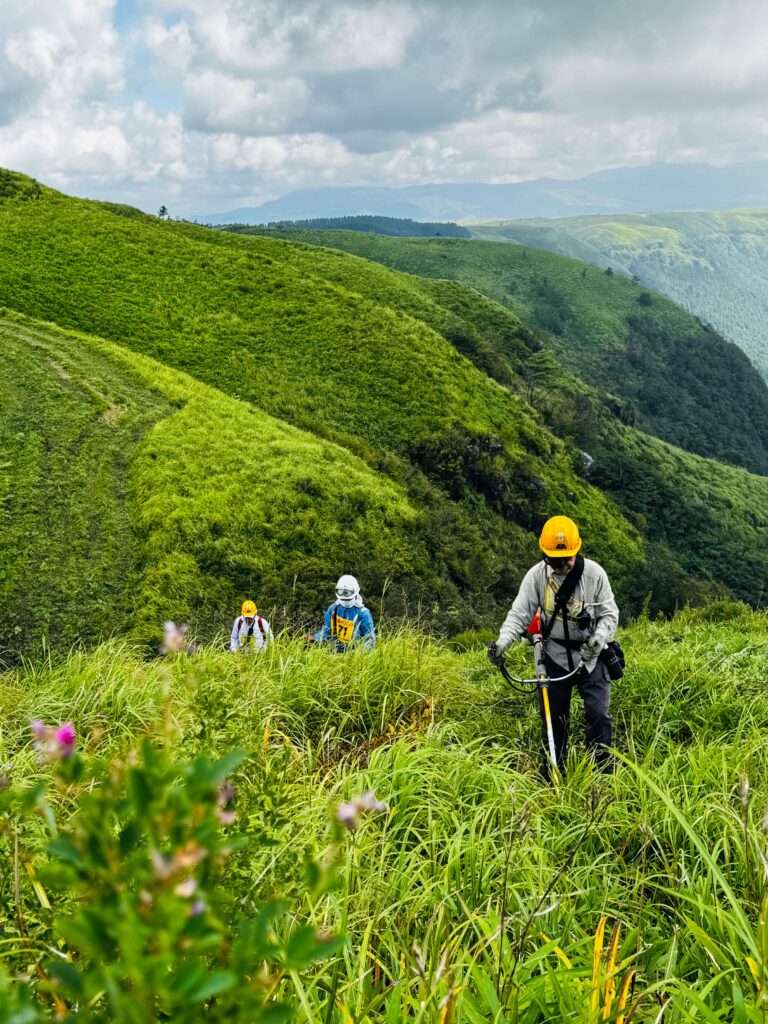
増井さんが語る通り、野焼きを支えるボランティアへの企業参加は、ここ数年で着実な広がりを見せている。2022年時点で約900名だった登録者数は、現在約1,500名にまで増加。熊本県と阿蘇グリーンストックが共同で運営する「阿蘇草原応援企業サポーター認証制度」の認定企業も50社を超えた。
If you look only at the surface-level figures, the initiative appears to be progressing smoothly. However, Ms. Masui candidly expresses her feelings, saying, “Considering the potential that Aso has, I can’t help but feel a sense of frustration that the circle of support should be even wider.”
However, it’s not enough simply to increase the number of participating companies. To truly preserve the value of Aso, it is crucial to ensure that their involvement is not just a passing phase, but rather that they make a deep and long-term commitment.
Mr. Masui cited Kumamoto Toyota Motor as a symbolic example of this ongoing collaboration. The company’s “Hybrid Fund”—which donates a fixed amount for every hybrid car it sells to support grassland conservation efforts such as controlled burning—has become a groundbreaking initiative recognized both within and outside the industry.


Reflecting on the background of how this strong partnership came to be, Mr. Masui says the following.
The president of Kumamoto Toyota Motor at the time was simply a man who loved Aso more than anything. Aso Green Stock provided a platform for him to channel the feelings he had always held in his heart through its activities. That was how it all began.
There wasn’t a meticulously crafted CSR strategy or institutional framework in place from the very beginning. It all started with one person’s “personal passion” for Aso. And this enthusiasm has spread through industry networks to include Toyota Group companies and the Kumamoto branch of the JAF (Japan Automobile Federation).
Cases like this, which stem from “personal feelings,” are not limited to Kumamoto Toyota Motor. For example, a representative who visited Aso on a “Regenerative Tour” was deeply moved by the story of a grassland that had been maintained by human hands, which led to ongoing donations and employee training programs.
Or there’s the case where an employee who had always loved Aso kept passionately advocating for its value within the company, and as a result, a connection to the company’s core business finally emerged. Although the approaches differ, the underlying structure that Mr. Masui points out is the same in all cases.
It’s about discovering the seed that’s already there in a person’s heart—the feeling that “I love nature; I love Aso.” I believe my role is to work with them to create a “rationale” for driving the company forward, so that this seed can grow.
That said, this bottom-up approach—which takes “individual inner feelings” as its starting point—is difficult to evaluate and systematize within an organization. These days, corporate sustainability initiatives are predominantly designed from a macro perspective—such as compliance with ESG disclosure requirements and alignment with medium-term management plans—making it difficult to incorporate a process for determining “whether our company has employees who love Mount Aso” into standard business workflows.
However, Mr. Masui’s approach hits upon a certain truth. It is the realization that, no matter how impressive a system or strategy may be, “personal, tangible emotions” come first—and that the bonds forged from that starting point are ultimately the strongest and most enduring.
The Value of the “Prairie” for Businesses
When companies engage in environmental conservation, they generally tend to choose “forests” or “oceans.” This is because a well-established carbon credit system exists for forests, making it easy to quantify CO2 absorption and link it to corporate decarbonization goals. Similarly, companies find it easy to identify points of engagement with the oceans due to their connections to the fishing and tourism industries.
So, compared to those options, what does investing in “grasslands” mean for a company? Mr. Masui first points out that “it’s not a matter of which is better,” and then emphasizes that “the unique characteristic of grasslands is that they are a natural environment whose richness can only be maintained through human involvement.”
The logic behind the conservation of satoyama landscapes—including grasslands—is fundamentally different from that of other natural environments. Conservation of forests and oceans is often based on a “subtractive” approach, which involves reducing human intervention and relying on nature’s resilience. However, as mentioned at the beginning, in the case of environments like Japan’s grasslands, it is precisely the absence of human intervention that leads to the greatest environmental destruction. The uniqueness of this ecosystem lies in the fact that an “additive” approach—one that involves continuous human engagement—is essential.
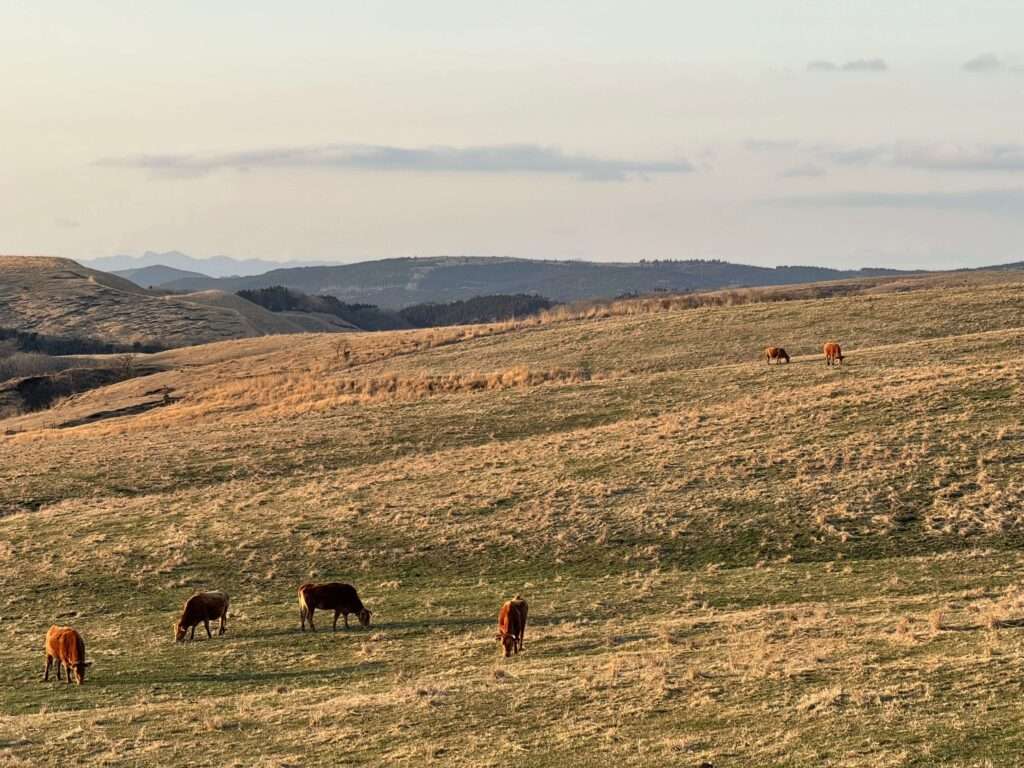
実際に人々の関わりが薄れた結果、日本の草原はいま、存続の危機に瀕している。もともと草原は、農耕用の牛や馬を放牧し、冬場の飼料や田畑の肥料として草を利用するという、人々の暮らしと密着したサイクルの中で長きにわたって維持されていた。
しかし昭和30年代以降、農業機械や化学肥料が普及すると、牛馬の放牧は激減し、人々が草を求める理由も失われた。役割を失った草原は、別の土地利用として高度経済成長期の植林、また現在では一部メガソーラーに姿を変えている。さらに、斜面など活用の目処が立たず放置された草原は、次第に森林へと変わり、阿蘇の草原に住んでいた多くの生き物たちが住処を奪われ、絶滅危惧種となっている。
Mr. Masui points out that the proportion of grassland in Japan has now declined to less than 1% of the country’s total land area. Compared to the fact that forests account for about 67% of the country’s land area, the scarcity of grassland is striking. (*1)
Furthermore, the characteristics of grasslands are fundamentally aligned with the concept of “nature-positive,” which has become a key priority for companies in recent years. “Nature-positive” refers to the global goal of halting biodiversity loss by 2030 and putting it on a path to recovery (turning the trend positive).
Consequently, compliance with the TNFD (Task Force on Nature-related Financial Disclosures)—an international framework for companies to disclose their impacts on natural capital, as well as associated risks and opportunities—has become an urgent priority, particularly for large corporations that are highly dependent on specific forms of natural capital.
Until now, corporate environmental initiatives have primarily focused on “decarbonization.” In Japan, for example, efforts to increase CO₂ absorption through forest conservation have garnered significant attention, and a large proportion of carbon credits come from forest-based sources. On the other hand, established methodologies for carbon credits related to grassland restoration have not yet been fully developed.
However, the “carbon sequestration” capacity of restored grasslands should not be underestimated. In fact, vast amounts of carbon are stored in the soil of grasslands that are properly managed through regular controlled burns. It is said that the amount of carbon sequestered there is “about 1.7 times” the annual CO2 emissions of all households in the Aso region.
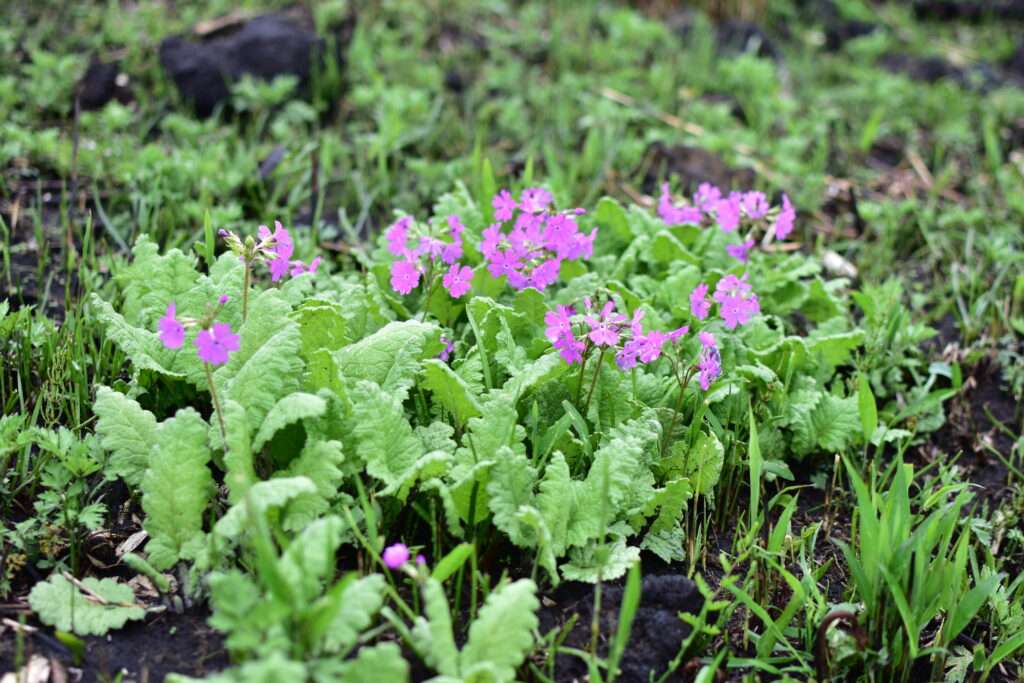
Furthermore, Mr. Masui is hopeful that grasslands hold immeasurable potential for the restoration of “biodiversity.” The grasslands of Aso are home to approximately 600 species of rare plants and insects, including endangered species. Some of these organisms are found exclusively in the grasslands of Aso and its surrounding areas, fostering a unique ecosystem. If human management were to cease, their habitats would be swallowed up by the forest, and biodiversity would be lost in an instant.
However, when companies invest resources and manpower to support grassland conservation—including controlled burning—ecosystems are preserved and the risk of extinction is reduced. This is precisely the kind of concrete, clear “nature-positive outcome” that companies can create on the ground at the local level.
Furthermore, grassland conservation efforts offer powerful benefits that attract companies. These are “flexibility in how companies can get involved” and “the ease of tracking progress.” The Aso grasslands offer a variety of entry points, including donations, volunteer programs, sustainable product development, and employee training. A key strength is that companies can get started at a manageable pace, tailored to their size and specific challenges.
Mr. Masui also mentions the “cycle” unique to grassland conservation. With projects such as “planting trees,” it can be difficult to envision the next steps once the project is completed. Furthermore, the concrete results are often hard to see. In contrast, controlled burning is an activity that is repeated every year without fail.
「今年は社員が何名参加した」「何ヘクタールの草原を維持できた」という確かな実績が年単位で蓄積していくため、社内外に対するサステナビリティの活動報告に組み込みやすいという、実務的な価値を備えているのである。
A Transparent Circle of Support, Connected by Water
When a company seeks to get involved in grassland conservation, the first hurdle it faces is likely the uncertainty of not knowing where to start. Aso Green Stock offers companies a wide range of ways to get involved, such as donations and on-site training, but which option is best for a particular company depends entirely on its specific circumstances and industry.
Mr. Masui offered some guidance, saying, “There isn’t just one right answer. Since it’s ‘people’ who drive a company, there are times when an approach doesn’t work out,” and presented several options.
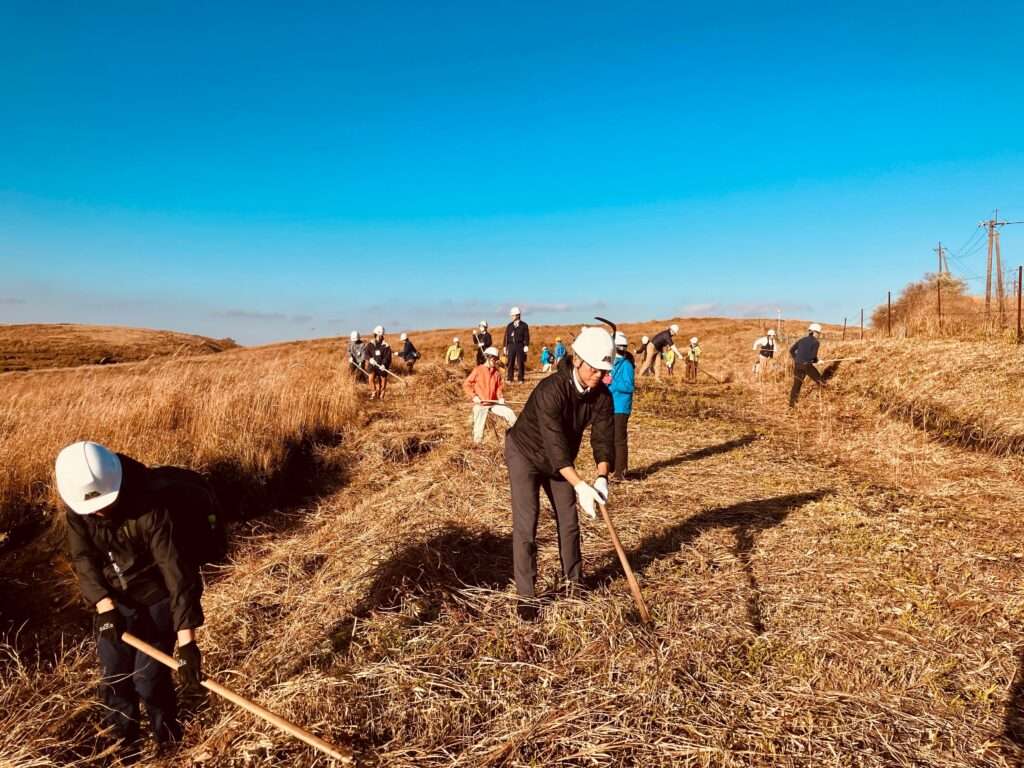
First, “volunteer dispatch” is the most direct and passionate way for employees to get involved, as it allows them to actually visit the Aso region and experience the controlled burns firsthand. However, the controlled burns are concentrated in the months of February and March. Since this period often coincides with the year-end busy season for some industries, there are quite a few companies that say, “We’d like to participate, but our schedules just don’t allow it.”
The “on-site training” approach meets the needs of both “companies that find it difficult to visit controlled burning sites” and, conversely, “large corporations that want to bring people together from across the country.” Japan Airlines (JAL) regularly conducts in-house training programs as part of its sustainability initiatives, incorporating activities such as “conservation of endangered species” and “creating firebreaks in preparation for controlled burning,” after issuing a broad call to employees nationwide.
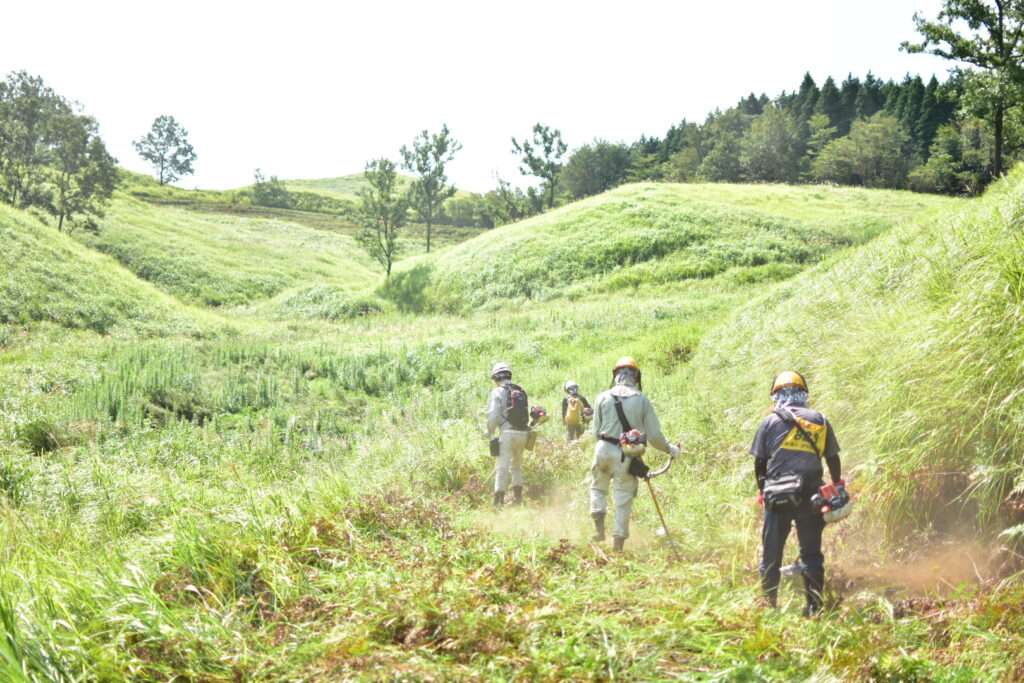
It all started because there was an employee at our company who loved Aso and felt strongly that “I absolutely want my colleagues to see how wonderful Aso is.” That individual’s enthusiasm spurred the company into action, leading to the creation of this training program.
As employees who participate in the training program become new “fans of Aso” and continue to share its charms within the company, the circle of people connected to Aso will continue to grow even larger.
Another powerful option is “donations and product partnerships.” This is an approach that is particularly well-suited for companies whose products are associated with Aso’s water and natural environment.
A system that allocates a portion of sales to conservation efforts—such as Kumamoto Toyota Motor’s “Hybrid Fund” mentioned earlier—makes it easier to convey the message to consumers and ensures the initiative’s long-term sustainability. A clear scheme such as “X yen per item sold” also has the advantage of making it easier for companies to fulfill their accountability to shareholders and customers.
At the same time, new challenges are emerging in the field of environmental conservation. In recent years, “carbon credits” have become widespread as a convenient mechanism that allows companies to purchase their contribution to the environment in the form of “numbers.” However, there is currently growing international skepticism regarding their effectiveness and transparency.
It is difficult for outsiders to determine whether the credits they purchase are “truly contributing to ecosystem restoration” or “benefiting local communities,” and this is increasingly posing a risk of being viewed as greenwashing (the practice of pretending to be environmentally conscious).
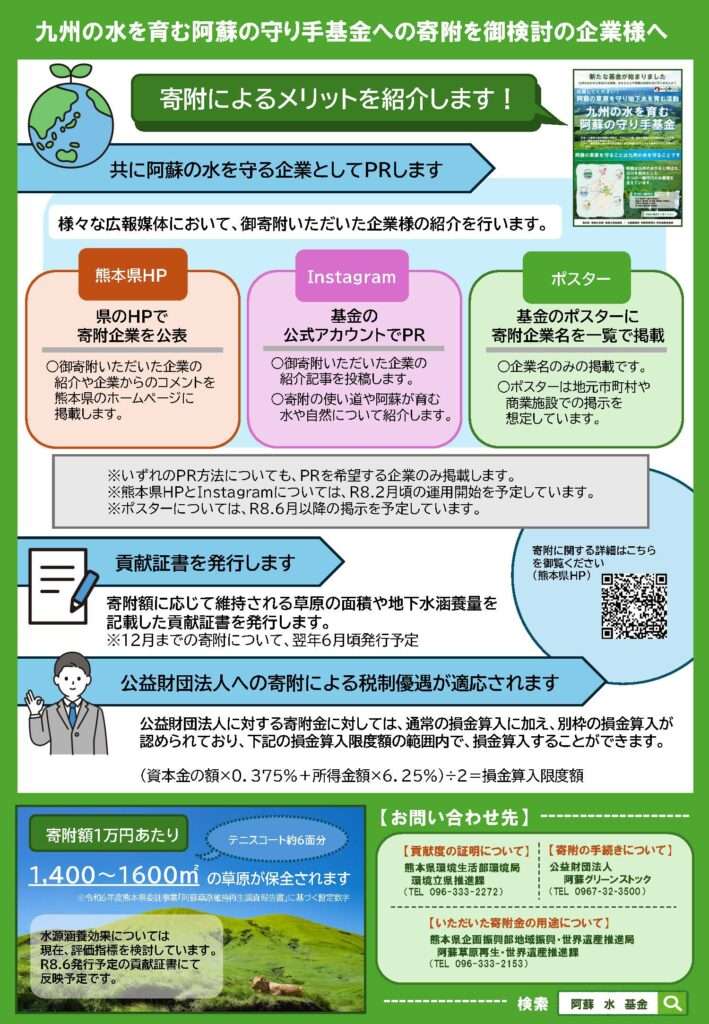
The “Aso Guardians Fund for Nurturing Kyushu’s Water” was established as an innovative mechanism to break through this barrier of “opacity.” “Water” is at the core of its design.
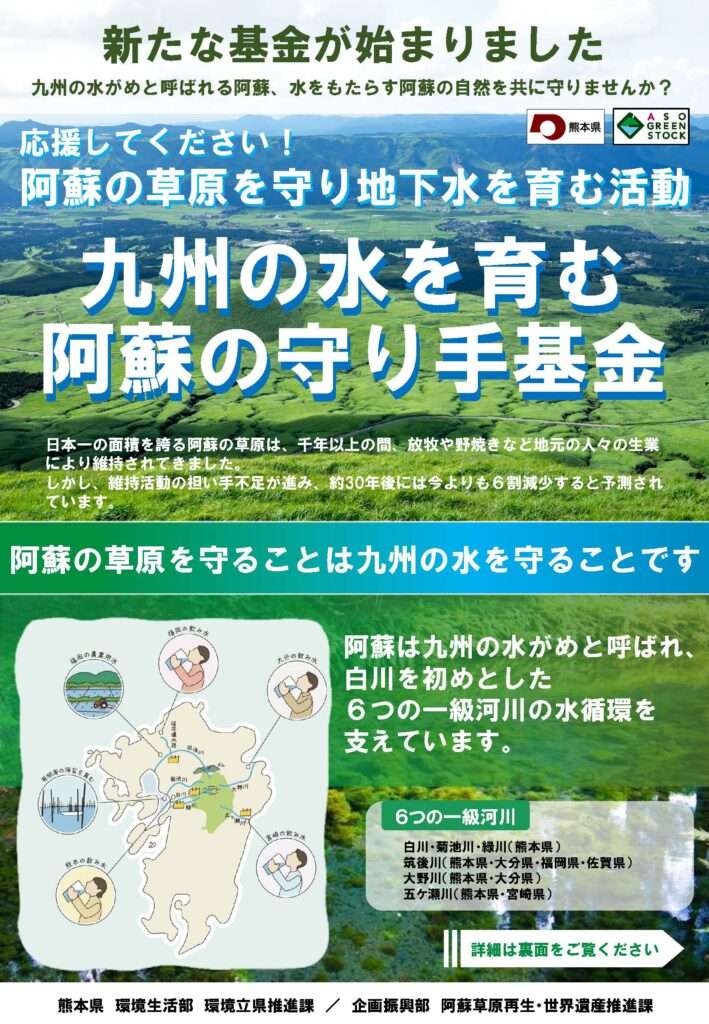
One of the key benefits of grasslands is their “water conservation function,” which stores rainwater in the soil and slowly releases it into rivers. They act as a “giant sponge” that does not release water during heavy rains but continues to supply a steady flow of water even during dry seasons.
Aso’s abundant annual precipitation—approximately 3,000 mm, twice the national average—seeps into the foothills of the Aso Five Peaks, which act as a sponge, and flows into six Class 1 rivers. These rivers provide the lifeblood for the approximately 5 million people living in the watershed. In other words, companies that use water from Aso—whether they realize it or not—are benefiting from the grasslands.
Centered on this “connection through water,” the “Guardians Fund” raises funds broadly from businesses and communities within the watershed. The funds raised are delivered directly to local organizations—such as the approximately 160 pasture associations in Aso—that are responsible for grassland management on the ground, thereby supporting their sustainable activities.
Another key feature is the transparency of the flow of funds. Through the “Contribution Certificates” issued by Kumamoto Prefecture, companies can clearly communicate—both internally and externally—exactly whose activities their funds have supported and in what ways.
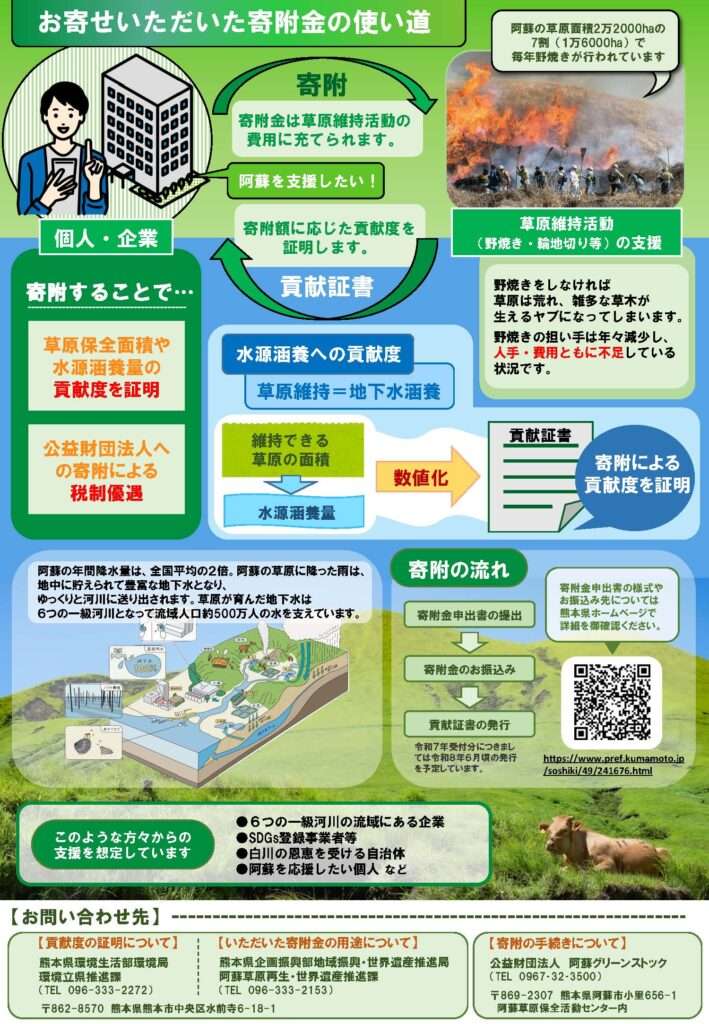
Society is increasingly holding companies accountable for how well they understand local communities and how effectively they implement substantive initiatives. The transparency that allows both the supporting companies and the Makino Union—which safeguards these communities—to see each other’s faces is, I believe, closely linked to the values that companies will seek in sustainability in the years to come.
Furthermore, this “water” perspective is closely linked to the region’s industrial structure. In recent years, Kumamoto Prefecture has seen a growing concentration of semiconductor-related factories. Since semiconductor manufacturing requires vast amounts of water, securing a stable water supply is a top business priority. The fact that maintaining grasslands supports the region’s water resources will likely become an even more compelling motivation for companies to engage in grassland conservation in the future.
“We view Aso as natural capital, and improving the natural environment benefits our business operations. That’s the kind of relationship we want to build,” says Mr. Masui. His perspective—which frames participation in grassland conservation not merely as a “cost” but as an “investment in the region’s natural capital”—aligns closely with the very essence of what “Nature Positive” seeks from companies.
Relationships Where People and Communities Blend Together, Starting with Travel
If donations and product partnerships are considered “indirect forms of involvement,” then actually standing on the grasslands and participating in controlled burns is the most “direct and passionate form of involvement.” The experience of lighting the fire with your own hands and working up a sweat fundamentally transforms your understanding of the grasslands.
This embodies the very essence of “regenerative tourism,” a concept that has been gaining attention in recent years. It goes beyond simply being environmentally conscious; travelers directly participate in the “recovery process” of the region’s natural environment and culture. Ms. Masui has experienced the benefits firsthand.
Participants in the Regenerative Tour gained an on-site understanding of the “mechanisms of grassland ecosystems” maintained through human intervention and came to recognize the need for ongoing support. As a result, there have been cases where participants went on to provide ongoing financial support (donations).
The reasons why volunteers feel they “want to come back” vary from person to person. Some are drawn to the overwhelming sense of scale of Aso’s grasslands, while others are captivated by the tangible sense of having “protected this place” when they see the pitch-black slopes they burned themselves in the spring come back to life as lush green grasslands in the summer. Still others find a sense of connection in the warmth of the community as they work up a sweat and exchange words with local residents.
In any case, the moment they transform from “tourists” who merely consume the scenery into “participants” who help create it, their bond with Aso becomes unshakable.
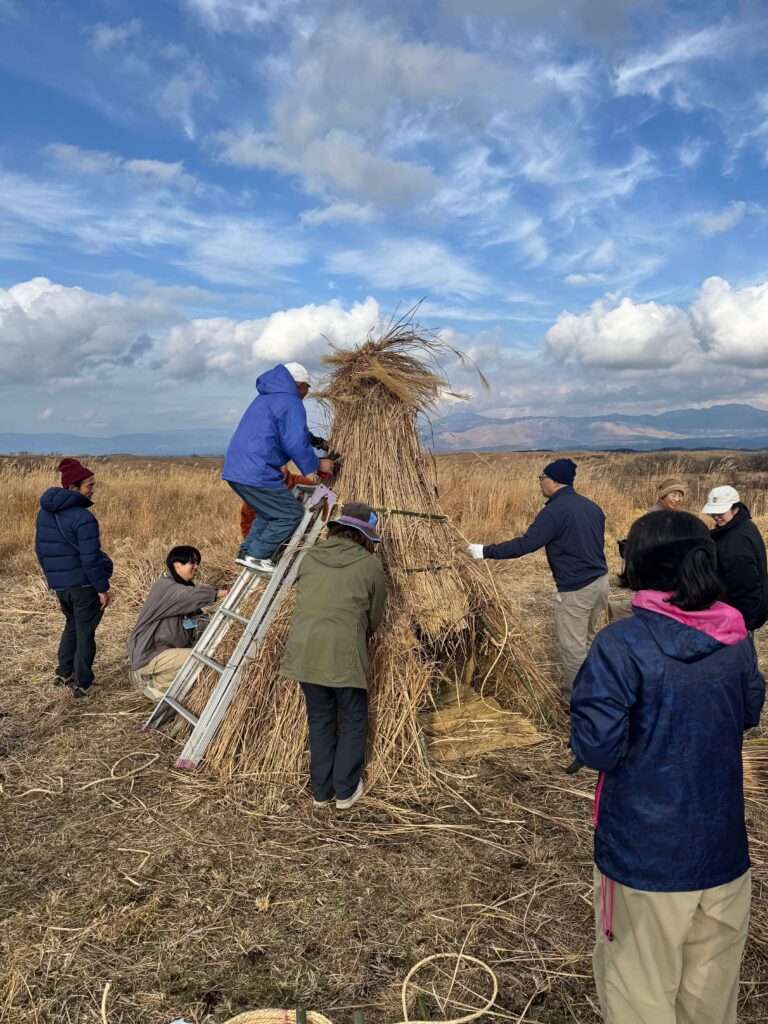
As volunteers continue their long-term involvement, the line between “outsiders” and “the local community” gradually blurs. Some have been coming here for nearly 20 years and have been welcomed as members of the community. The volunteer system that Aso Green Stock has cultivated over many years can be considered an excellent pioneering example of creating a “relational population”—a concept that is now emphasized in regional revitalization efforts. However, Ms. Masui is not entirely satisfied with the current situation.
Although the pool of volunteer participants has expanded, controlled burning is a task that requires experience. Since a certain number of participants do not become regulars after just one or two visits, I feel that it is now an urgent priority to “improve the quality of our relationships” by encouraging continued participation over multiple years and multiple visits per year.
From the phase of “broadening” relationships to the phase of “deepening” them. That’s how Ms. Masui describes the changes that have taken place over the past few years. Establishing diverse entry points—such as donations and product purchases—for those who cannot visit the site in person is also part of an effort to enhance the “quality of these relationships.” For companies as well, individual employees’ “trips and experiences” serve as entry points that hold the potential to eventually develop into deeper organizational engagement.
From One Person’s Dream to a Thousand-Year-Old Prairie
As he works to deepen the relationship between businesses and the grasslands, Mr. Masui places greater importance on the “attitude toward the relationship” than on the form or scale of collaboration. The term “regional revitalization” can sometimes create an asymmetrical dynamic between “those who provide support” and “those who receive it”—such as between cities and rural areas, or between businesses and local communities. The idea of “solving the problems of a region in need using external resources”—even when based on good intentions—carries the risk of unconsciously creating a hierarchical relationship.
What Mr. Masui is seeking is an “equal partnership”—a relationship that differs from that model. Before being a region facing challenges, Aso is also a region rich in natural resources and culture. Water sources, biodiversity, and connections with the local community. By engaging with the grasslands of Aso, companies gain more than just a track record of social contribution. Aso, too, is a place that offers significant value to the companies involved. A relationship of “co-creation” where value is discovered together and prosperity is shared—that is precisely the kind of collaboration Mr. Masui aims to achieve.
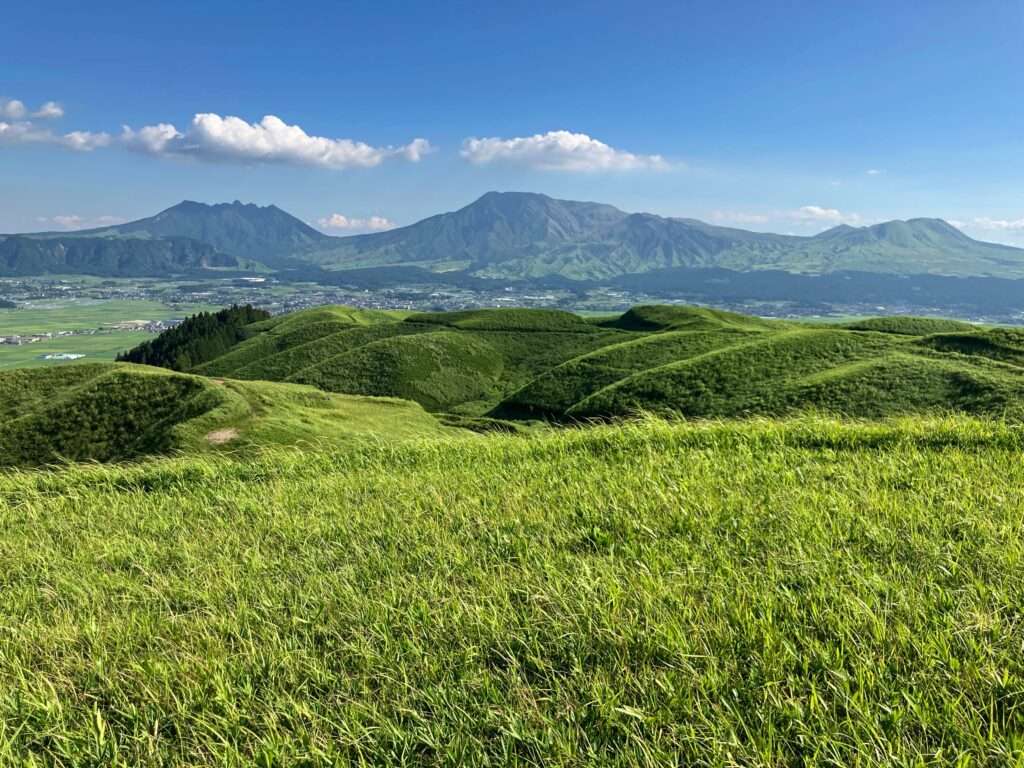
What can we do today to ensure that the grasslands of Aso remain for a thousand years to come? Mr. Masui’s answer to that question was not some grand vision, but rather the accumulation of small, everyday actions.
Even though we speak of a thousand years, it all boils down to a single year—and that year is made up of a succession of days. If people can remember Aso and the grasslands even just once a year, that’s enough for now. Japanese culture is rich with elements derived from grasslands, such as the pampas grass used in moon-viewing and the seven autumn herbs.
I hope you’ll take notice of the connection to grasslands that exists in your daily life, and choose grasslands as a place to recharge. Even when you’re far away, please continue to take an interest in them and never forget them. I believe that is the most important role each and every one of us has to play.
Currently, against the backdrop of efforts to address the TNFD recommendations, companies are gaining a deeper understanding of the relationship between their business models and supply chains and natural capital. At the same time, the reasons why companies engage in environmental conservation are increasingly being discussed in rational terms, such as “compliance with regulations” and “responding to disclosure requests.”
However, much of the collaboration that Mr. Masui has built up over the years began not with that kind of logic, but with a single person’s pure love for Aso.
First, take a look around your company to see if there are any employees who are interested in “Aso” or “nature.” Or perhaps try visiting the grasslands yourself. That small, personal step may eventually become the driving force behind your company as an organization and grow into a powerful force that nourishes nature for the next thousand years.
With the cooperation of: Aso Green Stock Public Interest Foundation

