
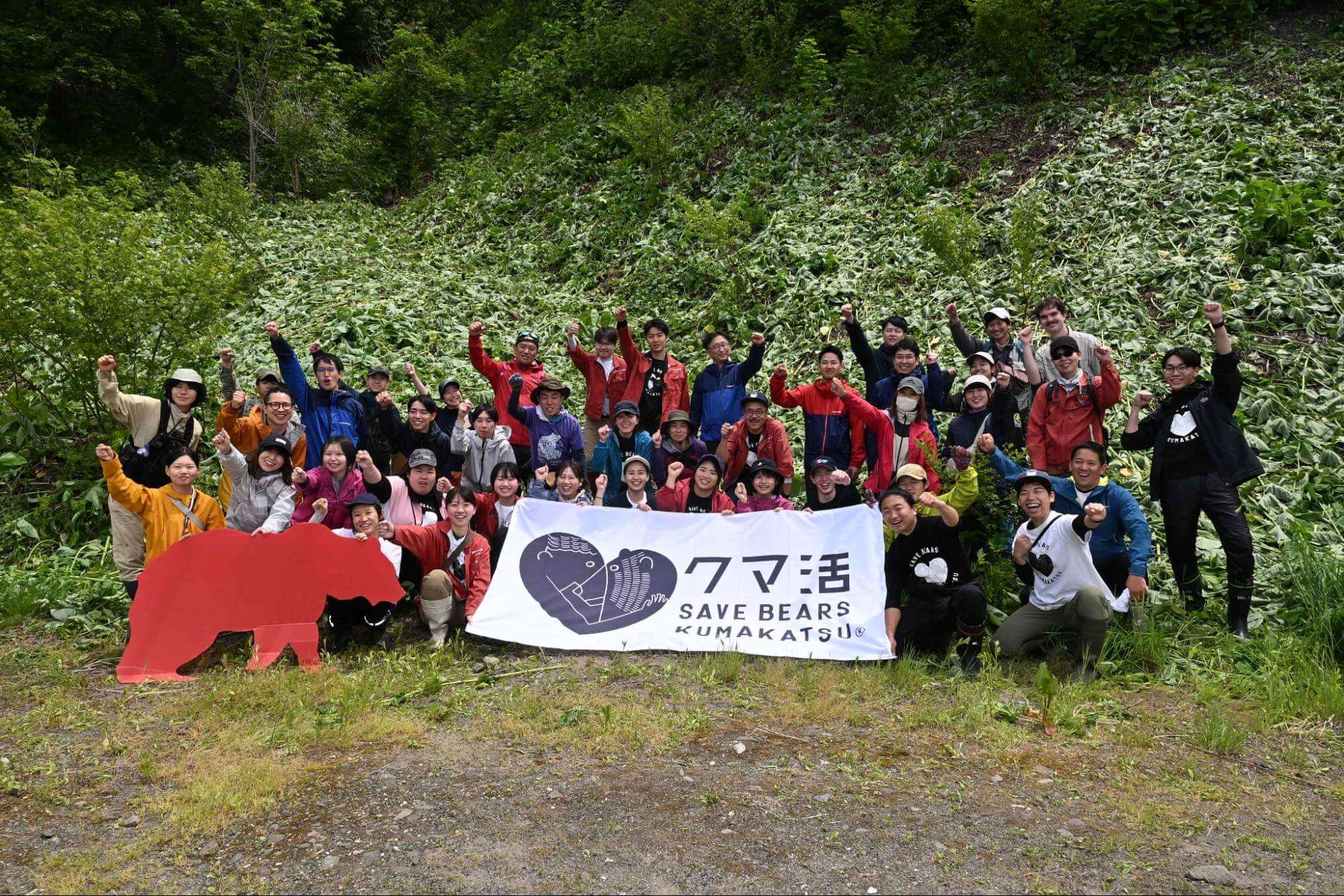

Image courtesy of Kitakobushi Resort
This year, too, there have been a series of bear sightings in various regions. Damage to crops, bears entering residential areas, and tragic accidents involving people. On Honshu, Asian black bears, and in Hokkaido, brown bears, have each crossed the boundary into human habitats; each time this happens, the media uses terms like “danger” and “threat,” and public opinion is filled with calls for countermeasures.
Bears are big, fast, and powerful. I think it’s only natural for humans to find bears scary. However, I’ve come to feel uneasy about how that feeling of “fear” has, before I knew it, turned into “hostility.”
Instead of simply driving them away, isn’t there a way for us to coexist while respecting each other’s territories and maintaining an appropriate distance? To find the answer, I visited Utoro on the Shiretoko Peninsula in Hokkaido this past June. My goal was to participate in “Kuma-katsu,” an event organized by the Kitakobushi Resort. Surprisingly, the activity—which aims to promote coexistence with brown bears—involves “mowing the grass.”
Shiretoko, the event’s host location, is a peninsula jutting into the Sea of Okhotsk in eastern Hokkaido. Recognized for its rich ecosystem, the area was designated a UNESCO World Natural Heritage Site in 2005. According to the Shiretoko Foundation, a public interest incorporated foundation, an estimated 400 to 500 brown bears currently inhabit the Shiretoko Peninsula, making it one of the world’s most densely populated habitats for the species. The annual number of sightings reaches approximately 1,000; in 2023, the number was double the usual annual figure, and in 2026, it exceeded 200 between March and June alone. Shiretoko is one of the places where brown bears and humans live in the closest proximity.
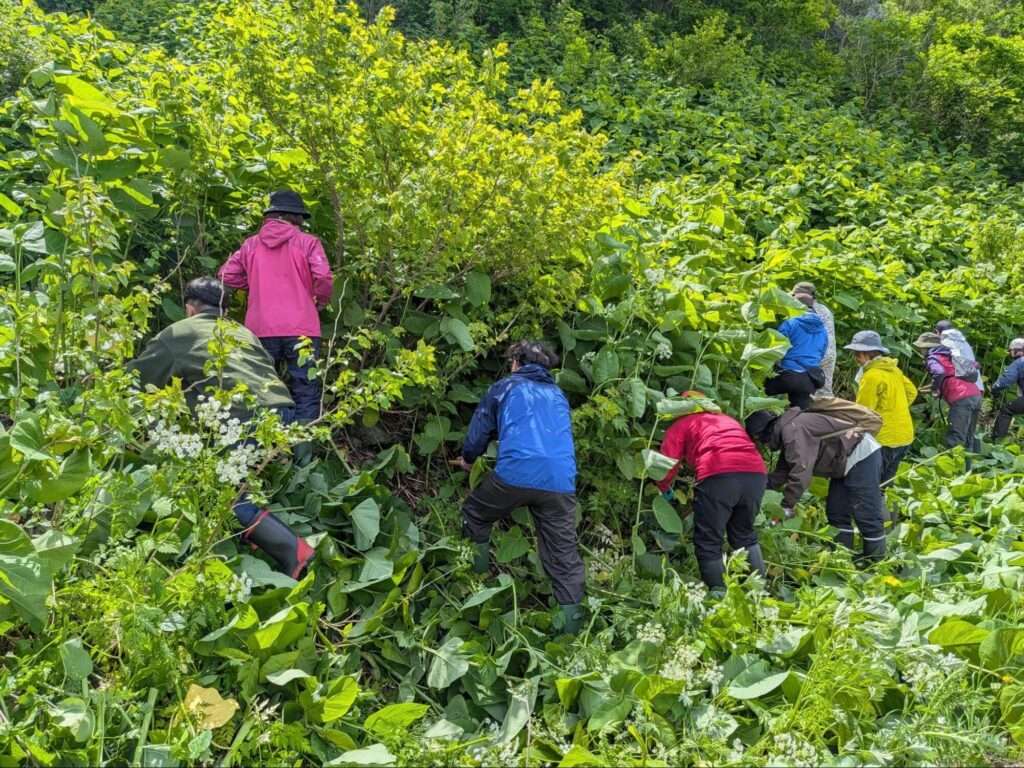
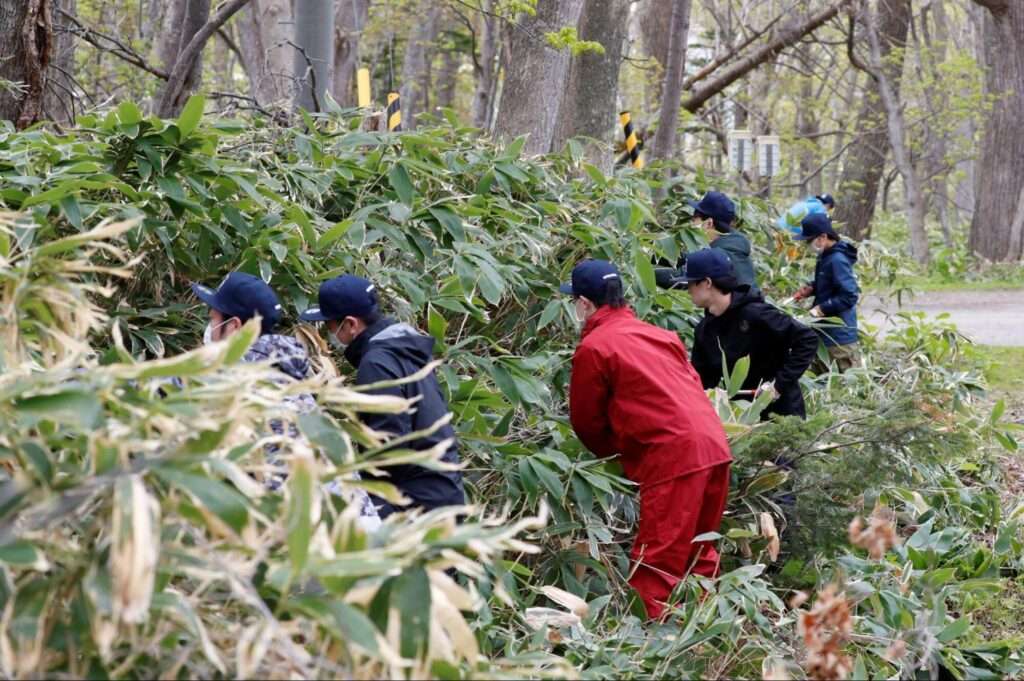
The “Bear Activity” held in the town of Utoro in Shiretoko is an initiative that involves mowing grass and picking up trash to create an environment that prevents brown bears from venturing into the town. In Utoro, which is directly adjacent to brown bear habitat, many bears blend into the thick grassy thickets and wander right into the town. Therefore, the goal of “Kuma-katsu” is to cut back the tall grass to improve visibility at the town’s boundaries and create an environment where people and brown bears can spot each other.
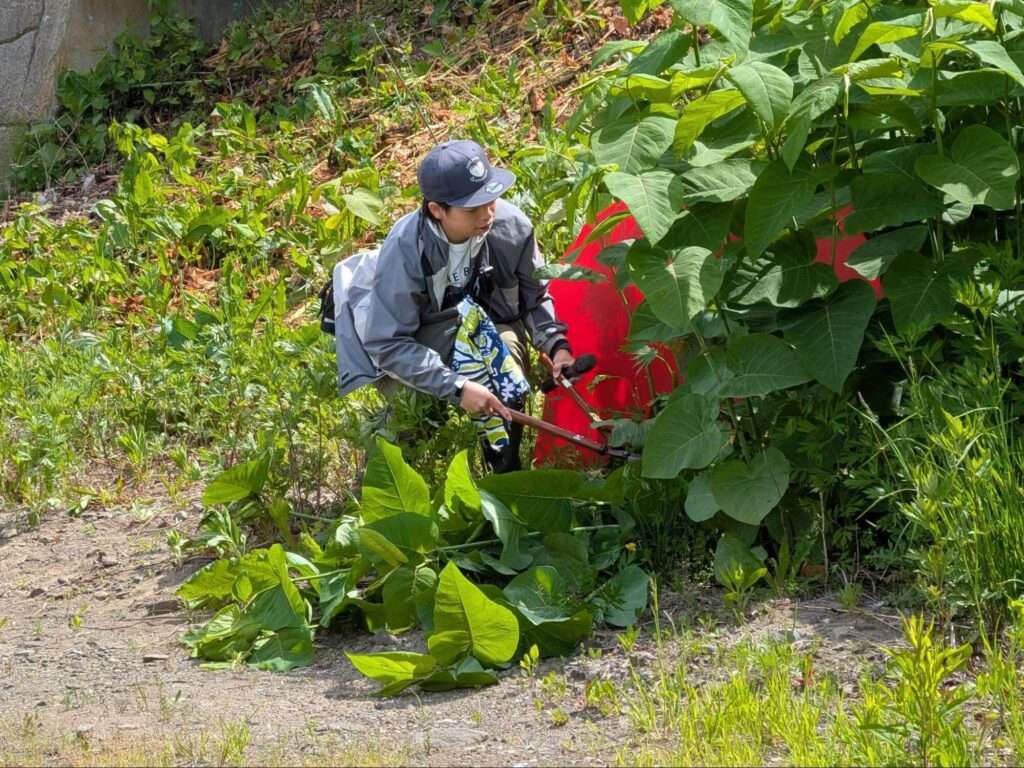
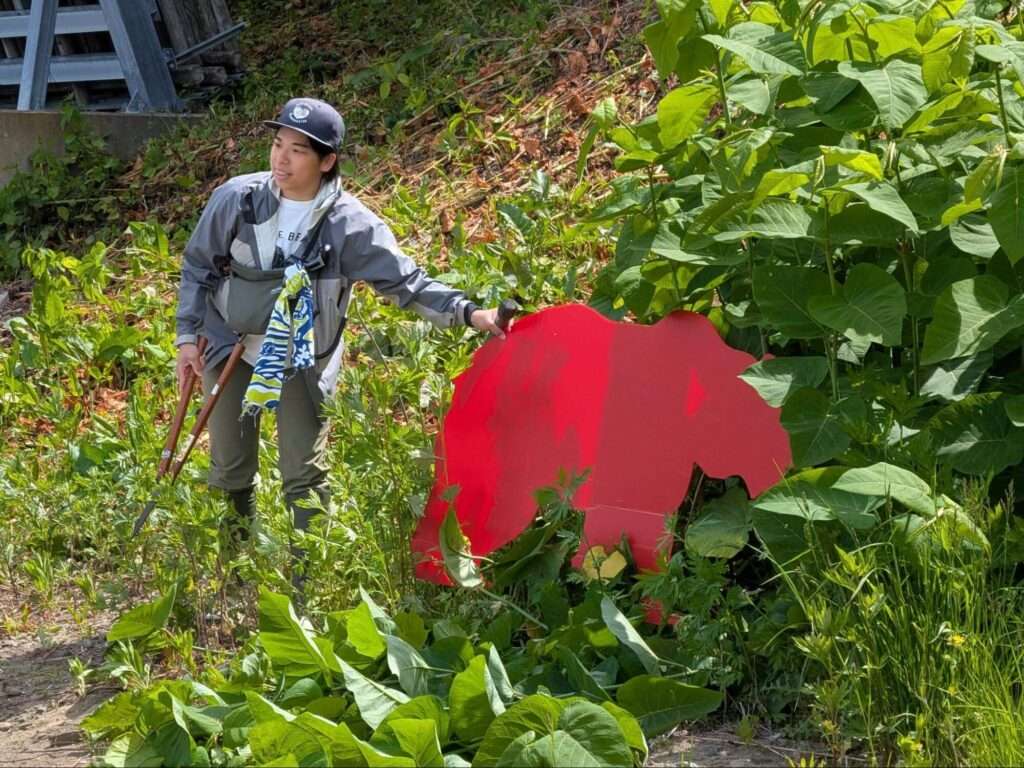
Mowing the grass improves visibility and helps prevent encounters between brown bears and people.
As I actually participated in “bear activities” and worked up a sweat alongside the local people, I realized something. Naturally, the people living in Shiretoko also have concerns and fears about bears. However, that fear is somehow different from the “fear” portrayed in the news. While there is a sense of awe and tension, there is no “hostility” there.
People connected to Shiretoko took it for granted that they were “guests in the habitat of the brown bears.” It was a sense that the brown bears weren’t just “coming” there—they were the ones who had always lived in Shiretoko, while humans were the ones who had arrived later.
Where exactly does this “gap in perception” between urban dwellers and rural residents come from? Perhaps the root cause of the strained relationship between humans and bears lies not in the bears’ presence, but in our sense of ownership toward nature—the belief that “this is human territory.” Could it be that this very mindset is transforming a pure reverence for nature into “hostility,” thereby creating unnecessary conflict with creatures with whom we are meant to coexist?
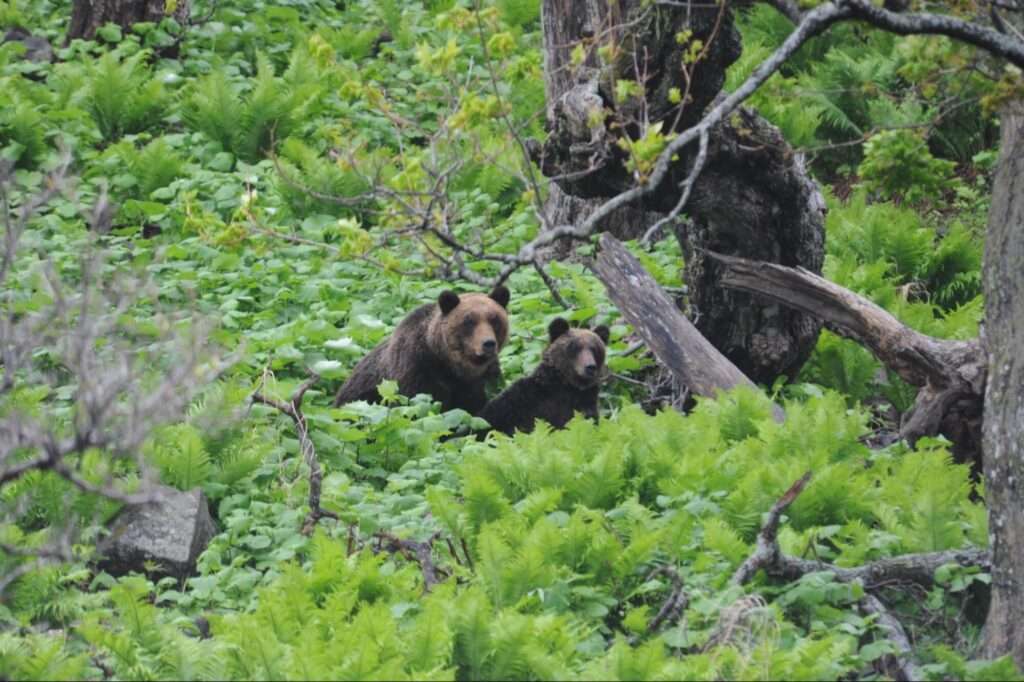
Brown Bears as Native Species
The brown bear is Japan’s largest land mammal and is found exclusively in Hokkaido. It is a different species from the Asian black bear found on Honshu; adult males weigh over 200 kg, and some individuals have been recorded weighing as much as 400 kg. The claws that support its body are extremely sharp and are specially adapted for climbing trees and digging holes; despite weighing over 100 kg, it sometimes sleeps in trees.
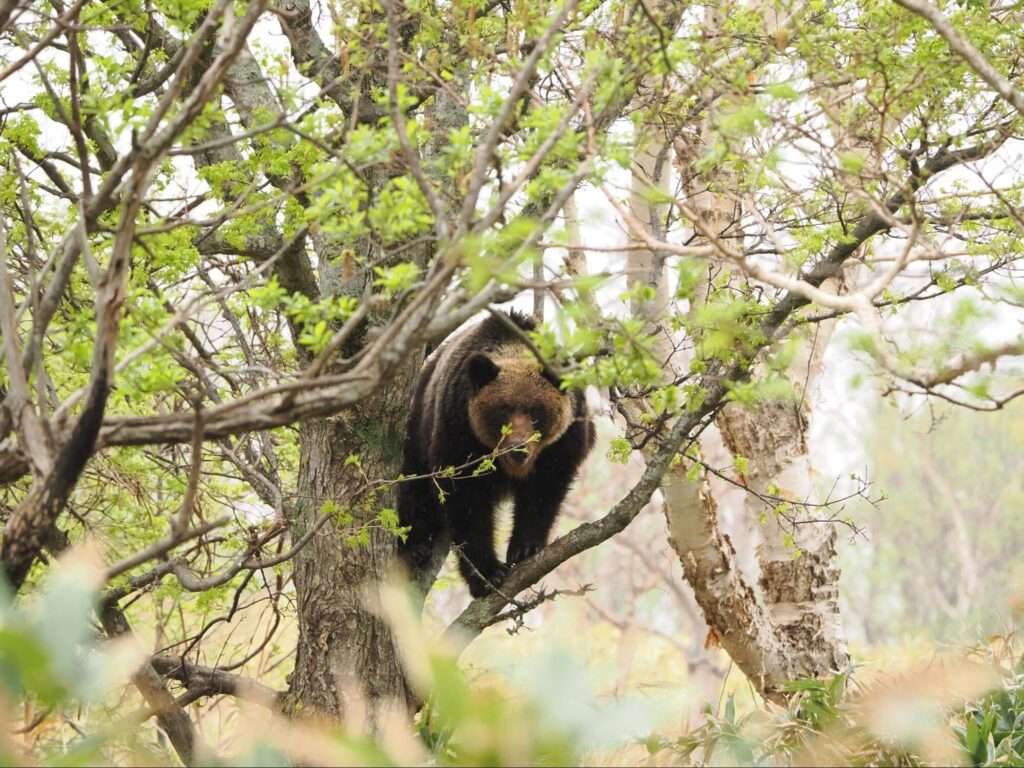
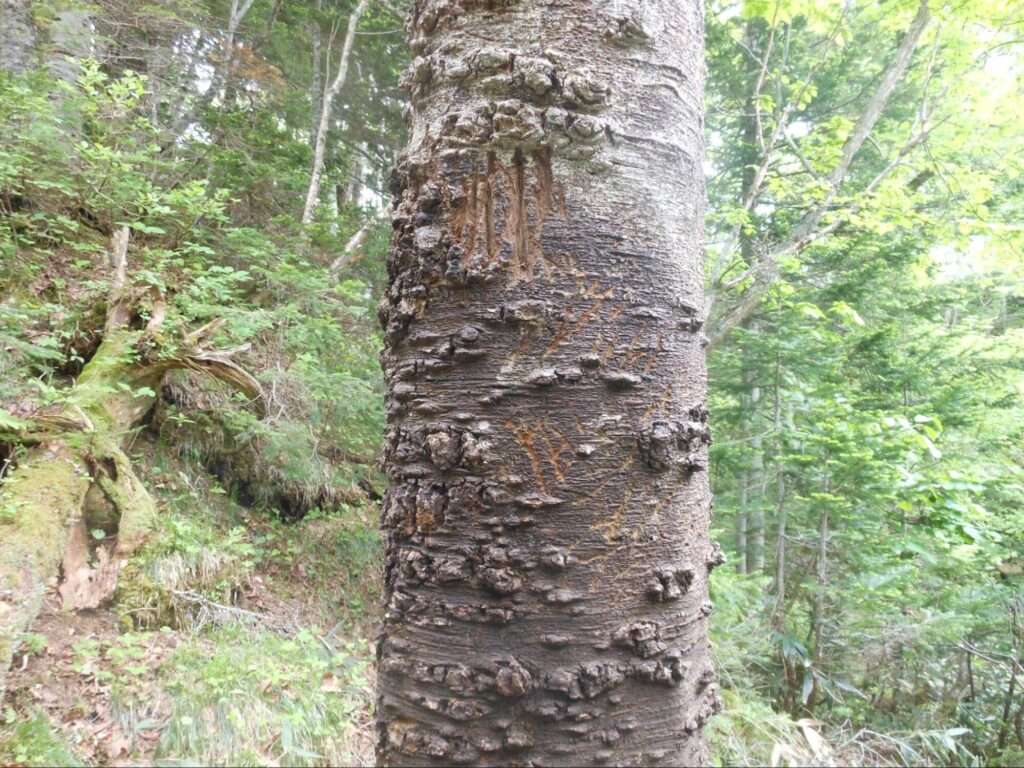
Courtesy of: Shiretoko Foundation (Public Interest Incorporated Foundation)
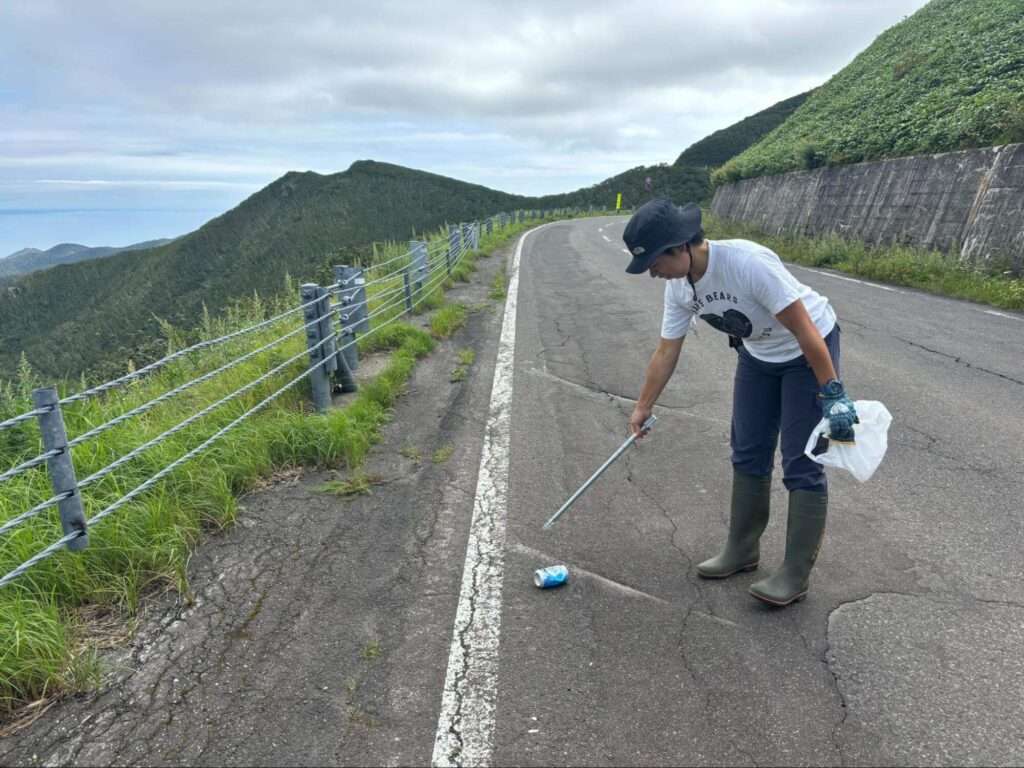
Furthermore, their sense of smell is so acute that it surpasses even that of dogs, and they are animals that primarily rely on their sense of smell to find food. That is precisely why the smell of trash discarded along the roadside often attracts brown bears into human settlements.

Courtesy of Kitakobushi Resort
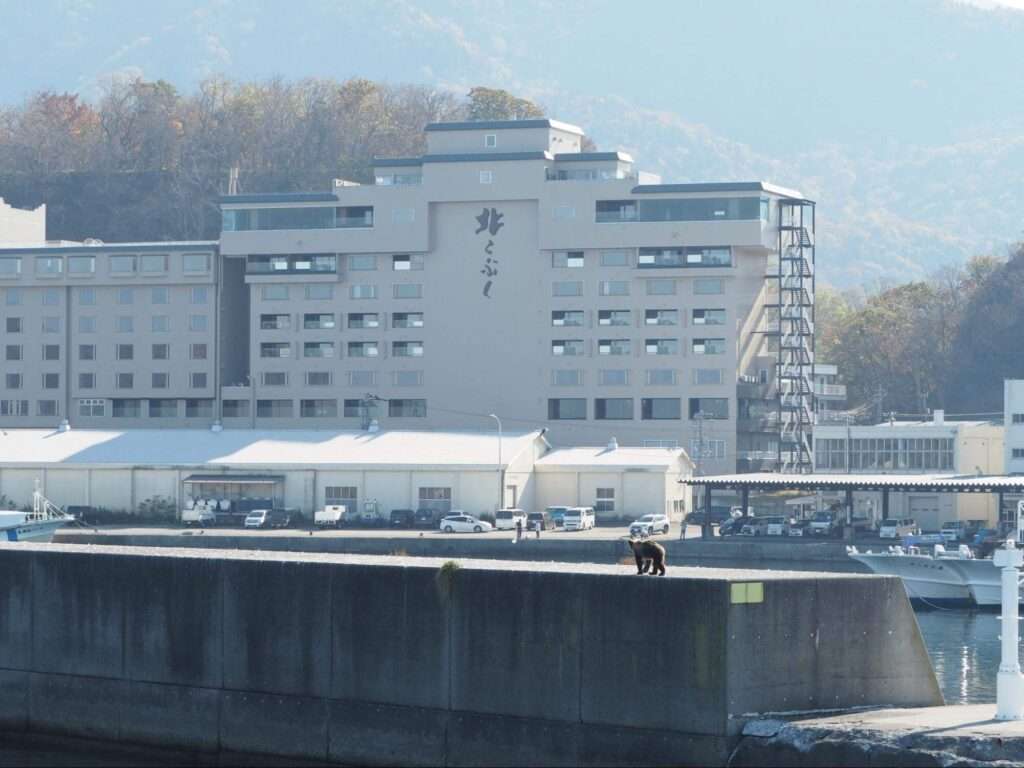
By nature, brown bears are creatures that avoid human contact and live deep in the forest. However, in Shiretoko, it is not uncommon to see brown bears walking nonchalantly along the roadsides. This phenomenon, known as “habituation to humans,” is believed to be caused by factors such as “bear traffic jams,” where tourists stop their cars to get close to the bears. As brown bears become accustomed to humans and vehicles and lose their wariness, some individuals begin to raid crops or venture into urban areas. Unintentional human behavior is robbing them of their natural way of life.
They walk through the forest, catch fish in the rivers, eat nuts, and return their remains to the soil. These activities of the brown bears form the very foundation of Shiretoko’s food chain. Long before humans began settling in Hokkaido in earnest, brown bears had been a constant presence in this ecosystem. Long before modern “boundaries” were drawn, the people who lived on this land existed as “part of nature” alongside the bears. So, what was the relationship between humans and brown bears like in the first place?
The brown bear is a visitor from the realm of the gods.
There are people who have cultivated a relationship between humans and brown bears within their own unique worldview. They are the Ainu, the indigenous people of Hokkaido. In the Ainu worldview, everything that exists in this world is imbued with a spirit. Whether it be the brown bears dwelling in the mountains, the fish swimming in the rivers, the utensils humans use every day, or even sudden natural disasters—all are believed to be beings that have descended to this earth from the heavenly realm, each bearing a specific mission. Since they come with a mission, the Ainu people hold the fundamental belief that there can be no such thing as a “non-entity” in this world.
These beings are called “Kamui,” a term often translated as “god” in Japanese. However, it is difficult for those without an Ainu spiritual background to fully grasp the depth of this word. Although our understanding is based solely on written records, the Ainu have revered “Kamui”—beings with “powerful spirits” far beyond human capacity—as entities that should be treated with respect.
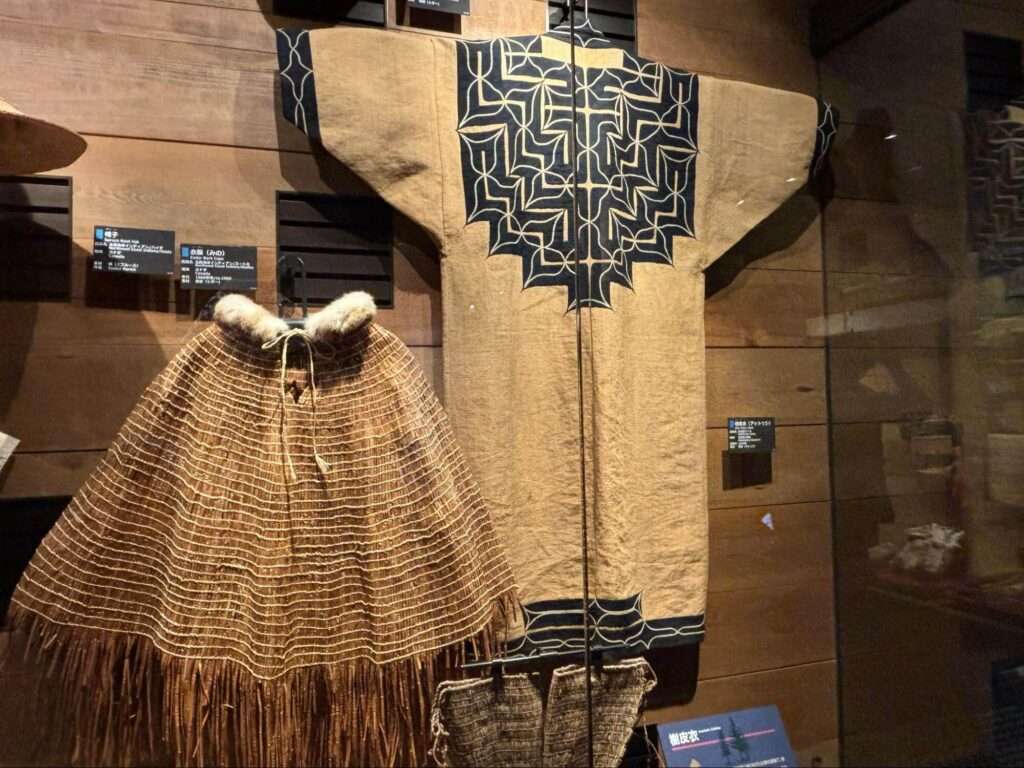
The brown bear holds a particularly important place among the Kamui. Known as Kimun Kamui, or “God of the Mountains,” it has long been at the center of the Ainu people’s beliefs. According to the expanded and revised edition of *Basic Knowledge of Ainu Culture* (edited by Kyoko Kojima, Sōfūkan, 2018), the brown bear was not a primary food source for the Ainu, nor was its fur or hide frequently used as a main material for tools. Nevertheless, it has held a special place as an object of worship.
At the heart of their relationship with the brown bear lay not practical benefit, but something else entirely. This is reflected in the language they use to describe hunting. The Ainu people describe heading into the mountains to hunt brown bears as “going to welcome them” or “going to receive them.” This is based on the belief that “brown bears descend to this land from the realm of the gods on a mission, taking the form of bears to visit human settlements.”
Therefore, what humans must do is welcome these visitors with respect and eventually send them back to the Kingdom of God. Even when a mother bear was captured in the mountains, the cub that was with her was brought back to the kotan (Ainu settlement) and raised with great care as a deity. Then, through a ritual called “Iomante,” the bear was sent back to the realm of the gods. For this reason, raising a bear cub as a deity was considered the highest honor for the Ainu people.
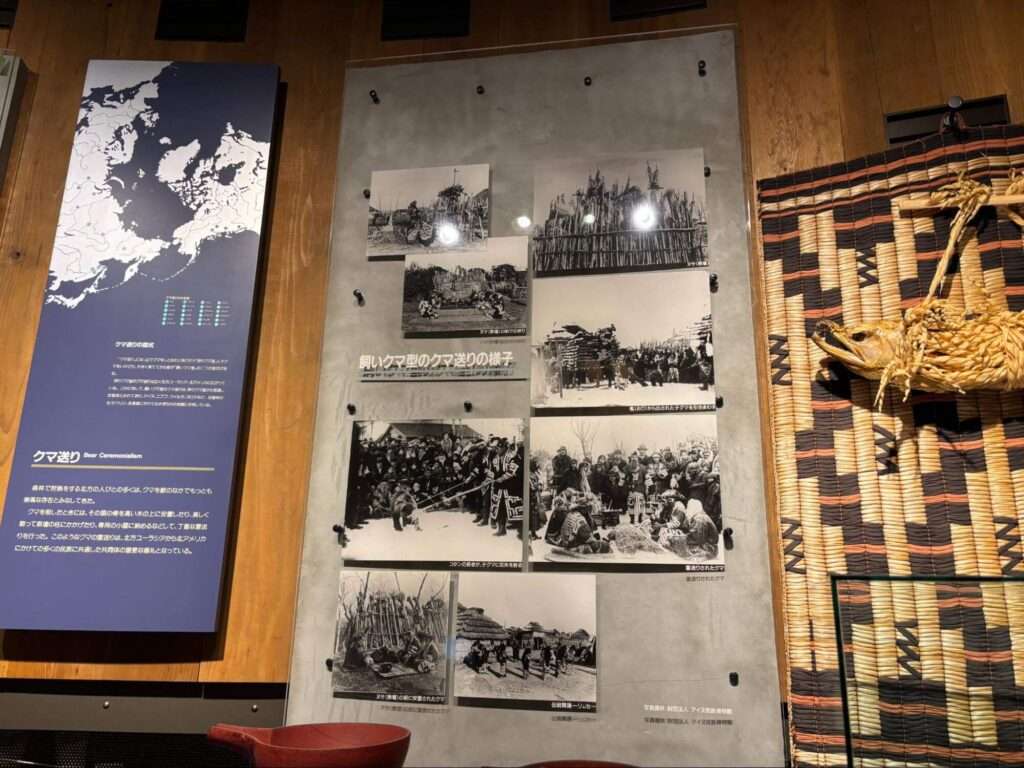
The Ainu worldview clearly defines humanity’s place in the world. Rather than as rulers, the Ainu have always regarded themselves as “those who coexist” with brown bears in a space where various beings come and go. Of course, they must have felt “fear.” However, that fear was not hostility but “respect” itself. Rather than attempting to eliminate what they could not control, they viewed it as possessing a “strong spirit” precisely because it was beyond their control, and sought to engage with it sincerely.
So, turning our attention to the present, where exactly is the “fear” we feel as people living in the modern world headed? Both the anger of farmers whose crops have been ravaged and the anxiety felt by residents who worry about these creatures appearing in residential neighborhoods are entirely justified. However, we should pause for a moment to consider the words we use to articulate that “fear.”
Phrases like “invaded” or “stolen” are all based on the premise that “this is human territory, and the bear has encroached upon it.” When that premise becomes taken for granted, mightn’t that “fear” gradually turn into “hostility” without us even realizing it?
How did this sense of “ownership”—which we harbor without even realizing it—become so deeply ingrained, and how has it altered our relationship with nature? The process by which the Ainu people were driven from their lands serves as historical evidence of this.

In 1872 (Meiji 5), the government enacted a new law called the “Land Regulations.” Simply put, this marked the introduction of a Western-style rule requiring that “boundaries be drawn around all parcels of land to clearly determine ownership.” The Ainu people, who had no concept of land as private property, saw their ancestral homelands and hunting grounds unilaterally taken away under this new rule and designated as “state-owned land.”
The lives of the Ainu people, who had until then lived in harmony with nature, were to be drastically transformed. In 1876, the traditional Ainu practice of trap-and-bow hunting was banned, and this was followed by bans on salmon fishing and deer hunting.
The forest has transformed from a place where the Kamui and humans coexisted to a “resource” managed by the state. The modern system of “drawing lines to claim land as human property” operates on the same structure that excluded the Ainu people—who held no property rights—from their way of life; eventually, it will unconsciously come to exclude even the brown bears that roam the forest, treating them as “intruders into human territory.”
Hokkaido’s vast natural landscape, which became an “object of ownership” through colonization, was eventually redefined as a “tourism resource.” Mountains are meant to be climbed, the ocean is meant to be viewed, and forests are meant to be experienced. Nature has been commodified as an object for human consumption, and the tourism industry has developed based on this structure.
In Shiretoko, too, as development and infrastructure for visitor access expanded, the area increasingly took on the character of a so-called “tourist destination.” And I can’t help but feel that even the brown bears—which should naturally inspire awe—have, before we knew it, been incorporated into the tourist experience as a “main attraction” to be easily enjoyed from the safety of a car window.
Mowing the grass helps protect bears
Rather than unilaterally exploiting nature as a “commodity” until it is completely depleted, the goal is to reshape the environment so that humans and brown bears can coexist. An initiative that seeks to directly confront the very nature of tourism as it has existed until now has begun in Utoro. This is “Kuma-katsu,” launched by Kita-Kobushi Resort.
Click here for more details on “Bear Activities”

Haruka Murakami, the company’s public relations representative, has played a central role in driving the “Kuma-katsu” initiative since its inception. A native of Osaka Prefecture, she became deeply immersed in research on brown bears during her college years. She fell in love with Shiretoko during her first visit there—which came about through a part-time job creating brown bear skeletal specimens—and eventually moved there.

Kitakobushi Resort, which celebrated its 60th anniversary in 2020, adopted the concept “Preserving Shiretoko for the Future” as a way of giving back to the region. In fact, the roots of this philosophy trace back to the Taisho era.
The inn’s founder, Shin’ichi Kuwajima, originally settled in the area from Kagawa Prefecture during the Taisho era and worked as a farmer in Shiretoko. However, hampered by the harsh natural environment of the volcanic region, he was forced to give up farming. Compounded by the fact that there were many women in his family, making farm work difficult, he made the agonizing decision to start a ryokan as a means of survival. At that time, it is said that he personally planted trees such as Japanese white spruce on his former farmland in an effort to “restore the land to its original natural state.”
Moving beyond tourism that merely consumes resources, the goal is to ensure that, well into the future, we can maintain a balance between our rich natural environment and human activities. Just as the company’s founder once planted trees, “Kuma-katsu” was conceived as a modern way of “giving back”—in collaboration with the Shiretoko Foundation, which specializes in local nature conservation. Ms. Murakami, who has experience in brown bear research, was chosen for the role; after transferring to the public relations department, she became the driving force behind this project.
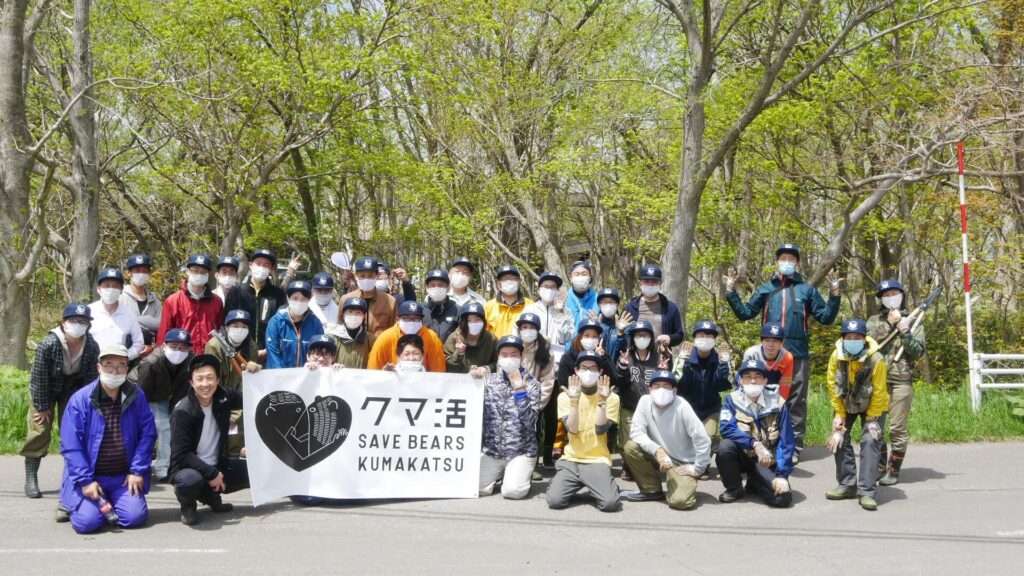
Coincidentally, 2020 was the year of the COVID-19 pandemic, and tourists vanished from the town. “Even though there are no customers, the bears are still coming, so let’s do it!” Under that motto, we started out tentatively, initially involving only employees, the Shiretoko Foundation, and other people connected to the project.
Courtesy of Kitakobushi Resort
This “Bear Safety Initiative” is a practical effort aimed at achieving its ultimate goal of “zero human casualties caused by brown bears,” and it consists of three main pillars: “grass cutting,” “public awareness and education,” and “litter cleanup.”
The electric fence that runs along the coastal walkway serves as a defensive line to prevent brown bears from entering the town of Utoro. In the past, brown bears that came along the coast would sometimes slip through the gap between the railing and the rock face and make their way into town. To prevent this, a fence has now been installed to block the route from the ocean side to the town.
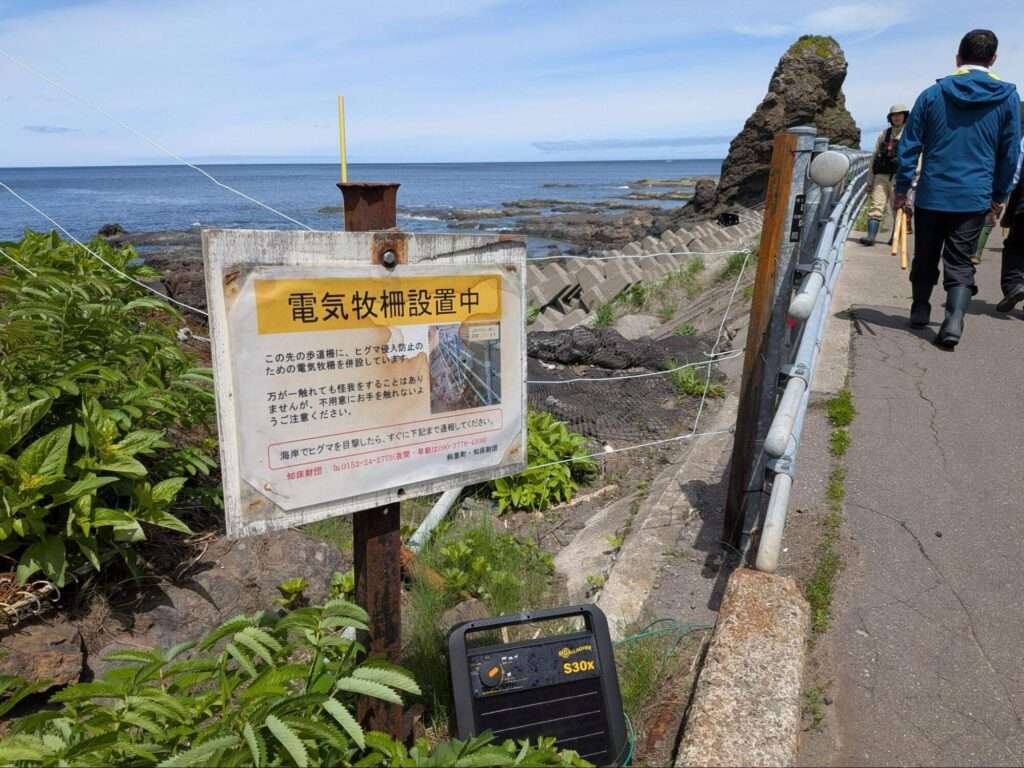
However, there are inevitably “gaps” in physical barriers—such as along rivers and roads where electric fences cannot be installed due to the terrain. Mowing the grass as part of “bear safety activities” is intended to cover these vulnerable areas and ensure safety.
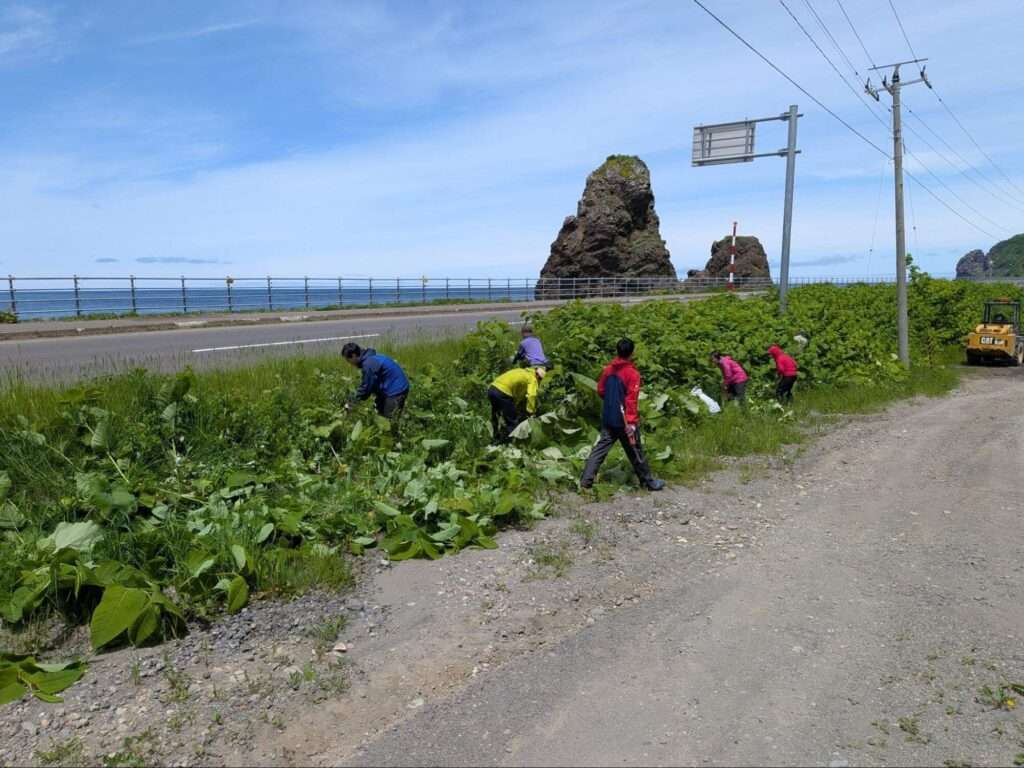
Along the coast near urban areas and around school routes, thick stands of giant knotweed—tall enough to completely conceal a brown bear’s massive body—and butterbur, which serves as their food source, grow in abundance. The tall grasses, which tower over even a brown bear, make it impossible for both humans and bears to see each other. It is precisely because they cannot see each other that sudden encounters occur, leading to accidents. Mowing the grass creates an environment where both people and brown bears can be aware of each other and maintain a safe distance.
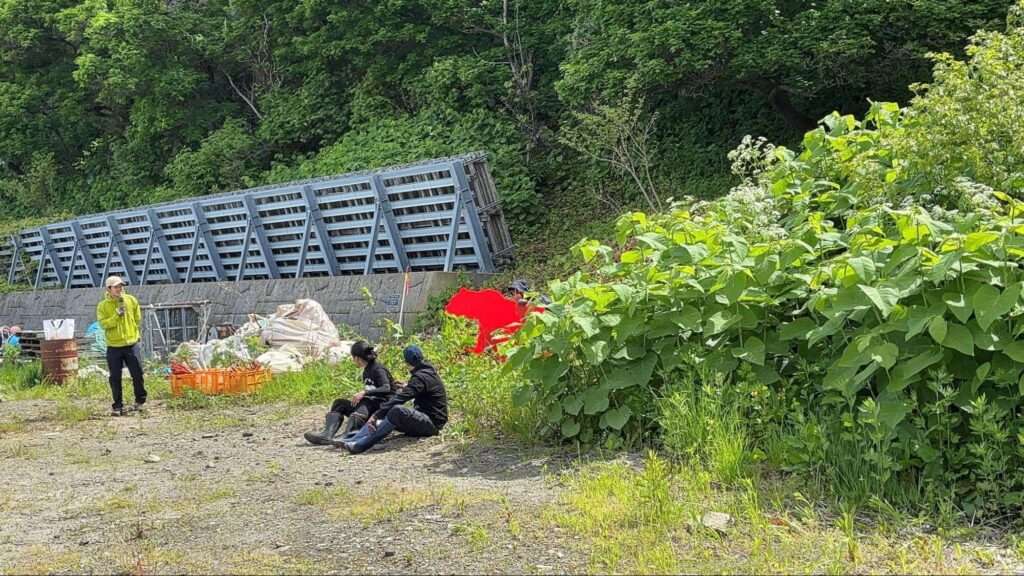
The timing of the project—specifically “June”—holds particular significance, as Mr. Murakami explains, “Brown bears are extremely active during this time of year.”
This is the breeding season when males chase females, and young males driven out by stronger males, as well as females with their young fleeing from males, move around all over the place. That is precisely why it is of the utmost importance not to create “comfortable places” for them within the town.
We want to prevent both the tragedy of brown bears losing their lives and situations where local residents are put in danger.
In the past, the rise in tourist numbers led to problems such as overtourism and attracting brown bears, and there was a tendency for the region to become increasingly strained as more people visited. There was even a period when the increase in tourists directly contributed to the worsening of brown bear-related issues, as people unfamiliar with these animals would carelessly approach them to take photos.
Having squarely confronted that past pain, Mr. Murakami emphasizes, “Our goal is a future where Shiretoko becomes better the more people visit.” By clearing vegetation to improve visibility and prevent accidents involving people, and by picking up trash to minimize contact with brown bears, they are creating an environment where nature and society thrive as more people visit, while maintaining an appropriate distance from the bears. This is also a strong commitment to preserving the unique natural value of Shiretoko—the only place in Japan where visitors can truly experience wildlife.
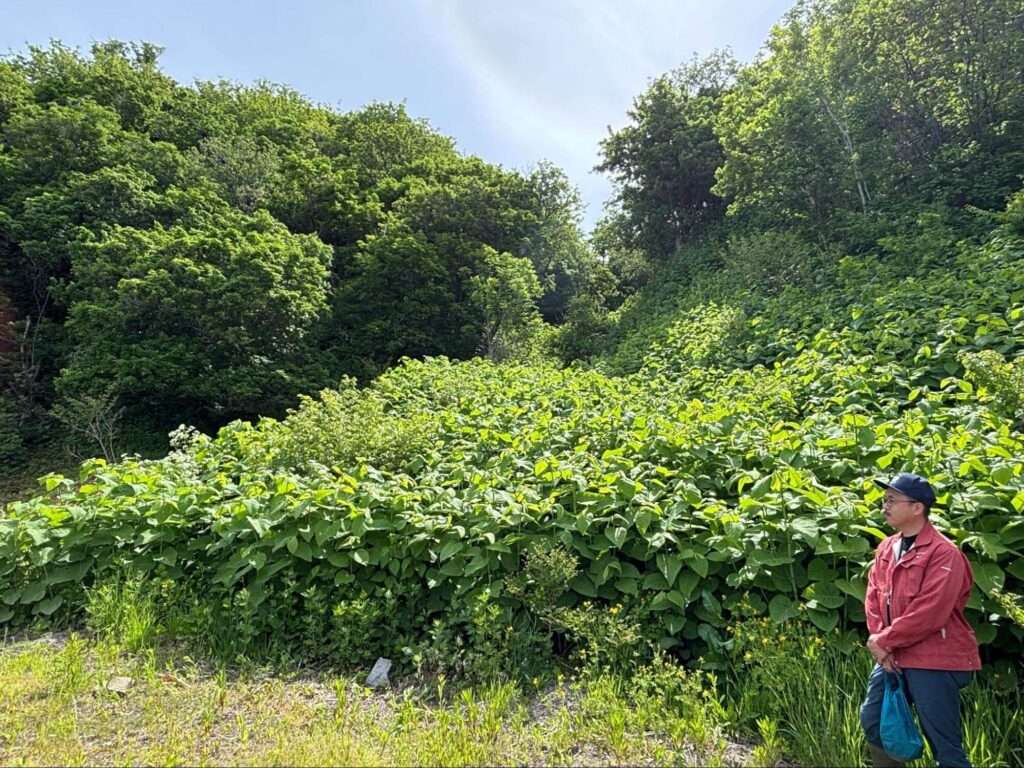
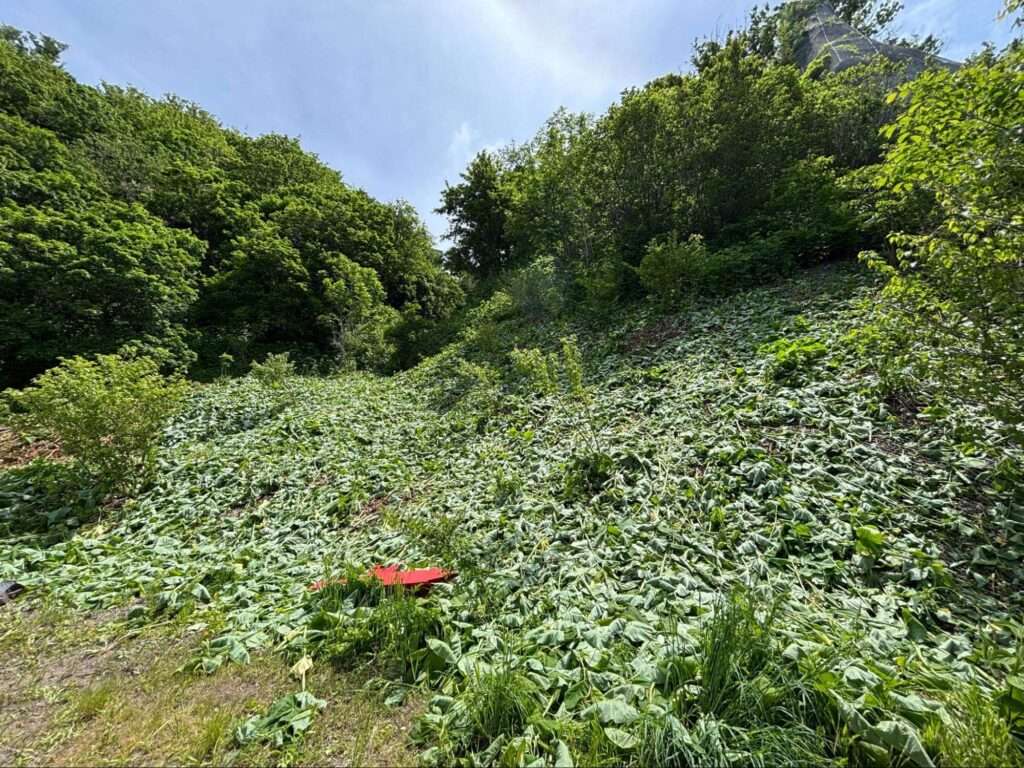
The area before and after mowing. The slope offers a clear view after mowing, which helps in spotting brown bears.
In fact, when I myself visited Utoro, participated in the “bear-related activities,” and climbed the slope with pruning shears in hand, I realized something. It was the feeling that what I was enjoying doing was, in the end, helping the brown bears. Even though the work was meant to maintain a safe distance between people and brown bears, I strangely felt as if my heart was drawing closer to them.
And above all, there’s just something inherently satisfying—without needing any explanation—about moving your body to your heart’s content and working up a sweat in the great outdoors. The time spent silently mowing the grass while exchanging a few words here and there with locals or fellow participants who happened to be working right next to me was also a major part of the appeal of this activity.
“Where are you from?” “What do you usually do?” and “What do you like most about Shiretoko?” The person next to me, who was wiping sweat from his brow, said with a smile that he had been completely captivated by Shiretoko’s majestic nature and had visited about 20 times over the past five years. He went on to explain that he had eventually moved here. Another participant told us that, while the beauty of nature was certainly a draw, it was the warmth of the people living in Utoro that had drawn him back time and time again.
People of completely different ages and backgrounds were working up a sweat on the same piece of land, all for the same purpose. That’s exactly why there was a quiet, warm sense of unity in the air. I suddenly stopped working, straightened my hunched back, and looked up. Before my eyes lay the beautiful Sea of Okhotsk, and all around me, dazzlingly vibrant greenery swayed in the breeze—the sheer comfort of the moment made me breathe a sigh of relief.
Can Tourism Be a Way to “Give Back”?
Tourism is an industry that has long benefited greatly from nature—beautiful scenery, rich ecosystems, and unique local cultures. It has thrived by utilizing these as resources.
Currently, Utoro is a small town with a population of about 1,100, but thanks to tourism, it attracts many visitors from both Japan and abroad. However, Mr. Murakami points out that if these visits are reduced to mere “consumer activities”—such as simply admiring the scenic views and enjoying delicious food—people will end up merely passing each other by without truly connecting.
By engaging with tourists, we can effectively convey the real challenges facing the local community—such as “we’re currently struggling to coexist with brown bears”—and work together with people from outside the area to find solutions.
How can we leverage tourism to improve our community and safeguard our peaceful way of life? If we can design a plan that achieves this, it should become a powerful force for good.
A region cannot thrive on beautiful nature alone. It is home to people who face pressing challenges in coexisting with nature, and it has a history that has been preserved and passed down through the generations.
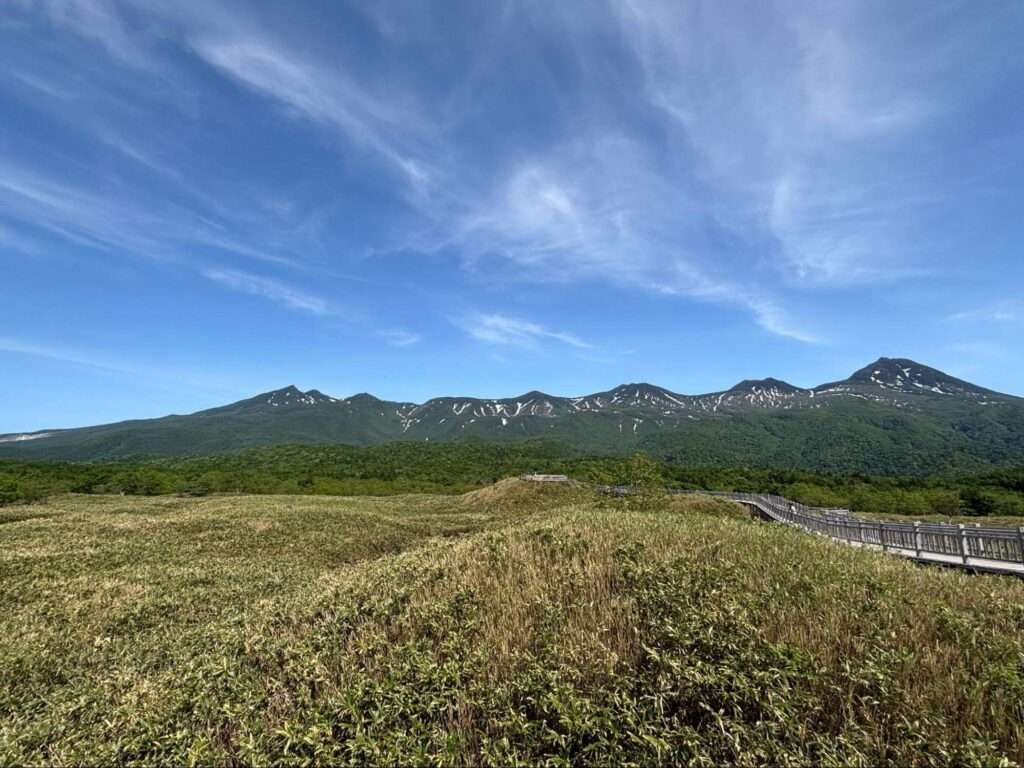
Standing before the majestic Shiretoko mountain range, I couldn’t help but feel a deep sense of respect for the efforts of our ancestors who have preserved this landscape to this very day. I am captivated by the vast expanse of Hokkaido’s landscape, and I find even the presence of the Blakiston’s fish owls and brown bears that inhabit the forest utterly endearing. Precisely because of this, I feel a sudden, faint dizziness at the weight of the responsibility to pass on this “irreplaceable natural heritage of Shiretoko” to future generations.
However, participating in “Bear Activities” and mindlessly mowing the grass gave my heart—which had been on the verge of despair—a tangible sense of grounding. It was by no means a burdensome obligation, but rather a “genuine act of gratitude” that I could offer right here and now.
Work up a sweat while having fun and connecting with Shiretoko’s nature. “Bear Activities” quietly foster a warm bond between people and the great outdoors within each and every participant.
With the cooperation of: Kitakobushi Resort, Shiretoko Foundation (Public Interest Incorporated Foundation)

