
If tourism numbers go up, local communities will prosper. For a long time, it was widely believed that chasing “numbers” was the surest path to regional prosperity. But today, that assumption is crumbling across the world.
Tourists flooding the back alleys of Kyoto. Long queues stretching up the trails of Mount Fuji. This is overtourism, leaving local residents crying out that their daily lives are being disrupted. The “recovery of tourism demand” as measured by statistics and the “recovery of prosperity” as felt by communities do not necessarily align.
So what is tourism for? Is it to increase visitor numbers? To grow spending? When chasing those metrics becomes the goal in itself, tourism turns into a mechanism for consumption. Communities are placed on the receiving end of consumption, culture is sold off piece by piece, and nature is eroded. No matter how loudly the word “sustainability” is invoked, if the underlying structure — treating tourism as an end in itself — remains unchanged, the distortions will keep recurring in different forms.
As these distortions reach a tipping point across the world, a growing movement is emerging to rethink tourism itself. It is called “Regenerative tourism.”
Unlike conventional “Sustainable tourism,” which aims to maintain the status quo, regenerative tourism goes one step further. It seeks to restore damaged nature, culture, and local communities, and to leave them in a more flourishing state. It is a movement to redefine tourism as the means toward that end.
How Indigenous values can shape tourism policy
New Zealand is drawing global attention as a leader in regenerative tourism. It is an island nation home to towering mountain ranges that seem to reach the sky and the World Heritage-listed Fiordland, where the tuatara, a reptile unchanged since the age of the dinosaurs, still lives today. It is a place where one can viscerally experience the profound depth of the earth’s time.
However, its global leadership in regenerative tourism is not solely due to this awe-inspiring natural environment. It is also because Māori values have contributed to a growing focus on value over volume in parts of the tourism sector.
The organization working to root that philosophy in “mainstream tourism” and “the business world” is New Zealand Māori Tourism (NZMT). Its mission is to support Māori-owned tourism operators and to spread a Māori values-based approach to tourism across all of New Zealand.
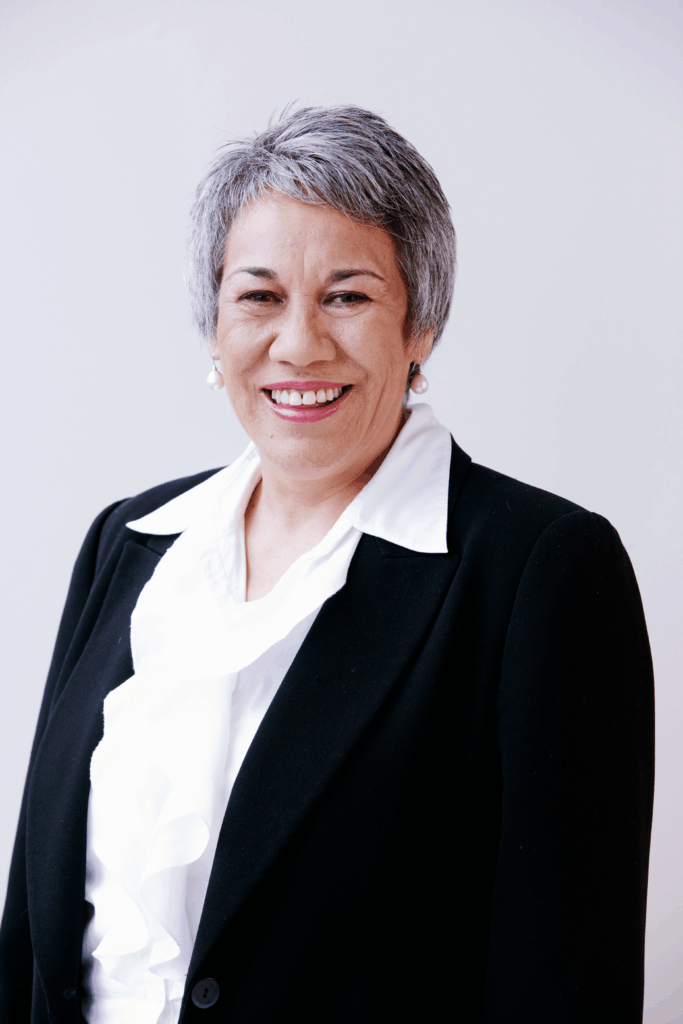
Dame Pania Tyson-Nathan, CEO of NZMT, embodies that mission. (“Dame” is New Zealand’s highest honor bestowed upon women.) She has spent years integrating Māori values into mainstream business practices, and has continued to raise these questions at international conferences and forums around the world.
The perspective Pania draws on comes from te ao Māori, the Māori worldview. . For Māori, nature is not a “resource” to be managed and consumed by humans, but an “ancestor” and “family” to be in dialogue with.
For example, the concept of “Kaitiakitanga” — meaning guardianship and responsibility — refers to the obligation to pass on the natural environment to the next generation. It goes beyond simply “taking care of the environment.” It is an active concept of responsibility: to return what has been received from nature to the next generation in a more abundant state.
There is also “Manaakitanga,” which means deep respect and hospitality toward people and places. According to Pania, Manaakitanga carries a similar sentiment as the Japanese spirit of the “Shokunin” (職人).
A Shokunin is not simply someone who sells their skills. They are someone who faces their materials, thinks of the person who will use their work, and strives for utmost sincerity in the work itself. That spirit closely mirrors Manaakitanga, which embodies deep respect for people and places through action.
Concepts such as “Kaitiakitanga” and “Manaakitanga” are not mere philosophy — they are the principles of “life itself” that continue to shape how many Māori engage with people and place.
Tourism is a vehicle, not a destination
Pania does not leave Māori philosophy as an abstract ideal. There is a phrase she often returns to and challenge how business is thought about and approached. That phrase is “Culturalizing Commerce.” Broadly speaking, this means “conducting business in a culturally grounded way,” but its meaning runs deeper than that.
Using yoga and Ayurveda as examples helps clarify the structure of “Culturalizing Commerce.” These traditional Indian systems of medicine and philosophy, with a history of over 5,000 years, have expanded into the global market while preserving their deep spirituality.
The Indian government has positioned Ayurveda and yoga as exportable high-value services under the national strategy “Heal in India.” Rather than allowing traditional wisdom to be exported indiscriminately, they have established world-standard quality certifications. In 2023, they created the “Ayush* visa” for foreign visitors, establishing a formal framework to welcome them. In 2024, approximately 640,000 foreigners visited India for medical purposes, demonstrating that cultural depth directly translates into economic value. (*1)
*Ayush: An acronym for Ayurveda, Yoga & Naturopathy, Unani, Siddha, and Homoeopathy — all traditional and alternative medical practices of India.
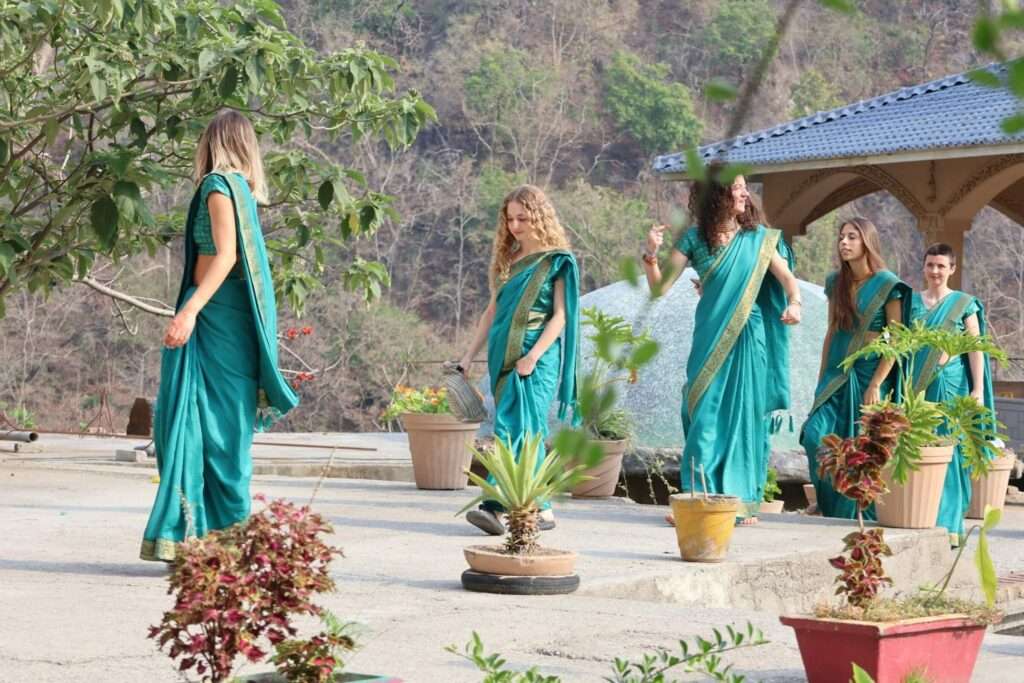
What India offers is not a functional product divorced from its context, like a mere massage or exercise. It delivers India’s ancient lifestyle itself — food, meditation, harmony with nature — as one comprehensive experience. It places the “authenticity” of its own deep spiritual culture as the greatest added value, drawing people from around the world. It is not about using culture as raw material for business, but making business serve culture. That is what “Culturalizing Commerce” means.
Tourism is a vehicle, not a destination. It is a tool for intergenerational well-being, economic independence, cultural strength, and environmental restoration. People and place come first, and business should serve them.
When we think of tourism as a “vehicle,” the question becomes: where are we headed? Not toward achieving numbers, but toward enriching people and places. Only when that direction is set does business become a tool that functions correctly.
Pania also points to the risk of viewing tourism through the single lens of the “visitor economy.”
Culture is at the center of all economic activity. If we do not stop looking at tourism through a single lens, we will miss so much untapped value right in front of us.
It requires connecting all economic activity — from food to investment — with culture at the center. From this holistic perspective, tourism transcends the framework of “an industry that welcomes visitors” and becomes inseparable from the life of the community itself.
To make this philosophy work to its fullest, the industry must understand its values and send “a consistent message” to visitors.
It is not enough for tourism operators alone to hold that philosophy. Accommodation, food, transport, government, local residents — only when each touchpoint of the visitor journey deeply shares those values and consistently embodies them toward visitors can cultural misunderstandings be prevented and true value delivered.
Why does culture become a commodity?
The problem of chasing “numbers” reappears in a different form when culture is brought into tourism. We want visitors to enjoy themselves. We want to make things easier to understand. And so, in that spirit, culture is adjusted, polished, and neatly “packaged.” But in that very moment, culture is reduced to a generic commodity — a commodity in the truest sense of the word.
Why does this happen? Culture is, at its core, the living practice of the people who inhabit a place. Even without special staging, it holds a unique value simply by existing. But when the drive to “communicate” or “show” something grows strong, culture becomes something to be “delivered.” A dynamic between the “performer” and the “audience” emerges, and culture is placed upon a stage.
What is needed to deliver a genuine experience is not special staging. It is having touchpoints within the daily life of that place where visitors can naturally encounter it. And one of those touchpoints is language.
Language is not simply a tool for communication. When a group of people live in the same environment and share the same sensibilities, their collective consciousness naturally gives rise to unique words. Just as internet slang only makes sense among people who use the internet daily, words are cultivated by the people within a culture and cannot survive outside of it. In every culture, language is at its very center.
That is why there is inherent meaning in conveying something in the language of that place. Of course, the necessity of guiding in English as an international language cannot be denied. But the anxiety around “not being able to speak English” may be a far smaller barrier than one might think.
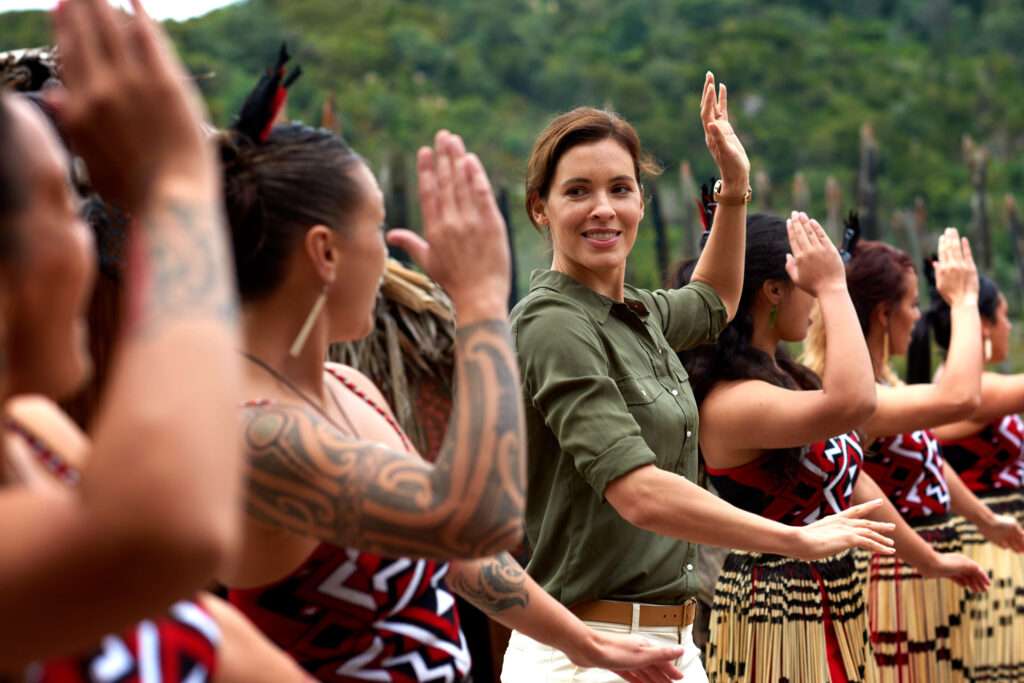
Even if the meaning of the words is not understood, visitors can often sense something cultural in the rhythm and cadence of the language itself.
Pania sees further possibility in this: people from Asia and beyond, who have lived in deep connection with nature and community, may carry something within them that allows mutual understanding even when words do not connect — something that resonates between those who share a similar cultural foundation.
As the Global South rises in prominence, the presence of people who share this cultural sensibility continues to grow. It is natural for those who travel to meet the culture they are visiting halfway. The world is already seeking the value of Japan being exactly as it is.
Experience protects culture
Once, Māori tourism was strongly associated with the image of “cultural shows.” Haka performed on stage, performances arranged for tourists. They were certainly powerful and captivated visitors — yet there was an inherently one-sided dynamic of “spectator and spectacle” to them.
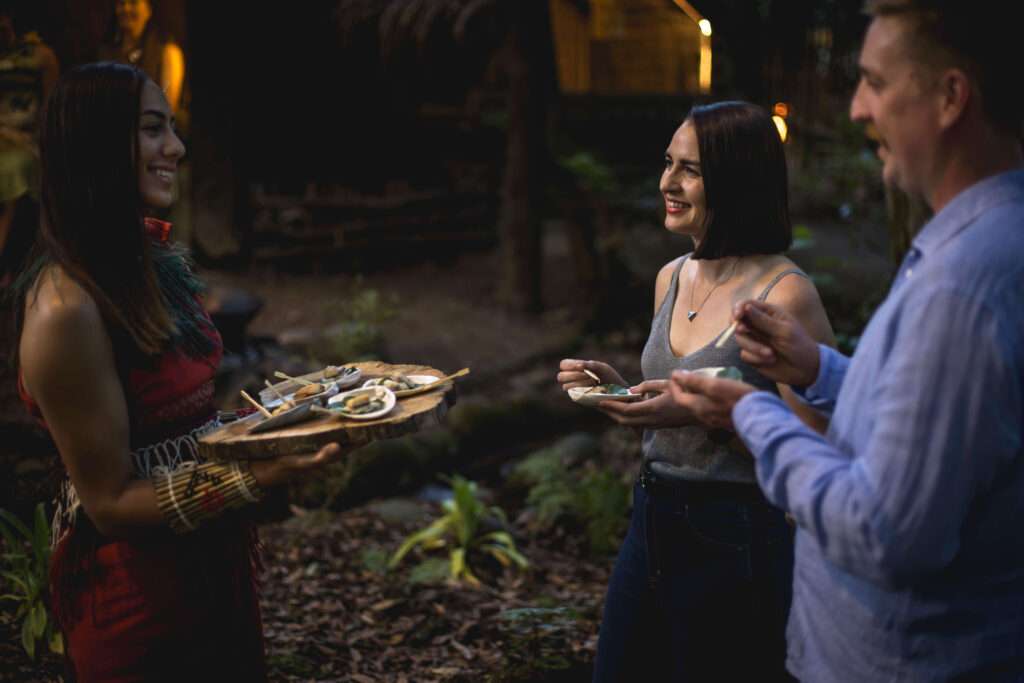
What the Māori tourism sector aims for today goes beyond that. Visitors receive a thorough briefing before their experience. They come to the experience having first understood the cultural meaning of what they are about to participate in.
For example, before entering a traditional Māori meeting house (Marae), visitors remove their shoes. This is not simply a rule — it is an act rooted in the Māori worldview, ensuring that nothing harmful from the outside world is brought inside.
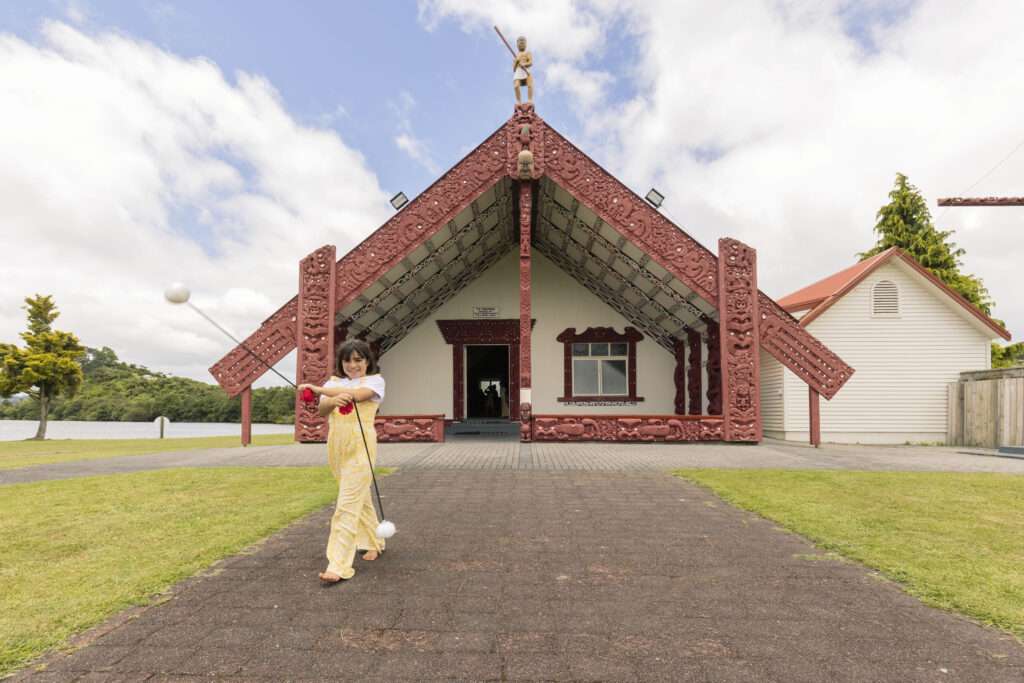
What is shared and what is protected is decided by the community. The stories conveyed to visitors are those chosen by the people of that place. There are areas within sacred sites that cannot be entered, and there are depths of knowledge that cannot be disclosed. Drawing boundaries is not an act of rejection — it is the strength required to protect one’s own culture.
If an experience from within those boundaries is to be offered, there is no need to hesitate in charging a premium. An experience that touches the depths of culture holds that much value.
As Pania points out, “knowledge is not content” — the moment culture is extracted as mere information, the context and spirit that resided within it are lost. That is why reciprocity is required of visitors. Through their behavior, learning, and sometimes through direct support for place-based projects, visitors become not just participants in an experience, but contributors to that place. They leave not only with the sense of having “received” something, but of having “given something back.” That reciprocity extends beyond the economic. It spreads as social connection, and as the inheritance of culture passed on to the next generation.
NZMT never uses the term “tourism product” — it always says “tourism experience.” Products are consumed and discarded. But experiences change people. At the heart of that experience design lies the wish to welcome visitors not as “consumers” but as “guardians” of that place.
A “guardian” engages with the culture and nature of a place as someone who will pass it on to the next generation. Even after the journey is over, they continue to think about that place, speak of it, and cherish it. When that kind of relationship is born, mutual expectations are cultivated between the visitor and the place.
Wrong behavior must not be rewarded
For a long time, Māori were compelled to operate their businesses within a system incompatible with their own values. Since colonization, the capitalist system that took root has demanded short-term numbers and efficiency. That pressure has the potential to erode culture and the environment.
This structure also manifests in the relationship with the New Zealand government. While the government calls for “more tourists,” NZMT asserts “Less is more*.” In a system where increasing numbers is equated with success, Māori values have always faced an uphill battle.
*Less is more: A phrase attributed to architect Mies van der Rohe. Originating from the philosophy that simplicity stripped of ornamentation brings true richness, it has come to be widely used to mean “simpler is better.”
If increasing numbers becomes the only goal, then cutting corners on culture to attract visitors becomes the ‘right answer.’ That is the same as rewarding the wrong behavior. Instead, we have overcome that pressure by building a business case around long-term value and reputation.
When short-term numbers and efficiency alone are pursued, certain things fade from view: the unique value that regional culture has cultivated over a long time, the relationship with the natural environment, and the impact on the community.
So it is necessary to shift one’s paradigm and change the landscape one perceives. Only when one raises their viewpoint beyond the profits of an individual or a single operator — up to the long-term value that encompasses the entire community and the natural environment — does the “true value” that could not be seen through short-term efficiency come into view.
What NZMT has practiced is precisely that shift in perspective: setting “non-negotiables” and placing people and place at the center of everything. Returning to the principle of “Culturalizing Commerce” to overcome capitalist pressure is what leads to protecting the true authenticity of a region.
NZMT has embedded that perspective into the daily life of the organization itself. Currently, four generations work together at NZMT, from the grandparent generation to the younger generation, engaging in daily discussion within the same organization. “The young ones drive me crazy,” Pania laughs, but the criteria for judgment that emerge from those multigenerational discussions are remarkably simple.
In our decision-making, we use one question: ‘What will our grandchildren say about the decisions we make today?’ It is not uncommon for Māori organizations to have 50-year or 100-year plans. Even if a decision increases short-term profit, if it harms people, place, or culture, it is never considered a success. Profit should be a ‘result,’ not a ‘purpose.’ The cost of money made by damaging a community comes back later in the form of loss of trust, loss of license to operate, and loss of identity.
Trust and identity, once lost, are extremely difficult to rebuild. That is why profit should be a “result” that naturally follows right action.
However, this transformation does not happen overnight. They face ongoing challenges: maintaining consistent standards, navigating tight budgets, avoiding overtourism, and addressing infrastructure challenges and labor shortages. Even New Zealand, noted around the world as a “success model of regenerative tourism,” faces no shortage of challenges.
Among these, ensuring that “regeneration” is truly being achieved — measured not through mere marketing campaigns, but in ways that communities can trust — is something Pania emphasizes strongly.
“We Māori are proud of our progress. But we also know that we are still on the journey.” Those words look strictly to the future.
The word ‘sustainability’ has become a market in itself. Every conference has to talk about it. Enough talking. Let’s just get on with it.
When words are consumed, the power those words originally held is also lost. What must be asked is not the definition of concepts, but practice itself.
We see similar superficial borrowing in Japan’s tourism industry as well, where words that represent Māori values are often held up without truly understanding their essence. Words like “omotenashi” and “sustainable” abound, while their true essence is rarely questioned. Only by understanding the depth within words does practice begin.
Authentic experiences remain undiscovered
Approximately 75,000 visitors from Japan travelled to New Zealand in the year ending January 2026 (*2), yet Pania notes, looking at that number, “What we understand may be the ‘Japanese market’ — not necessarily ‘Japanese culture.'” While the mechanics of the market might be understood, whether the tourism industry truly grasps the depth of what Japanese people feel, and what they seek when they travel, is a separate question entirely.
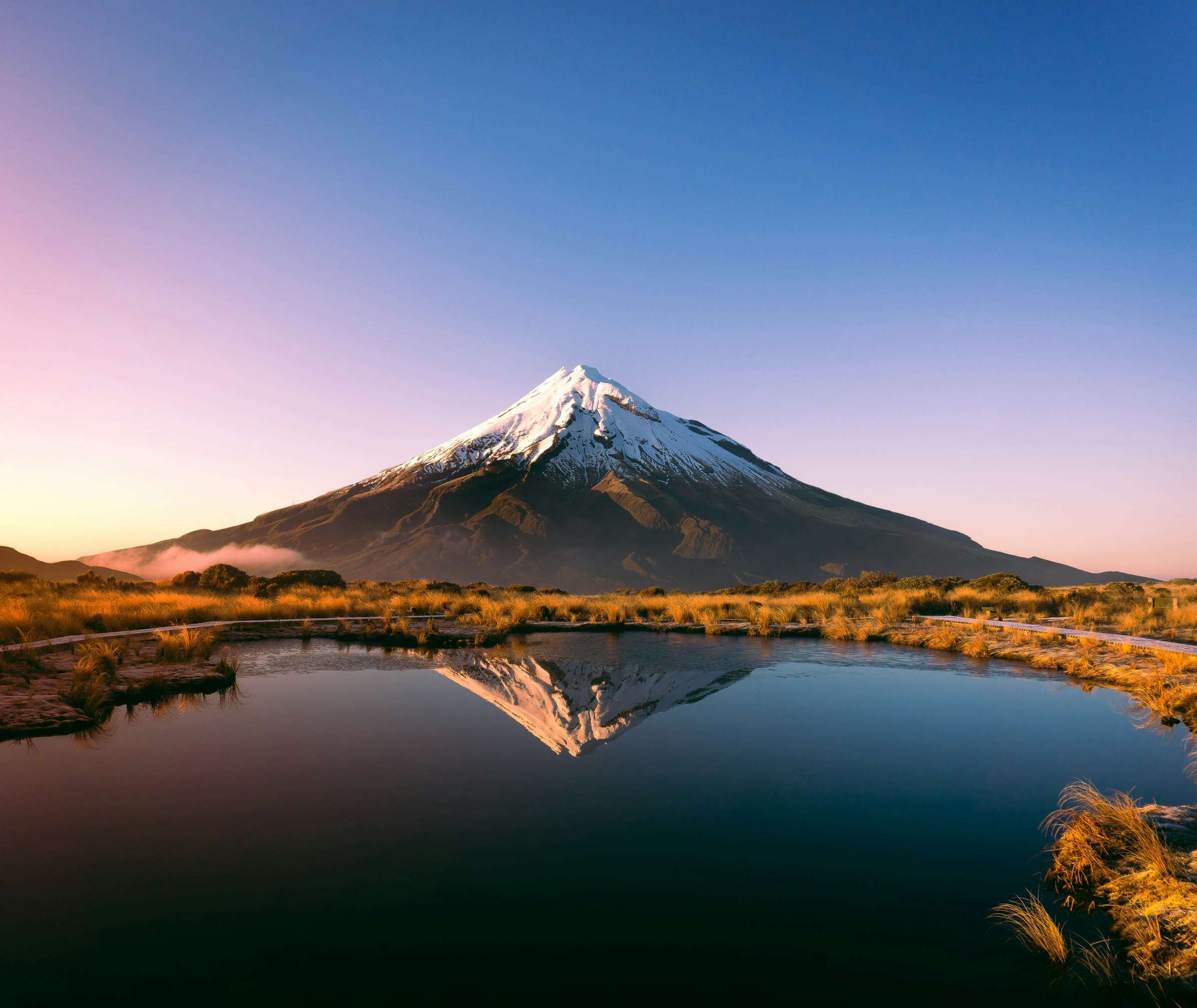
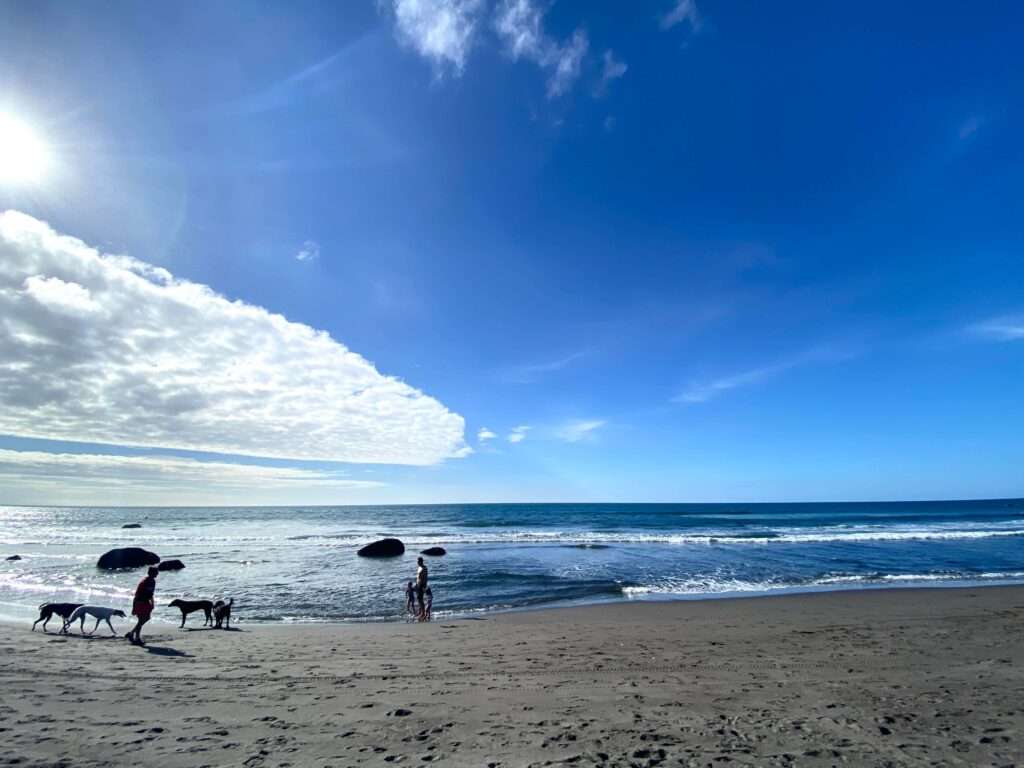
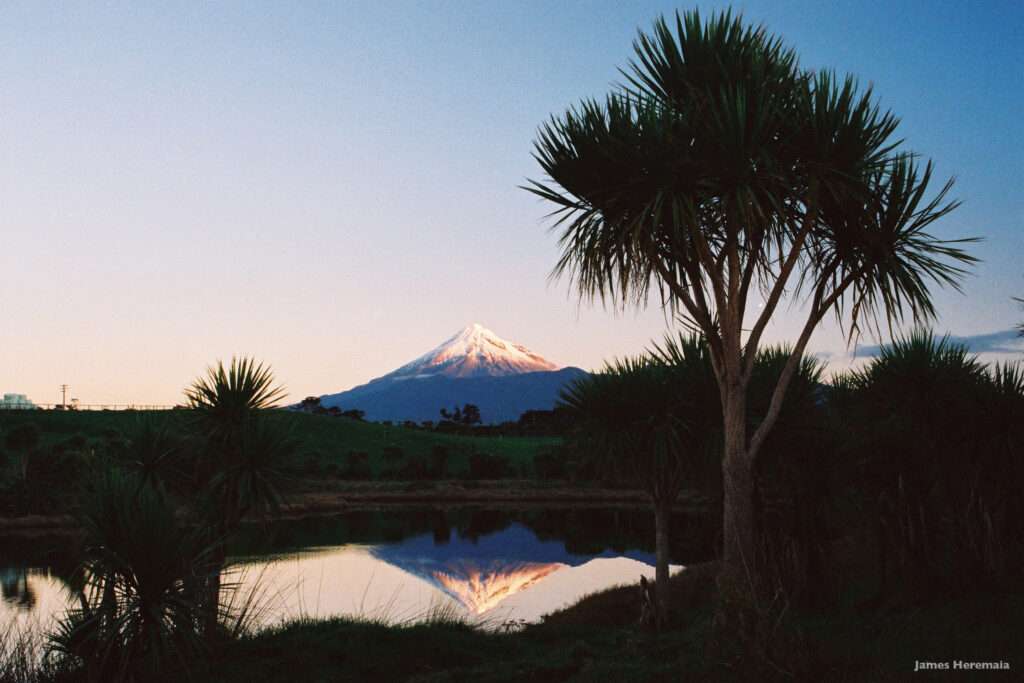
That question is directed at the Japanese side as well. For example, when visiting regional cities in New Zealand, one rarely encounters Japanese travelers. A place like New Plymouth, with Mount Taranaki on the horizon, is rich in unique nature and culture, yet it remains largely unknown in Japan.
While many Japanese travelers move from place to place seeking “photogenic, iconic scenery,” the value of authentic nature and cultural experiences often escapes their notice. And ironically, the people living locally are sometimes unaware of the value that exists right in their own backyard.
Facing this challenge, Pania has long sought improvements in the policies of national marketing bodies. But now, she is convinced that the proliferation of AI will bring about a paradigm shift. AI will not only change the way people travel — it will change the way places that have never been in the spotlight are introduced to the world.
In the past, people found information by actively “searching” for what they already knew. But now, if you tell AI your “wishes,” it will curate destinations that can fulfill those desires. Type in “I want an authentic Māori experience in New Zealand,” and a list of options from across the country appears. Unconstrained by the budgets or policies of marketing bodies, even small regional places now have the possibility of reaching the screens of travelers around the world.
That is why the focus should be on getting “AI-Ready” for AI-based search engines. Information dissemination is essential for that, and a strategy that is not dependent on budgets or flight numbers becomes more critical than ever.
“Focus on what you can control.” Having long walked at the forefront of tourism, Pania laughs: “In order to help carve out the future together with the generation of my grandchildren, I’m going to become the grandmother who uses AI better than anyone.” In that expression, a profound hope resided.
Where does the sensibility of “Regeneration” come from?
The goal is to make tourism itself function not as a force that consumes the nature and culture of a region, but as a “force of regeneration.” How, then, do the Māori practice that “regeneration”?
What Pania emphasizes is that for Māori, this “regeneration” is neither a newly adopted strategy nor a concept brought in from outside.
Regenerative tourism is in our DNA. We say, ‘I am the river, and the river is me.’ It may sound abstract, but it is true. We have natural assets that the United Nations and our own government have recognized as living entities. Regeneration is what we live every day — it is an integral part of who we are as a people.
In the Māori worldview, humans and nature are not separate entities but exist within the same continuum of life. If a river is polluted, one is personally harmed. If a forest is lost, a part of oneself is lost. That is why protecting nature is not an obligation or a responsibility — it is synonymous with protecting oneself.
That philosophy has been given concrete form in New Zealand law. Māori sacred sites such as Mount Taranaki and the Whanganui River have been recognized as “entities with rights,” in the same way as human beings. There is a worldview there that is fundamentally different from the idea of managing nature as a “resource.” But is this worldview something unique solely to the Māori?
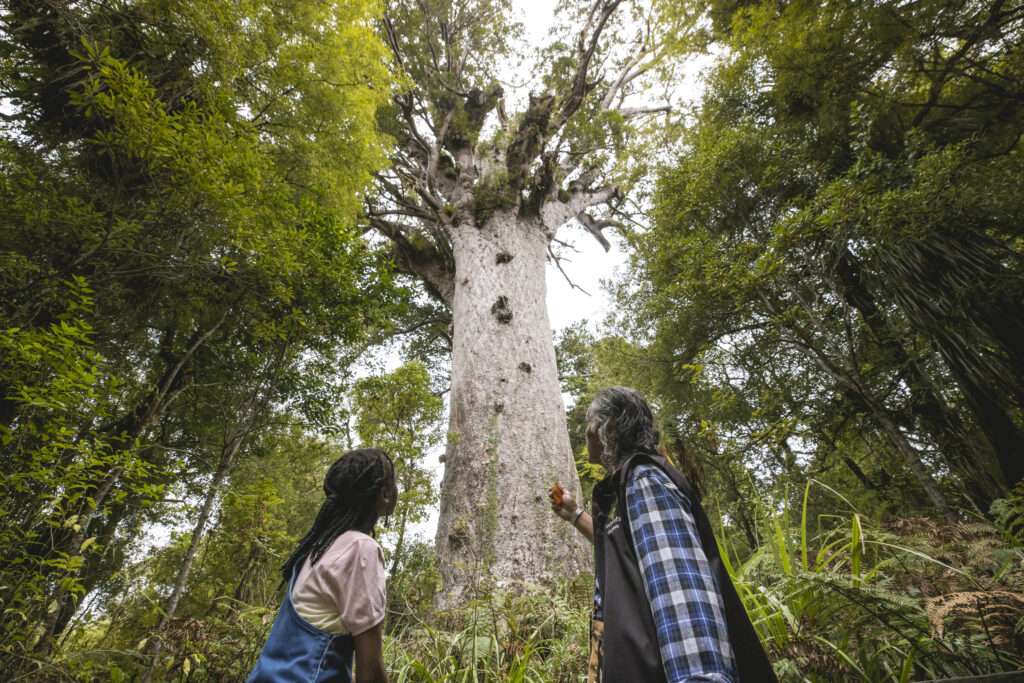
In fact, there is a connection between the Māori and the Ainu — the indigenous people of Japan — known as the “Ancient Trees Agreement.” This bond centers around two ancient trees: one in Hokkaido, and another in New Zealand. Through these trees, each deeply rooted in their respective lands, the two peoples have built a relationship. Those who equally revere trees that have lived long and hold the memory of the land are drawn to each other across language and distance. What is resonating between the two peoples?
The Ainu have long believed that “Kamuy” — spirits — reside in all things in the natural world. What exists there is not the idea of “managing” or “consuming” nature. It is gratitude toward, and dialogue with, existence itself.
The Māori words “I am the river, and the river is me” and the Ainu worldview of Kamuy seem to arise from the same place: a world where nature and humans are not separate, rooted in the sense that humans, too, exist within a great continuum of life.
And the Ainu are not a people of a distant foreign land. They are people who have long lived on the Japanese archipelago, engaging deeply with the nature of this land. Their sensibility is quietly connected to the deeper layers of the Japanese people’s view of nature.
We Japanese, too, have carried forward, through generations, a sense of animism — a way of perceiving nature as part of oneself, or as a presence to be in dialogue with. We have received “the rustling of the wind” and “the sound of rain” not as mere physical noise, but as meaningful “voices” by translating them into the rich onomatopoeia that our language, with its many vowels, makes possible.
The sensibility of hearing loneliness in the cry of insects, of listening to the stirring of the heart in the sound of waves, is deeply inscribed in the haiku of ancient Japan. We have perceived nature not as an “object” to be dominated, but as a “presence” to exchange words with.
Could it be that the Māori words “I am the river, and the river is me” arise from the same place as this sensibility?
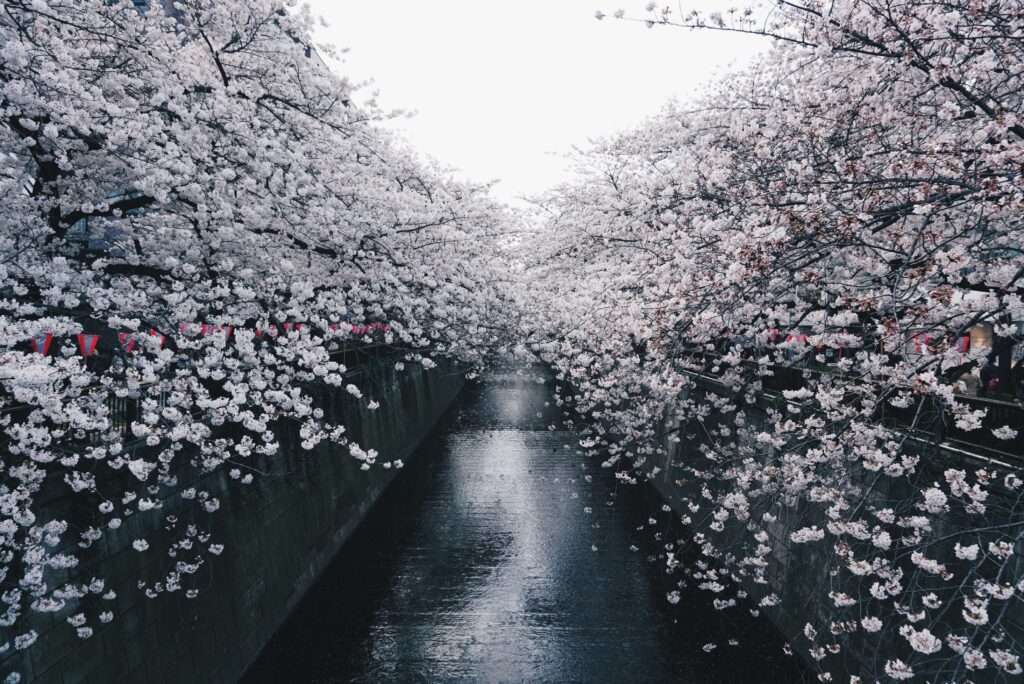
We have long looked at New Zealand with admiring eyes as a “leading example of regenerative tourism.” And yet, the sensibility at the core of “regeneration” is not the story of a distant foreign land — it has always resided within us.
And yet, the daily life of the modern world dulls that sense of “dialogue with nature.” Surrounded by air-conditioned interiors, digital screens, and streamlined travel, even if one understands intellectually that “nature must be cherished,” the heart does not easily move. There is a considerable gap between holding something as knowledge and holding it as lived experience.
That is why travel holds power. When one treads on the earth of a place visited, and connects through all five senses to the life of that community, an irreplaceable sense of reality is born in the heart — one that will never appear in a tourism pamphlet.
The sound of a stream, the air of a forest, a casual greeting exchanged with someone in town—these memories never fade with time. The imagination of what it would feel like if that place were someday lost reaches quietly toward a place that the words “environmental protection” could never reach.
Becoming a better person through travel
“Regeneration is a discipline, not a destination,” says Pania. It is not a goal to be reached, but something to be built up as a daily practice. Beyond those words lies the vision of the future that Pania describes.
When I imagine New Zealand 100 years from now, I want it to be a place where my grandchildren inherit healthier lands and oceans, stronger cultures, and an economy that rightly rewards care for each other and for the environment.
From a tourism perspective, if we get this right, visitors won’t just consume our country and leave — they will go home as better people: more responsible, more connected, and more committed to caring for their own places, not just ours.
What tourism can offer is not a mere package of experiences. It is the awakening of a dormant sensibility, and the cultivation of an unforgettable memory of “that place” within the visitor. It is that memory which becomes the catalyst for shifting the mindset from “what can I receive” to “what can I do for this nature and culture.” Pania expressed this sentiment in her message to Japan:
I am not going to Japan to see what I can see in other countries. I want to know the ‘heartbeat’ of the Japanese people. I want to hear the ‘song of their soul.’ And I am prepared to pay for that. From the moment I get off the plane, the cultural experience should have already begun. I hear your language, I eat your food, I visit a temple, I go shopping. I hope to have a cultural experience at every single touchpoint.
What visitors truly seek is what exists only in that land — what that land has cultivated over a long period of time. It is not about building large facilities or manufacturing special programs. What is needed is for us to genuinely become aware of the value of our own culture. And that sensibility is something we already possess.
Travel is an opportunity to awaken that dormant sensibility. And is it not the role of those involved in tourism to carefully design that opportunity? There is no need to do anything extravagant. It is simply about providing touchpoints within the daily life of that land where travelers can connect through all five senses. That, I believe, is the most honest form of tourism, one that truly leads to “regeneration.”
